Mangroves: A Natural Shield for Coastal Communities
Mangrove forests are vital to coastal ecosystems, particularly in estuarine areas where dense populations can be affected by even small ecological imbalances. They help stabilise shorelines and act as a natural buffer between land and sea. Their role in protecting coastal land from erosion and reducing exposure to cyclones and other ecological threats makes their conservation an important environmental priority. While engineering solutions may support coastal management, mangroves provide natural protection that is difficult to replace.
Supporting Wetlands, Water Quality and Biodiversity
Wetlands and mangrove habitats support a wide range of life, including invertebrates, fish, amphibians, reptiles, birds and mammals. They provide breeding and nursery grounds for many marine species, helping sustain biodiversity that is increasingly under pressure. Mangroves can also help improve water quality by trapping sediments and absorbing certain pollutants and heavy metals. Protecting these ecosystems supports healthier coastal waters and strengthens the ecological relationships between land, wetlands and the sea.
A Role in Climate Resilience
With rising concern about global warming and sea-level rise, mangroves are receiving greater attention for their contribution to coastal resilience. Their root systems can help reduce wave energy and limit shoreline erosion, while their habitats support species adapted to saline conditions. The original initiative also points to the potential value of mangroves as a future resource for salt-tolerant crop research. Preserving these forests can therefore contribute to biodiversity protection and help communities prepare for environmental changes.
Biological Processes and Pollution Control
The biological value of wetlands lies in the interactions among plants, roots, microorganisms and aquatic organisms. In mangrove areas, roots slow the movement of water and can help sediments settle, while wetland soils and associated microbial communities may retain or transform some pollutants. These natural processes do not eliminate every contaminant, and their effectiveness depends on local conditions, but they show why healthy wetlands are important in environmental management. Conserving mangroves is therefore relevant not only to habitat protection, but also to maintaining the natural processes that support water quality.
AALAMARAM’s Community-Led Effort
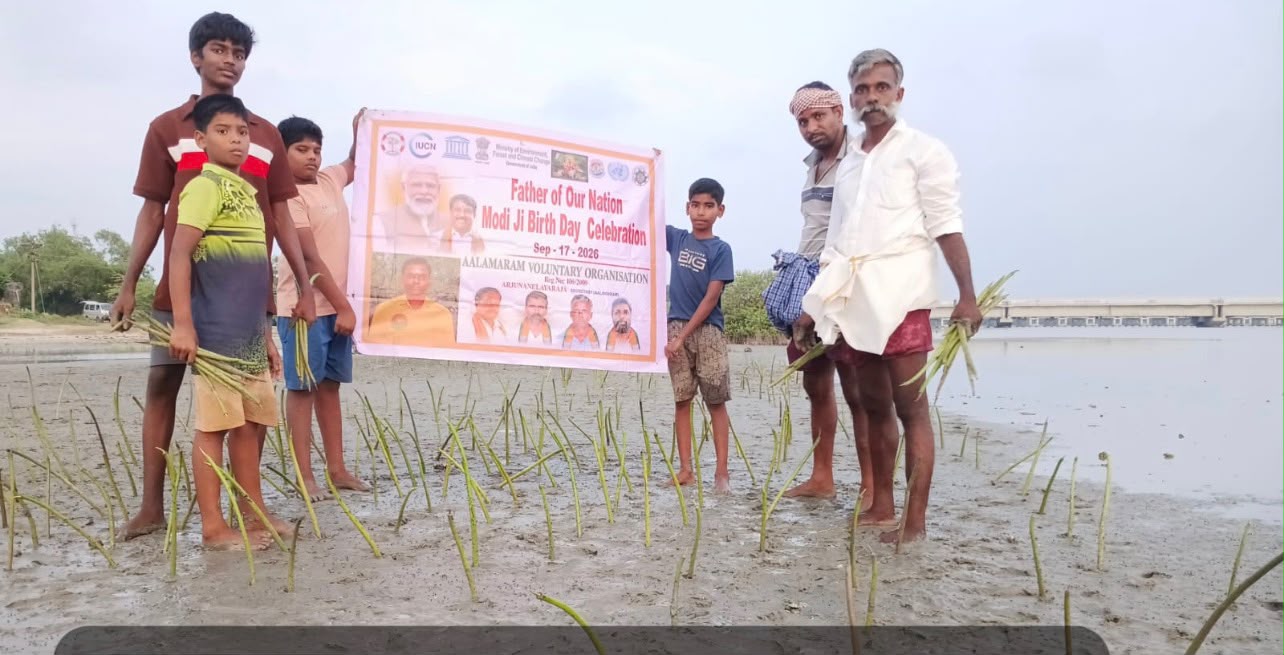
The non-governmental organisation AALAMARAM was established in 2009 to carry out welfare activities led by rural youth in villages across Cuddalore district. The initiative was started and is headed by founder and secretary Mr Arjunan Elayaraja. According to the information shared by the organisation, the team chose environmental action because it viewed threats such as air pollution and ecological damage as challenges that require sustained care and practical community participation.
Planting Mangroves Despite Challenges
AALAMARAM began planting mangroves along coastal areas near local villages, an effort that required patience, resources and continued commitment. The supplied account says mangrove seeds had to be brought in at considerable cost. The team also faced setbacks, including floods that destroyed many young mangrove trees. Despite these difficulties, the organisation continued its work without taking government grants, according to the information provided.
A Milestone After Years of Work
Over the past 16 years, the team reports planting more than 450,000 mangrove seedlings. A particularly encouraging moment came when the first seed was observed on one of the mangrove trees nurtured through the project. For the team, this was a meaningful sign of progress after years of planting and overcoming setbacks. The development has also raised hopes that more trees will eventually produce seeds, potentially reducing the need to purchase or import planting material from elsewhere.
Why Mangrove Conservation Matters
Mangroves offer benefits that extend beyond shoreline protection. They support marine diversity, provide habitat for wildlife, and can contribute to local livelihoods through fisheries and other coastal activities. In suitable locations, mangrove landscapes may also create opportunities for nature-based recreation and tourism. Their role in filtering some pollutants and supporting ecological balance makes them relevant to broader discussions about wetland health, water quality and biological approaches to pollution control.
Looking Ahead
AALAMARAM’s work in Cuddalore illustrates how community-led environmental initiatives can contribute to the long-term care of coastal ecosystems. The team’s reported planting effort and the appearance of the first seed mark an important moment in its journey, while also highlighting the need for continued monitoring and protection of young mangroves. Sustained conservation, local participation and awareness can help safeguard wetlands and biodiversity for future generations.