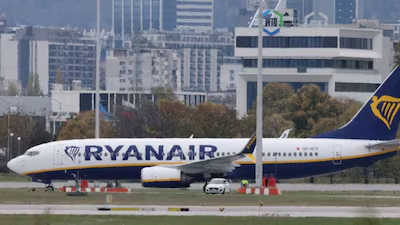
A wave of bomb threats targeting passenger aircraft across Europe has disrupted air travel, forcing multiple flights to divert, make emergency landings or undergo intensive security inspections. The incidents, reported on November 5, 2026, affected several major airlines and prompted emergency responses at airports across the continent.
Authorities and airline operators reported that passengers and crew members landed safely in the incidents reported so far. Initial searches of the affected aircraft did not uncover explosives or suspicious materials, raising suspicions that the alerts were hoaxes intended to disrupt aviation operations.
Multiple Airlines Hit by Bomb Threats
The latest incidents involved airlines including Ryanair, Aer Lingus, Wizz Air, Finnair, LOT Polish Airlines and Aegean Airlines. Flights travelling between major European cities were among those affected, with security alerts reported in countries including France, Italy, Bulgaria, Romania, Poland, Austria, Belgium and the Czech Republic.
The threats led to a combination of emergency landings, diversions, aircraft searches and precautionary security measures. In some cases, military aircraft were deployed to escort passenger planes as they approached their destinations.
Reports published on November 5 indicated that more than a dozen flights had been affected that day alone. The incidents followed similar alerts earlier in the week, bringing the total number of flights targeted across several days to more than 20 in some tallies.
Aer Lingus Flight Diverted to French Military Airbase
One of the most prominent incidents involved an Aer Lingus Airbus A320 travelling from Dublin to Rome. Following a bomb threat, the aircraft was diverted to the Évreux-Fauville airbase in northern France.
The plane landed safely with 151 passengers and six crew members on board. French authorities initiated security procedures, and bomb disposal teams inspected the aircraft.
The diversion highlighted the precautions aviation authorities take when a potential security threat is reported during a flight. Even when the credibility of a warning has not been established, pilots and ground authorities must follow established safety procedures.
Ryanair Flights Make Emergency Landings in Bulgaria
Three Ryanair flights bound for Sofia, Bulgaria, were also targeted by bomb threats. Two aircraft, travelling from Copenhagen and Madrid, landed safely at Sofia Airport, while a third flight from London's Stansted Airport was diverted to Plovdiv.
Bulgarian authorities confirmed that inspections were conducted after the aircraft landed. Military fighter jets were also deployed in connection with the incidents.
Officials said the necessary security checks did not identify any suspicious items, and airport operations subsequently returned to normal.
Other European Airports Strengthen Security
Several additional incidents prompted security responses elsewhere in Europe.
A Wizz Air flight travelling from Milan to Warsaw was diverted to Vienna, while a Finnair flight from Helsinki to Rome received a military escort before landing. Other aircraft arriving in Milan and Prague underwent precautionary inspections after threats were reported.
In Poland, a LOT Polish Airlines flight scheduled to depart Warsaw was subjected to security procedures following a reported threat. One runway at Warsaw Chopin Airport was temporarily closed while checks were carried out.
Authorities in the Czech Republic also prepared for the arrival of several aircraft following bomb alerts. Searches reportedly found no suspicious objects.
Authorities Investigate Possible Links Between Incidents
The repeated threats have raised questions about whether the incidents were isolated hoaxes or part of a coordinated effort to disrupt European transport networks.
The latest alerts came amid broader concerns about security incidents and potential hybrid threats across Europe. However, no definitive public evidence has established that all the aviation threats were connected or that a state actor was responsible.
Security experts have warned that even false threats can cause considerable disruption, requiring aircraft diversions, emergency personnel, passenger checks and temporary changes to airport operations.
Passenger Safety Remains the Priority
Airlines and aviation authorities are continuing to treat reported bomb threats seriously, regardless of whether previous alerts have proved unfounded. Aircraft inspections and emergency procedures are designed to protect passengers and crew while allowing operations to resume once a threat has been assessed.
Although the incidents caused significant disruption, reports available on November 5 indicated that the affected flights had landed safely and that inspections had not uncovered explosives.
Investigations are expected to focus on identifying the source of the threats and determining whether any of the incidents were coordinated. Until more information emerges, European aviation authorities are likely to maintain heightened vigilance against further security alerts.