Introduction: Infrastructure + Policy Angle
Large-scale infrastructure projects play a crucial role in improving connectivity and driving regional development. However, they also require careful environmental assessment, long-term feasibility planning, and economic viability analysis.
The Dahej Ro-Ro Ferry Terminal project in Gujarat has emerged as a case study highlighting the complexities and challenges associated with coastal infrastructure development in India.
Project Overview: Investment and Objective
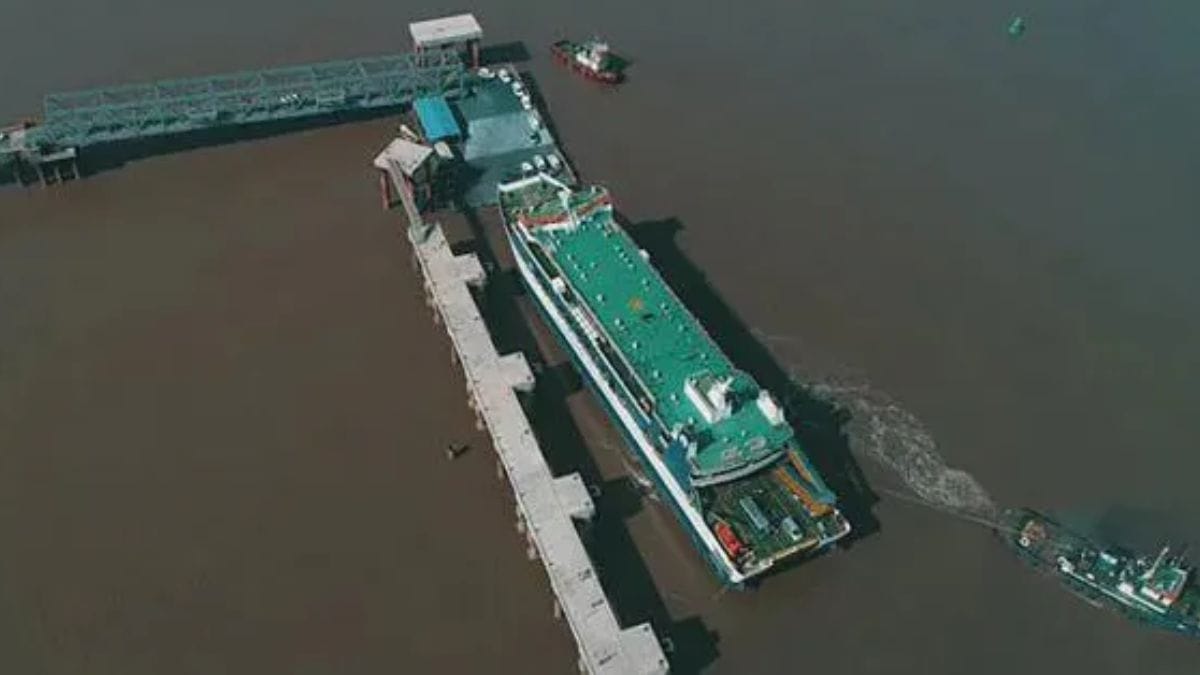
The Dahej Ro-Ro Ferry Terminal was developed with the objective of improving maritime connectivity across Gujarat’s coastal regions.
Key investment figures include:
₹290 crore for terminal construction
₹117 crore allocated for dredging operations
₹615 crore estimated for the overall ferry project
The initiative aimed to facilitate passenger and vehicle transport through roll-on/roll-off ferry services.
Environmental and Operational Challenges
The project faced significant challenges due to its geographic location near the Narmada River mouth and the Gulf of Khambhat.
Key issues observed include:
Strong tidal currents
Continuous sediment accumulation
Difficulty in maintaining required water depth for ferry operations
These factors impacted the long-term operational viability of the terminal.
Service Disruption and Operational Closure
The Ro-Ro ferry service from Dahej was operational for a limited period before being discontinued in 2019.
Despite efforts such as repeated dredging to maintain navigable depth, operational sustainability remained a challenge.
Attempts at Revival and Transfer of Operations
Following the suspension of ferry services, the terminal was transferred to Kandla Port authorities for potential revival.
However, the project did not progress further, and the terminal remained non-operational due to ongoing environmental constraints.
Economic Viability Considerations
Earlier feasibility assessments indicated varying revenue potential across different ferry routes.
Ghogha–Surat route projected higher revenue potential
Ghogha–Dahej route showed comparatively lower returns
This highlights the importance of aligning infrastructure investments with both environmental feasibility and economic viability.
Key Learnings for Future Infrastructure Projects
The Dahej Ro-Ro Ferry project offers important insights for future planning:
Need for comprehensive environmental studies
Importance of long-term operational feasibility
Alignment between investment scale and revenue potential
Adaptive planning for coastal and riverine conditions
Results & Impact (MOST IMPORTANT)
Policy Impact:
Increased focus on feasibility assessments in infrastructure planning
Emphasis on environmental sustainability in coastal projects
Economic Impact:
Significant capital investment with limited operational returns
Need for better cost-benefit evaluation
Industry Impact:
Lessons for future maritime and ferry infrastructure projects in India
Final Verdict
The Dahej Ro-Ro Ferry Terminal reflects the complexities of infrastructure development in environmentally sensitive regions.
While the project was initiated with the goal of improving connectivity, the challenges encountered highlight the importance of integrating environmental, economic, and operational considerations in large-scale public projects.