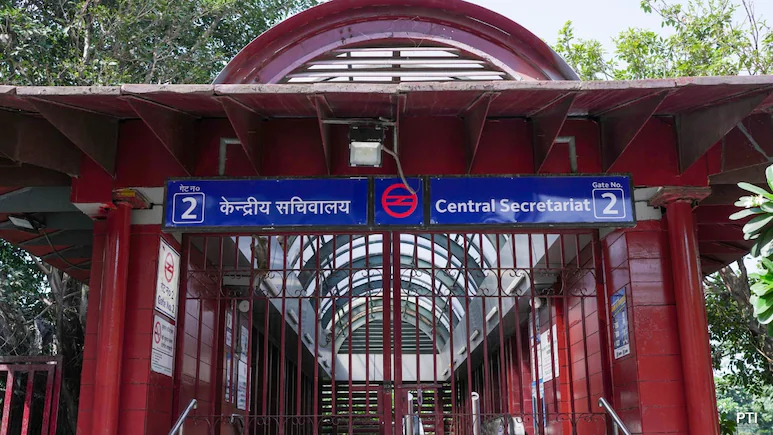
Delhi Metro commuters faced travel disruptions on Saturday, October 10, as authorities restricted entry and exit at 45 stations across the national capital ahead of a planned demonstration by the Cockroach Janata Party (CJP). The protest, scheduled at Jantar Mantar, seeks the resignation of Chief Election Commissioner Gyanesh Kumar over allegations concerning electoral roll revisions.
The restrictions were introduced as part of a wider security arrangement to manage crowds and prevent potential disturbances near sensitive locations. The Delhi Metro Rail Corporation (DMRC) initially announced restrictions affecting 57 stations before revising the number to 45.
Metro Restrictions and Passenger Advisory
The entry and exit restrictions began at 9 pm on Friday, October 9, and were scheduled to continue until 6 pm on Saturday, October 10, subject to a review of the security situation.
Passengers can continue using interchange facilities at the affected stations, allowing them to change metro lines where permitted. However, the interchange facility at New Delhi Metro station is also unavailable under the restrictions.
Several important stations serving central Delhi and other parts of the city are affected. These include Rajiv Chowk, Central Secretariat, Patel Chowk, Mandi House, ITO, Kashmere Gate, Hauz Khas, Lajpat Nagar and New Delhi. Stations on multiple corridors, including parts of the Red, Yellow, Blue, Violet and Pink lines, are among those covered by the measures.
The restrictions could complicate journeys for people travelling to government offices, commercial districts, railway stations and other busy parts of the capital. Commuters have been advised to check service updates and allow additional time for their journeys.
Namo Bharat Stations Also Affected
The transport restrictions extend beyond the Delhi Metro network. Sarai Kale Khan and New Ashok Nagar Namo Bharat stations were also scheduled to remain closed until 10 pm on October 10.
Train services between Anand Vihar in Delhi and Modipuram in Uttar Pradesh were expected to continue according to their regular schedule during the closures. However, passengers using the two affected stations need to account for the temporary access restrictions.
The measures form part of a broader effort to control movement around key locations during the planned demonstration. Travellers using connecting transport services may also experience delays or need to adjust their routes.
Why Is CJP Demanding the Election Commissioner's Resignation?
The CJP demonstration centres on allegations involving Form 6, which is used in the process of registering new voters, and the Election Commission's Special Intensive Revision (SIR) of electoral rolls. The party has called for Gyanesh Kumar's resignation, alleging irregularities in the electoral process.
These allegations remain contested and should not be treated as established findings. The dispute has nevertheless become the focus of a planned public mobilisation at Jantar Mantar.
Delhi Police have also raised procedural concerns regarding the proposed gathering. Joint Commissioner of Police Nupur Prasad said the organisers submitted their permission application on October 7 for a protest planned on October 10. She stated that the prescribed notice period was at least 10 days. Police also cited concerns about alleged violations of directions issued during an earlier demonstration.
Security Arrangements Across the Capital
Authorities prepared an extensive security deployment ahead of the protest. More than 120 companies of Central Armed Police Forces were expected to assist Delhi Police, while CCTV surveillance and additional monitoring arrangements were put in place.
The New Delhi district was divided into 20 zones, with senior police officers assigned to supervise security and coordinate responses to developments on the ground.
The combination of metro restrictions and enhanced policing reflects officials' efforts to manage the anticipated gathering while maintaining public order. For commuters, the immediate priority is to account for station closures, check transport arrangements before departure and allow sufficient time to reach their destinations.
The restrictions were scheduled for review as the security situation developed, meaning passengers should rely on the latest official travel advisories for any changes to metro access or operating arrangements.