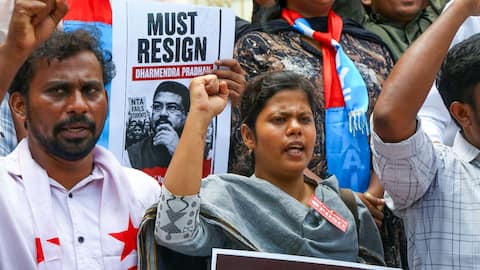
New Delhi: Union Education Minister Dharmendra Pradhan resigned from the Union Council of Ministers on Saturday, taking moral responsibility amid the nationwide controversy surrounding the NEET-UG 2026 examination. His resignation follows weeks of student protests, public criticism, and demands for accountability after irregularities in the country’s premier medical entrance examination came to light.
In a detailed resignation letter addressed to Prime Minister Narendra Modi, Pradhan said his decision was guided by his lifelong commitment to India’s students and the belief that the education system must remain free from uncertainty and political conflict.
Resignation “In the Interest of Students”
Announcing his decision, Pradhan said he did not want the ongoing controversy to distract millions of young aspirants preparing for their future.
“Education should inspire confidence, not confusion,” he wrote, adding that the nation’s youth deserve an environment where merit and hard work remain the defining factors of success.
The former minister emphasized that throughout his public life, he had worked closely with students and educators, describing education as the foundation of India’s long-term development.
Government Acted Swiftly After Exam Irregularities
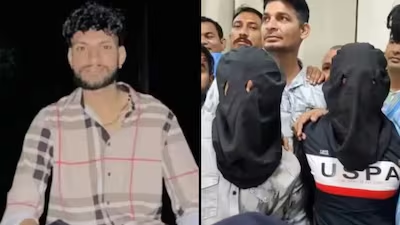
The NEET-UG 2026 examination, held on May 3, became the subject of intense scrutiny after reports of a paper leak and examination irregularities surfaced soon after the test.
Pradhan stated that the Central Government immediately initiated corrective measures, including:
- Transferring the investigation to the Central Bureau of Investigation (CBI).
- Cancelling the affected examination.
- Organising a nationwide re-examination.
- Announcing that NEET-UG will shift to a Computer-Based Test (CBT) format from 2027 to improve transparency and examination security.
According to him, these decisions were taken to ensure that deserving candidates did not suffer because of the controversy.
“Accepted Responsibility From the Beginning”
In his resignation letter, Pradhan said he never attempted to distance himself from the crisis and accepted responsibility from the very first day.
He noted that the government’s highest priority was conducting the re-examination fairly for more than 20 lakh candidates, ensuring that every student received an equal opportunity to compete.
He also pointed out that the NEET-UG 2026 results, declared on July 16, reflected the resilience of students across the country, with many candidates from economically weaker backgrounds securing outstanding ranks.
Growing Protests Across the Country
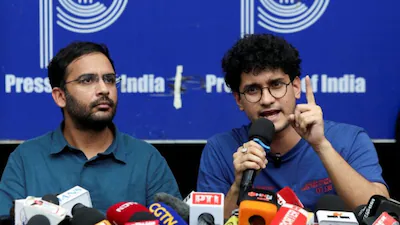
The resignation comes after protests intensified in several cities, with demonstrations at Jantar Mantar in New Delhi drawing national attention. Activists, student organisations, and civil society groups called for greater transparency in India’s examination system and stronger safeguards against future paper leaks.
Referring to the protests, Pradhan expressed concern that certain groups were attempting to mislead students and deepen public confusion. He said the movement surrounding the examination should not be exploited for political or anti-national purposes.
“The future of India’s youth must remain above every other consideration,” he stated.
Thanks PM Modi and Ministry Officials
While stepping down, Pradhan expressed gratitude to Prime Minister Narendra Modi for the opportunity to lead the Ministry of Education. He also thanked his Cabinet colleagues, ministry officials, teachers, and education stakeholders for their support during his tenure.
He reaffirmed his commitment to public service and said he would continue contributing to the nation’s development in whatever role he is assigned.
Focus Shifts to Education Reforms
With Dharmendra Pradhan’s resignation, attention now turns to the government’s next steps in rebuilding public trust in India’s examination system. The ongoing CBI investigation, combined with the planned transition to Computer-Based Testing, is expected to play a key role in strengthening examination integrity and preventing similar controversies in the future.
The resignation marks a significant moment in India’s education landscape, highlighting the growing demand for accountability, transparency, and robust reforms in one of the country’s most competitive entrance examination systems.