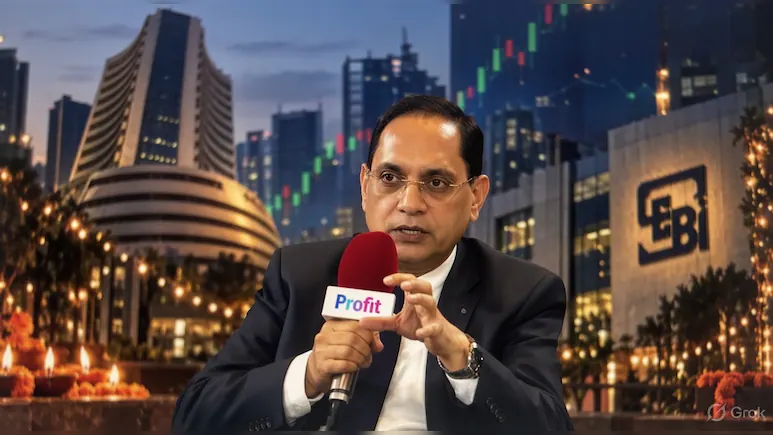
India’s mutual fund investors will see a significant change in how investment options are presented on asset management companies’ digital platforms from November 1, 2026. Securities and Exchange Board of India (SEBI) Chairman Tuhin Kanta Pandey announced that direct mutual fund plans will become the default option, while investors selecting regular plans must be informed about their higher expense ratios.
The move is intended to improve transparency around investment costs and help people make more informed decisions when purchasing mutual fund schemes online. The announcement was made during a financial markets event in Mumbai on October 28.
What Changes for Mutual Fund Investors?
Under the new arrangement, direct plans will appear as the default choice on the digital platforms operated by asset management companies (AMCs). Investors who prefer regular plans will still be able to select them, but they must be made aware that these plans generally carry higher expenses.
Direct and regular plans of the same mutual fund scheme invest in the same underlying portfolio and are managed by the same fund manager. Their investment objectives and risk profiles are also the same. The primary distinction is the cost associated with distribution.
Direct plans are purchased without a mutual fund distributor earning a commission through the investment. As a result, their expense ratios are generally lower than those of corresponding regular plans.
Regular plans are available through intermediaries such as mutual fund distributors and certain financial service providers. The cost of distribution is reflected in their expenses, which can make them more expensive for investors over time.
Because mutual fund expenses are deducted from scheme assets, a lower expense ratio can help improve net returns over the long term, assuming other factors remain unchanged. However, lower costs alone do not determine whether a particular investment is suitable for an individual.
SEBI Emphasises Investor Awareness
Pandey highlighted that improving access to financial products must go hand in hand with better investor understanding. Making investment transactions easier through digital platforms does not necessarily mean that people understand a fund’s costs, risks or investment objectives.
He referred to findings from SEBI’s investor survey indicating that 63% of households were aware of at least one securities market product, while only around 9.5% participated in the securities market. Among investors, approximately 36% demonstrated moderate or high levels of market knowledge.
These figures point to the importance of financial education as digital investment services become more widely available. Investors need to understand what they are purchasing, the expenses involved and the potential risks before committing their money.
Direct Plans Will Not Automatically Suit Everyone
The new default setting does not mean direct plans are necessarily the right choice for every investor. Direct investing may suit people who are comfortable researching mutual funds, assessing their risk tolerance and managing their portfolios independently.
Investors who need assistance with financial planning or scheme selection may value the support offered by an adviser or distributor. In such cases, understanding the cost of that assistance and the services provided is important.
The policy change focuses on how options are presented and how their costs are disclosed. It does not eliminate the ability to choose a regular plan.
A Broader Push for Market Transparency
The announcement forms part of SEBI’s wider efforts to improve investor protection and make India’s financial markets more accessible and efficient. The regulator is also examining ways to simplify compliance requirements and modernise market supervision.
For mutual fund investors, the immediate takeaway is that the default option on AMC digital platforms will change from November 1. Before investing, individuals should compare the costs, understand the scheme’s risks and select a plan that matches their financial goals and level of investment.