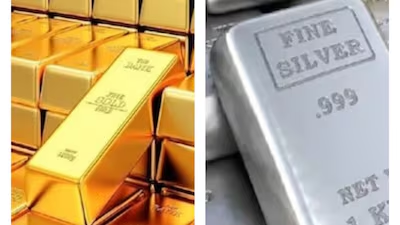
Gold and silver prices declined sharply in India on Friday, October 23, as investors reassessed their exposure to precious metals amid rising global uncertainty, changing interest-rate expectations and movements in the US dollar. Silver futures on the Multi Commodity Exchange (MCX) fell below ₹2 lakh per kilogram, while gold prices slipped towards ₹1.43 lakh per 10 grams.
The decline comes after a period of considerable volatility in bullion markets. Although gold and silver are often considered safe-haven assets during uncertain times, their prices can also fall when investors prioritise cash, respond to changing financial conditions or book profits after an extended rally.
For Indian buyers, the latest movement raises questions about whether jewellery, coins and investment-grade bullion could become more affordable in the coming days.
MCX Silver Falls Below ₹2 Lakh
Silver futures experienced renewed selling pressure, taking prices below the psychologically important ₹2 lakh-per-kilogram level. The decline reflects a combination of international price movements, investor positioning and concerns about the broader economic outlook.
Silver differs from gold because it has both investment and industrial uses. It is widely used in electronics, solar panels and other manufacturing applications, making its price sensitive to expectations for industrial demand.
When investors become concerned about economic growth, expectations of weaker industrial activity can weigh on silver. At the same time, changes in interest rates and currency movements can influence investment demand for the metal.
The latest fall highlights the volatility associated with silver, which can experience larger percentage swings than gold during periods of market uncertainty.
Gold Prices Slip Towards ₹1.43 Lakh
Gold futures also moved lower, with prices declining towards ₹1.43 lakh per 10 grams. The correction followed pressure in international bullion markets as investors evaluated the direction of interest rates, currency movements and geopolitical developments.
Gold is traditionally regarded as a store of value during periods of economic instability. However, it does not pay interest or dividends, meaning its relative attractiveness can decline when interest-bearing investments offer more competitive returns.
A stronger US dollar can also place pressure on internationally traded gold because the metal becomes more expensive for buyers using other currencies. Changes in the dollar-rupee exchange rate can further influence the price paid by Indian consumers.
Despite the latest decline, gold's longer-term direction will depend on factors such as central-bank purchases, inflation expectations, global economic conditions and demand for safe-haven assets.
Five Factors Behind the Decline in Bullion Prices
1. Changing Interest-Rate Expectations
Expectations that major central banks could keep interest rates elevated for longer can weigh on gold and silver. Higher yields on government bonds and other interest-bearing assets may reduce the relative appeal of holding precious metals.
2. Movements in the US Dollar
Bullion prices are closely linked to the US dollar. When the dollar strengthens, internationally traded gold and silver can face additional pressure as buyers outside the United States must pay more in their domestic currencies.
3. Profit Booking After Earlier Gains
Investors who purchased precious metals at lower prices may choose to lock in profits following a strong rally. When selling spreads across futures markets, it can accelerate short-term price declines.
4. Geopolitical and Economic Uncertainty
International tensions can produce mixed reactions in bullion markets. Although uncertainty may encourage safe-haven buying, concerns about inflation, interest rates and liquidity can also prompt investors to reduce positions in precious metals.
5. Industrial Demand Concerns for Silver
Silver's industrial applications make it particularly sensitive to expectations for manufacturing and economic growth. Concerns about future demand can therefore place additional pressure on silver relative to gold.
What the Price Fall Means for Indian Buyers
A decline in MCX prices does not automatically translate into an equivalent reduction in retail jewellery prices. Local prices also depend on international bullion rates, import costs, currency movements, taxes, dealer margins and, for jewellery, making charges.
Consumers planning to purchase gold or silver should compare current retail quotations and account for these additional costs before making a decision.
Investors should also distinguish between short-term trading and long-term ownership. Precious metals can help diversify a portfolio, but they remain subject to price fluctuations and do not guarantee returns.
Will Gold and Silver Prices Recover?
The next direction for bullion prices will depend on the US dollar, global bond yields, central-bank policy expectations, geopolitical developments and demand from major consuming countries.
If interest-rate expectations ease or safe-haven demand strengthens, prices could recover. Continued dollar strength, higher yields or further profit booking could prolong the correction.
For now, the fall below ₹2 lakh in silver and the decline in gold towards ₹1.43 lakh underline the importance of monitoring market conditions rather than assuming that precious metals will always rise during periods of uncertainty.