A Gujarat-based spice trader’s family has helped police catch suspected members of an interstate fraud syndicate after losing ₹40 lakh in a sophisticated cash-transfer scam involving bundles of counterfeit play money. The family reportedly devised a counter-trap, posing as new customers to lure the suspects into another transaction and alerting police before the fraudsters could escape.
The case has exposed a scheme in which criminals allegedly exploited traders seeking cheaper ways to transfer large amounts of cash between cities, using couriers to deliver bundles that appeared genuine but contained worthless imitation currency.
How a ₹40 Lakh Cash Transfer Turned Into a Scam
According to the police account, the family associated with BB Traders was looking to transfer ₹40 lakh from Nagpur to Unjha in Gujarat without paying high commissions charged by conventional informal cash-transfer operators.
On November 16, the family contacted a firm operating under the name Angadia, which allegedly advertised low-cost cash-transfer services through Google. The arrangement appeared to offer a convenient way to move the money between the two cities.
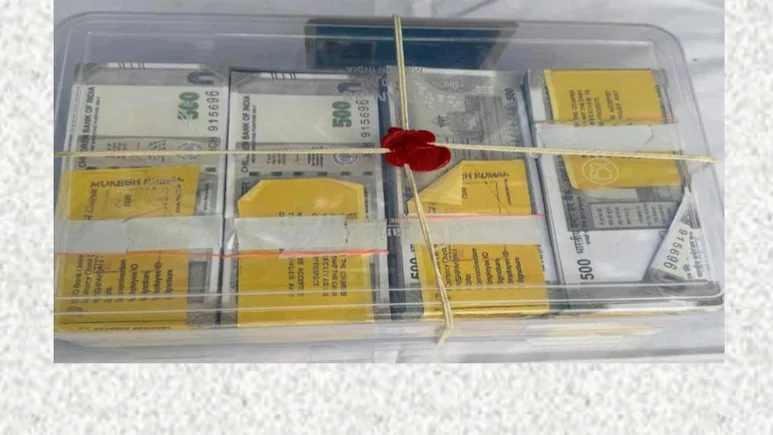
The following day, two couriers reportedly met the trader’s relatives near Shak Market in Unjha and handed over a bag containing eight bundles of currency notes. The bundles had genuine banknotes placed on the outer layers, making them appear authentic at first glance.
Believing the money had arrived safely, the family informed its contact in Nagpur, who then released ₹40 lakh in real cash to an associate of the suspected gang.
The deception came to light only after the bundles were opened more carefully. The genuine notes on the outside concealed stacks of imitation currency marked with names such as “Children Bank of India” and “Indian Entertainment Bank.”
By then, the fraudsters had allegedly obtained the real money, leaving the trader’s family facing a substantial financial loss.
Family Plans a Counter-Sting
Rather than allowing the suspected criminals to disappear, the family decided to use the same method to draw them into another transaction.
This time, they posed as customers seeking to transfer ₹10 lakh from Ahmedabad to Karnataka. The suspects reportedly agreed to the proposed deal and promised delivery within 24 hours.
The family then contacted Ghatlodia police inspector PJ Pandya on the night of November 19 and shared details of the planned exchange.
Police personnel prepared an ambush near the Parasnagar petrol pump in Ahmedabad. When two couriers arrived carrying bundles of cash, officers moved in and arrested them.
A coordinated operation in Karnataka also led to the detention of a third suspected operative who was allegedly waiting to collect the genuine cash payment.
Two Couriers Arrested, Delhi Links Under Investigation
The two men arrested in Ahmedabad were identified as Rahul Singh Thakur, 23, a resident of Delhi, and Malchand Sharma, 30, from Bikaner, Rajasthan.
According to Assistant Commissioner of Police AV Parmar, the suspects were carrying 17 bundles containing 1,666 counterfeit ₹500 notes bearing the names of imitation banks.
Investigators suspect the operation was managed by a network based in Delhi, with couriers travelling between states to deliver the fake currency. The couriers allegedly received ₹5,000 per trip, while the principal operators collected the real money.
Police have registered a case under the Bharatiya Nyaya Sanhita. A third suspect detained in Karnataka was expected to be brought to Ahmedabad for questioning.
Authorities are also searching for three alleged accomplices identified as Gajanan Sharma, Dhanraj and Varun, while efforts continue to identify the suspected masterminds.
Warning for Traders Using Informal Money Transfers
The case highlights the risks associated with unverified cash-transfer arrangements, particularly when large sums are involved. Fraudsters can exploit the appearance of legitimate currency, the urgency of business transactions and the promise of lower commissions to deceive unsuspecting customers.
Traders and businesses are advised to verify service providers carefully, avoid handing over money to unknown intermediaries and use regulated banking channels wherever possible.
For the Gujarat family, the counter-sting has resulted in arrests and given investigators an opportunity to pursue the wider network. However, the full extent of the alleged operation and the prospects of recovering the original ₹40 lakh remain matters for the ongoing investigation.