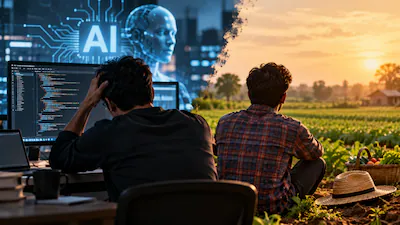
A software engineer with nearly a decade of professional experience has sparked an online discussion after expressing doubts about the future of traditional technology jobs amid rapid advances in artificial intelligence (AI). The engineer said the pace of change had become exhausting and revealed that he was seriously considering farming or growing his own food instead of continuing to work in software development.
The post, shared on a technology-focused online community, reflects growing concerns among some professionals about how increasingly capable AI tools could reshape programming, software architecture and long-term career prospects.
The engineer questioned whether conventional technology roles would remain widely available over the next five to ten years, arguing that the industry was changing faster than many workers could comfortably adapt.
Rapid AI Advances Raise Concerns About Job Security
In his post, the engineer described feeling overwhelmed by the speed at which AI capabilities were improving. He said that keeping up with new developments had become increasingly difficult and that he was no longer confident in some of the assumptions he previously held about the future of software engineering.
He explained that he had once believed AI could assist with writing code but would struggle with more complex responsibilities, such as designing systems and making architectural decisions. In his view, recent advances had challenged that distinction.
The engineer said modern AI tools could now handle some system-design tasks effectively, leading him to question how much of the work traditionally performed by experienced developers might eventually be automated.
His concerns extend beyond coding itself. He also questioned the long-term value of building websites, developing games and launching software-as-a-service products if AI systems become capable of completing an increasing share of the work.
Why Experienced Developers Are Rethinking Their Careers
The discussion highlights a broader debate about AI's potential impact on the technology workforce. Software developers have traditionally relied on technical expertise accumulated over years of education and professional experience.
AI coding assistants can now help with generating code, debugging, documentation and certain planning tasks. As these tools become more capable, employers may reconsider how software teams are organised and which skills they prioritise.
However, the effect on employment is not yet settled. AI adoption may reduce demand for some tasks while creating new responsibilities involving system oversight, security, integration, testing and the management of AI-generated output.
The engineer's post represents one individual's assessment of these changes rather than proof that software engineering jobs will disappear within a specific timeframe.
Farming Emerges as an Alternative to Technology Work
One of the most striking aspects of the post was the engineer's consideration of farming and growing his own food. He presented the idea as an alternative to the uncertainty and constant technological change he associates with software development.
The suggestion resonated with online readers because it reflects a desire among some professionals to reconsider how they work and what they want from their careers.
Farming, however, comes with its own challenges, including weather uncertainty, crop diseases, fluctuating market prices, physical labour and the cost of equipment and agricultural inputs. Moving from a salaried technology job to agriculture would therefore involve a different set of financial and practical risks.
The post did not establish that the engineer had already left his profession or committed to a farming career. Rather, it described a possibility he was considering as he reassessed his future.
Online Discussion Reflects Wider Uncertainty About AI
The post prompted renewed discussion about whether experienced professionals should continue adapting to AI tools or explore alternative career paths.
Some of the broader debate centres on the difference between automating individual tasks and eliminating entire occupations. While AI can increasingly perform specific programming activities, software development also involves understanding business requirements, coordinating teams, managing risks and maintaining complex systems over time.
The extent to which these responsibilities will change remains uncertain and is likely to vary across companies and industries.
The Future of Software Engineering Remains Uncertain
The engineer's experience illustrates the anxiety that rapid technological progress can create, even among people with substantial professional experience. His consideration of farming reflects a personal response to uncertainty rather than a definitive prediction about the entire industry.
As businesses continue integrating AI into their operations, the technology sector will likely undergo further changes in job responsibilities, hiring practices and the skills employers value.
For now, the discussion highlights a central question facing technology professionals: how to adapt to increasingly capable AI systems while maintaining confidence in their long-term career prospects.