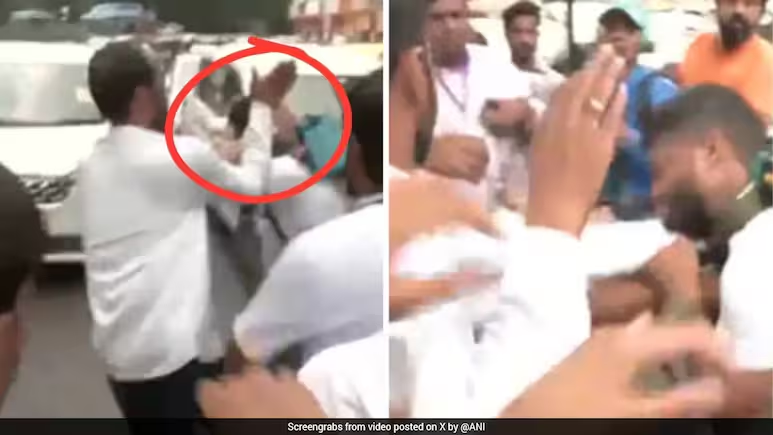
The INDIA bloc has intensified its campaign against Chief Election Commissioner Gyanesh Kumar, with opposition leaders continuing demonstrations in New Delhi and demanding accountability over alleged irregularities in electoral roll revisions. The protests have brought the functioning of the Election Commission, voter rights and the independence of constitutional institutions into the centre of a growing political confrontation.
Led by Congress leaders Rahul Gandhi and Mallikarjun Kharge, opposition parties have called for Kumar's resignation and raised concerns about the Special Intensive Revision (SIR) of electoral rolls. The alliance has indicated that its campaign will continue as it seeks answers from the election authorities.
Opposition Leaders Continue Their Demonstration
The latest phase of the INDIA bloc protest follows several days of demonstrations around central Delhi. Opposition MPs previously attempted to approach the Election Commission's headquarters but were stopped by police barricades and detained during the confrontation.
Rahul Gandhi, Congress general secretary Priyanka Gandhi Vadra and other opposition lawmakers participated in the demonstrations. On October 6, protesters staged a sit-in near the election authority's offices, seeking an opportunity to meet election officials and present their concerns.
The following day, opposition leaders returned to the streets, with Congress president Mallikarjun Kharge reiterating that the alliance would not abandon its demands. Several lawmakers were detained during the protests and subsequently released.
On October 8, opposition representatives gathered again to discuss their next steps. The continuing demonstrations have highlighted the alliance's intention to keep electoral transparency and voter access on the national political agenda.
Dispute Centres on Electoral Roll Revision
At the heart of the confrontation is the Special Intensive Revision of electoral rolls, a process intended to review and update voter registration records.
Opposition parties have questioned the implementation of the exercise and alleged that irregularities could affect eligible voters' rights. They have also raised concerns about the Election Commission's impartiality, arguing that the process requires greater transparency and accountability.
The Election Commission and the ruling Bharatiya Janata Party have rejected allegations of wrongdoing. The dispute has consequently developed into a broader political argument over the credibility of electoral administration and the safeguards needed to protect democratic participation.
The opposition's demand for Gyanesh Kumar's resignation reflects its position that the controversy requires a clear institutional response. However, the allegations remain contested, and claims of electoral manipulation should not be treated as established facts without supporting evidence.
Police Restrictions Add to Political Tensions
Police intervention has become another major issue surrounding the demonstrations. Security personnel blocked several protest routes and detained lawmakers during attempts to gather near restricted locations.
Authorities have cited applicable rules governing public demonstrations and the need to manage gatherings in the capital. Delhi Police has also emphasised that protests at designated locations, including Jantar Mantar, require advance permission.
The restrictions have prompted questions from opposition leaders about their ability to conduct peaceful demonstrations. The situation illustrates the challenge of balancing public order requirements with the right to assemble and express political dissent.
What Happens Next?
The INDIA bloc's next steps are expected to depend on discussions among its constituent parties and the response from the Election Commission. Opposition leaders have signalled their determination to continue pressing for electoral transparency and accountability.
The dispute also carries wider implications for public confidence in India's electoral system. Accurate voter lists, accessible registration procedures and transparent decision-making are essential to ensuring that eligible citizens can exercise their voting rights.
Whether the continuing protests lead to formal discussions with election officials or further political confrontation remains uncertain. For now, the demand for Gyanesh Kumar's resignation and the controversy surrounding voter roll revisions continue to shape the opposition's campaign in New Delhi.