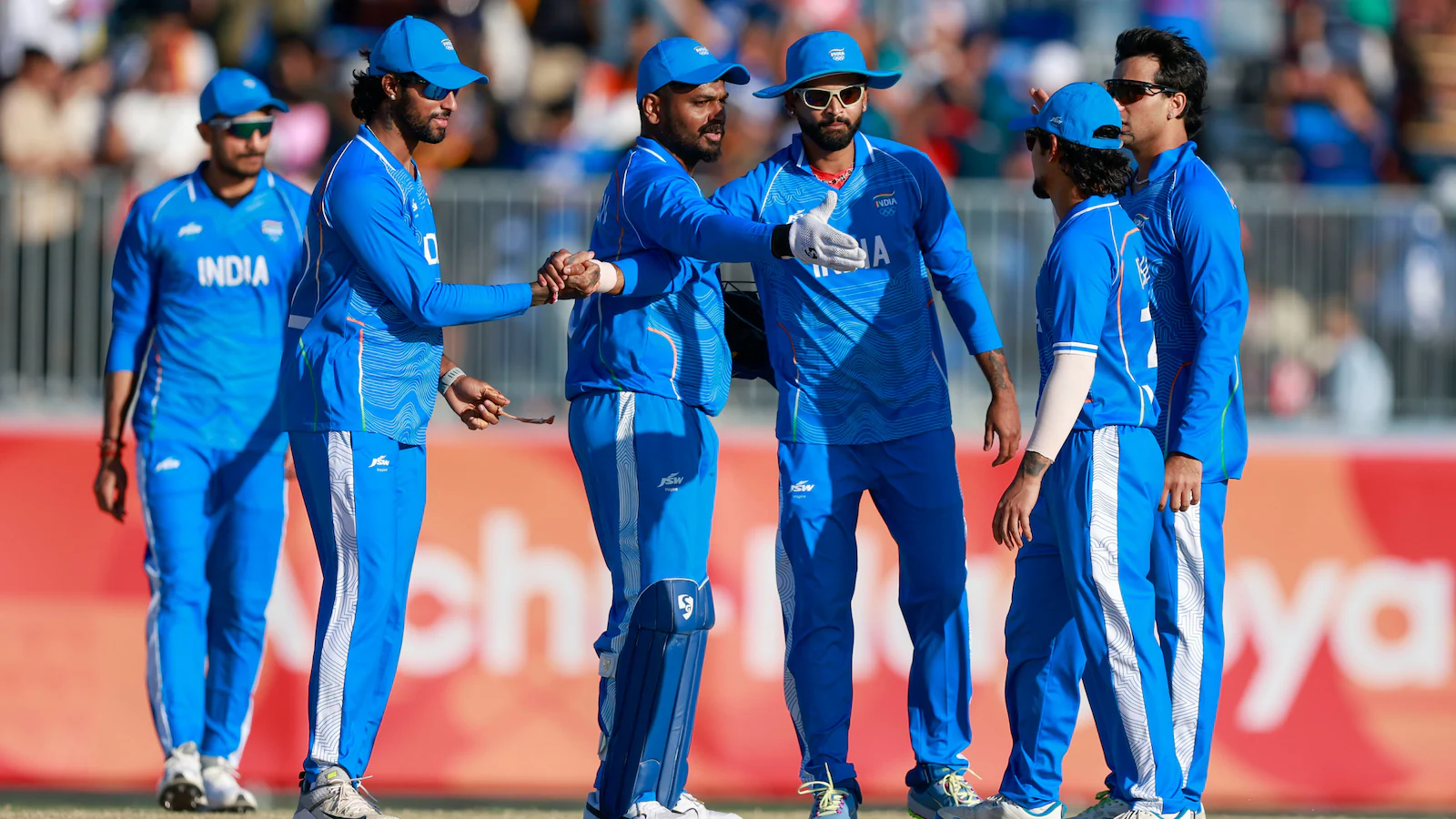
The Asian Games 2026 cricket tournament is heading towards a high-profile conclusion as India prepares to face Pakistan in the men's gold medal final on October 3 in Nisshin, Japan. While both teams will compete for the continental title, attention has also shifted towards an issue beyond the cricket field: whether players from the two sides will exchange customary handshakes.
The question has gained importance following recent India-Pakistan encounters in international cricket, where traditional pre-match and post-match greetings were notably absent. With the two teams now meeting in an Asian Games final organised under the Olympic Council of Asia, the situation presents a different sporting environment.
How India Secured Its Place in the Final
India booked its place in the championship match after delivering a commanding performance against Sri Lanka in the semifinal.
Led by a strong batting display from Ishan Kishan, India registered a 124-run victory. The result demonstrated the team's ability to perform under pressure and maintain momentum during the knockout stage.
Pakistan also secured its final position after defeating Bangladesh in the other semifinal. The team displayed a strong bowling performance before completing the chase to confirm its place in the gold medal contest.
The upcoming match will therefore bring two of Asia's leading cricket teams together for another important international encounter.
Why the Handshake Question Has Become Important
India's recent cricketing interactions with Pakistan have been influenced by the political and diplomatic tensions between the two countries.
Following Operation Sindoor last year, Indian cricketers avoided customary handshakes with Pakistani players during several Asia Cup and ICC events. The approach was viewed as a gesture of solidarity with the Indian armed forces.
However, the Asian Games operate under the Olympic Council of Asia, raising questions about whether the same approach will continue in this tournament.
Neither the Olympic Council of Asia nor the International Olympic Committee makes handshakes compulsory under a specific competition rule. Nevertheless, respectful interaction between competing athletes remains an established sporting tradition.
BCCI's Decision Could Determine the Protocol
The final approach regarding the handshake is expected to receive attention from the Board of Control for Cricket in India.
BCCI secretary Devajit Saikia is expected to be present in Japan for the final and is likely to be involved in discussions regarding the team's approach.
ICC chairman Jay Shah is also expected to attend the match.
However, no final public confirmation regarding the handshake arrangement had emerged ahead of the scheduled contest.
Other Indian Athletes Have Followed Different Sporting Practices
Interestingly, Indian athletes competing against Pakistani opponents in other Asian Games disciplines have continued customary sporting interactions.
Players from India and Pakistan have exchanged handshakes in events such as table tennis and squash.
This difference highlights how sporting protocols can vary between teams, disciplines and individual circumstances.
The issue also brings attention to the broader relationship between international sportsmanship and national sentiments.
A Shared Medal Ceremony Adds Another Dimension
Regardless of the result, both teams will have to participate in the medal ceremony if they finish as gold and silver medallists.
This creates another important moment beyond the final itself, as players from both countries will occupy the podium during the closing presentation.
India's women's cricket team had previously shared the medal podium with athletes from Pakistan during the ongoing tournament.
Conclusion
The India-Pakistan Asian Games 2026 final promises to be significant both competitively and symbolically. While the gold medal remains the primary objective for both teams, the handshake question has added another layer of attention to the encounter.
Whether players follow the traditional greeting or maintain the approach seen in recent cricket tournaments remains uncertain.
Ultimately, the match will be remembered for its sporting outcome, while the teams' conduct before and after the game will remain an important part of the discussion.