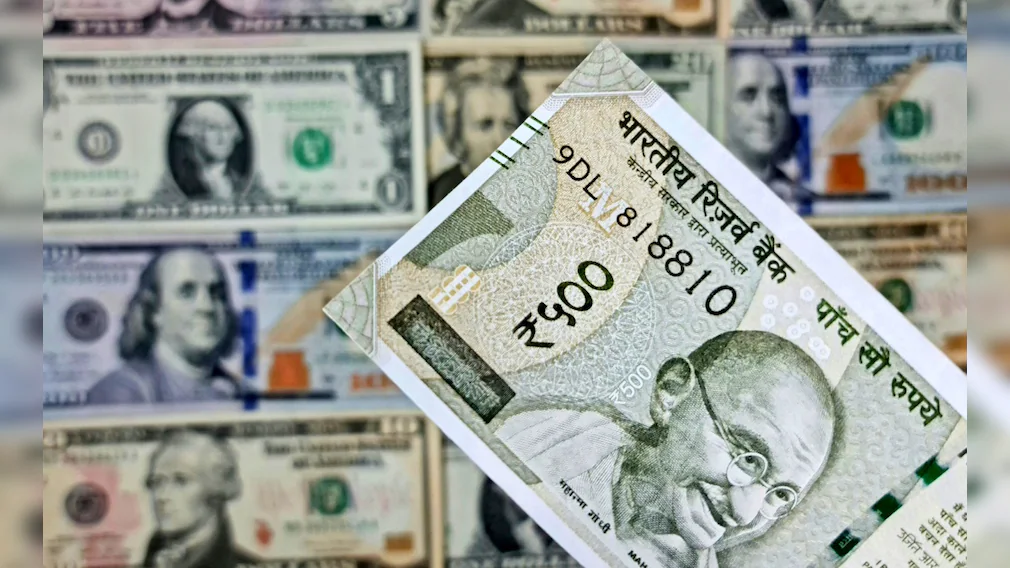
India's foreign exchange reserves recorded a sharp weekly decline of $18.34 billion, drawing attention to the pressures facing the country's external accounts and the Reserve Bank of India's currency-management strategy.
The size of the movement has raised questions about the reasons behind the fall, particularly whether it reflects active intervention in the foreign exchange market, changes in the dollar value of reserve assets, or a combination of several factors.
A Reserve Decline Does Not Equal RBI Dollar Sales
The headline figure requires some context. India's reserves include foreign-currency assets held in different currencies as well as gold. When the value of these assets changes against the US dollar, the reported reserve total can move even without an equivalent amount of buying or selling by the central bank.
That means the $18.34 billion decline should not automatically be interpreted as the Reserve Bank of India having sold exactly that amount of foreign currency to support the rupee.
The composition of the decline is therefore important when assessing the underlying pressure on India's external position.
Why India's External Accounts Matter
India's merchandise trade deficit remains an important factor in the country's demand for foreign currency. The import bill is particularly sensitive to products such as crude oil, fertilisers and electronic components.
At the same time, India receives substantial foreign exchange through services exports and remittances. These inflows have traditionally helped offset part of the pressure created by the goods trade deficit.
However, these sources of foreign currency are not completely insulated from the global economy. A slowdown in technology spending or weaker employment conditions in major economies could affect services exports and remittance growth.
Foreign Investor Flows Can Add Pressure
Capital flows provide another variable. Foreign portfolio investors can quickly change their exposure to emerging markets when global economic or financial conditions shift.
If foreign investment inflows weaken at the same time that importers need more dollars, demand and supply in the currency market can move in an unfavourable direction.
Businesses can also respond to expectations about future currency movements. Importers may bring forward dollar purchases, while exporters could delay converting foreign earnings. Such behaviour can amplify pressure that initially came from a relatively small shock.
RBI Faces a Difficult Balancing Act
Foreign exchange reserves give the central bank an important tool for reducing excessive volatility in the rupee. By entering the currency market when conditions become disorderly, the RBI can help smooth sudden movements.
But intervention also affects domestic liquidity. When the central bank sells dollars in exchange for rupees, liquidity can be withdrawn from the banking system. The RBI can subsequently use other monetary instruments to offset that impact, a process commonly known as sterilisation.
This creates a policy balancing act involving currency stability, domestic liquidity, interest rates and capital flows.
The Reserve Number Has Its Limitations
Headline reserves are an important indicator, but they do not provide a complete picture of India's foreign exchange position.
Forward transactions, for example, can create future foreign-currency obligations without immediately appearing as a comparable reduction in the headline reserve figure. Assessing external strength therefore requires looking beyond the headline weekly number.
The speed at which pressure develops can also matter. A country with a large reserve cushion can still face difficult choices if foreign-currency demand remains elevated for an extended period.
What India Needs in the Longer Term
The longer-term solution to external pressure is broader than currency-market intervention. A stronger external position would depend on diversified exports, greater domestic production of important intermediate goods and reduced vulnerability to energy-price shocks.
A more resilient economy would also be less dependent on capital inflows that can reverse quickly when international financial conditions deteriorate.
The recent reserve movement therefore needs to be viewed in context. A single week's decline does not by itself establish a structural crisis. Its significance will depend on what caused the fall and whether the underlying pressures persist.
For India, foreign exchange reserves function as an economic buffer during periods of global uncertainty. The key issue is whether that buffer is being used to absorb a temporary shock or whether persistent external pressures point to vulnerabilities that require longer-term policy changes.