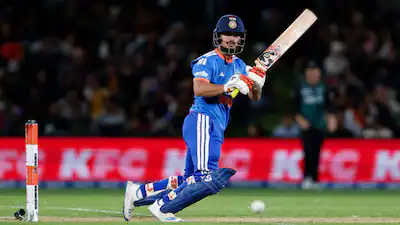
India have suffered a setback ahead of the second T20 International against New Zealand, with wicketkeeper-batter Ishan Kishan ruled out of the match because of a right adductor strain. The injury occurred during the opening game of the five-match series, prompting the team management to reassess its batting combination before Saturday’s contest.
The Board of Control for Cricket in India (BCCI) confirmed Kishan’s absence on October 23, adding that its medical team was monitoring his recovery. The announcement leaves India without one of their attacking batting options for the second match, scheduled to take place in Christchurch on October 24.
What Happened to Ishan Kishan?
Kishan sustained a low-grade strain in his right adductor during the first T20I against New Zealand on October 22. The adductor muscles are located on the inner side of the thigh and play an important role in movements such as running and changing direction.
The injury affected India’s plans during the series opener, when the team adjusted its batting order. Tilak Varma was promoted to No. 3, while other players were moved into different positions to accommodate the situation.
The BCCI has not announced a definite recovery timeline for Kishan. His progress will continue to be assessed by the medical staff, leaving his availability for subsequent matches dependent on his recovery and fitness.
India Look at Replacement Options
With Kishan unavailable, India must decide how best to structure their playing XI for the second match. Teenage batter Vaibhav Sooryavanshi has emerged as one of the leading candidates for a place in the side.
Sooryavanshi was included in the squad for the New Zealand series but did not feature in the opening T20I. His possible return would give India another aggressive batting option, although the final team selection will depend on the management’s assessment of the conditions and the overall balance of the side.
The youngster has attracted attention for his attacking approach in the shortest format. An opportunity against New Zealand would provide him with another chance to demonstrate his ability at the international level.
However, his inclusion should not be considered confirmed until the team announces its playing XI.
India Aim to Extend Their Series Lead
India entered the second T20I with a 1-0 advantage after winning the opening match by four wickets. The series opener featured a successful chase of a challenging target, giving the team early momentum in the five-match contest.
The second match will be played at Hagley Oval in Christchurch, where India will aim to build on that result. New Zealand, meanwhile, will be looking to level the series on home soil.
Kishan’s absence creates a selection challenge, particularly because he offers an attacking option in the batting order. India will need to decide whether to bring in a direct replacement or make a broader adjustment to their lineup.
How the Injury Could Affect India’s Batting Order
Kishan’s unavailability may influence India’s approach at the top of the order and in the middle overs. The team has several batting options, but the final combination will need to balance aggression with stability.
Sooryavanshi’s potential inclusion would add a young player capable of taking on bowlers early in the innings. Alternatively, India could consider another combination depending on the role required and the conditions in Christchurch.
The management will also need to monitor the workload and fitness of its available players as the team moves through a demanding international schedule.
What Comes Next?
India will look to maintain their advantage when the second T20I begins on October 24. The immediate priority will be settling the batting order and ensuring the team has enough depth to handle New Zealand’s bowling attack.
For Kishan, attention now turns to recovery and the medical team’s assessment of his fitness. With no confirmed return date announced, India will have to manage the next match without him and wait for further updates on his condition.