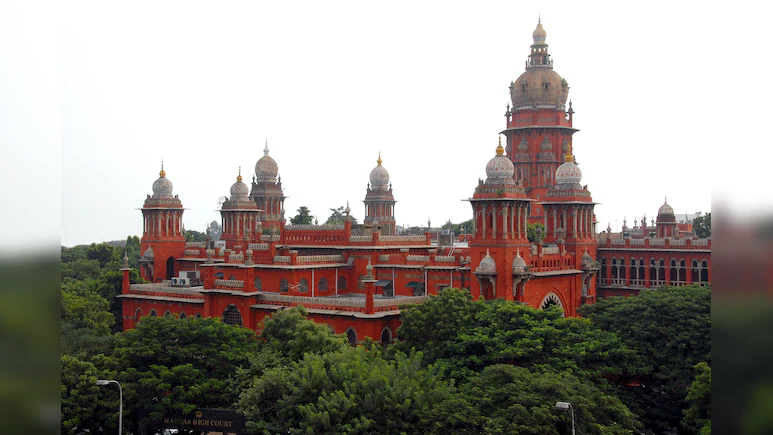
The Madras High Court has questioned the Tamil Nadu government’s decision to abandon the proposed Parandur greenfield airport near Chennai after substantial public expenditure and land acquisition had already taken place. The court asked why the project was being discontinued after authorities had conducted feasibility studies and obtained approvals.
A Division Bench comprising Chief Justice S.A. Dharmadhikari and Justice G. Arul Murugan was hearing a public interest litigation (PIL) challenging the state government’s decision. The judges directed the Tamil Nadu government and relevant central authorities to respond to the petition and scheduled the next hearing after four weeks.
The proposed airport, estimated to cost approximately ₹27,400 crore, was intended to serve as Chennai’s second airport and ease pressure on the existing facility at Meenambakkam.
₹680 Crore Spent and More Than 1,700 Acres Acquired
During the hearing, the petitioner’s counsel informed the court that approximately ₹680 crore had already been spent on acquiring around 1,700 acres of land for the project.
The Parandur airport proposal had progressed through several stages of planning and approval. Following feasibility assessments of multiple locations, Parandur was selected as the preferred site for the new airport.
In October 2023, the Tamil Nadu government approved the acquisition of approximately 2,325 hectares across Parandur and surrounding villages in Kancheepuram district.
The project was expected to address the growing demand for air travel as Chennai’s existing airport approached capacity constraints. The petitioner argued that abandoning the project after such extensive preparation and expenditure required a detailed explanation supported by technical and economic assessments.
The court questioned why concerns about the proposed site had not been resolved during the original feasibility process.
State Government Cites Water Bodies and Agricultural Land
Representing the Tamil Nadu government, Advocate General Vijay Narayan explained that the decision to discontinue the project was driven by concerns about the land required for construction.
The proposed airport would require approximately 5,368 acres, much of which the government said involved agricultural land and water bodies. Authorities were concerned that these conditions could make environmental clearance difficult to obtain.
The government maintained that discontinuing the project was a policy decision intended to protect farmers’ livelihoods and preserve water resources.
The court, however, questioned whether these issues should not have been adequately examined before the project received approval and land acquisition began.
The dispute therefore centres on whether the government provided sufficient justification for reversing an infrastructure decision after significant public resources had already been committed.
PIL Challenges Decision as Arbitrary and Unconstitutional
The petition was filed by Chennai-based software consultant and publisher G. Gouthaman, who argued that the decision to scrap the airport project was arbitrary and violated Article 14 of the Constitution, which guarantees equality before the law.
The petitioner contended that the government had not placed adequate technical data, expert committee findings or comparative economic assessments on record to justify abandoning the project.
He has asked the court to declare the decision unconstitutional and direct the government to reconsider the matter using updated technical assessments and expert advice.
The petition also seeks an interim stay on the implementation of the decision and restrictions on returning, transferring or reallocating the acquired land while the case remains pending.
The court has issued notices to the Tamil Nadu government, the Tamil Nadu Industrial Development Corporation (TIDCO), the Union Ministry of Civil Aviation and the Airports Authority of India (AAI).
No final ruling has been delivered on the legality of the government's decision.
Political Dispute Over Chennai’s Second Airport
The Parandur airport proposal has been politically contentious because of opposition from farmers concerned about the impact on agricultural land, water bodies and local livelihoods.
Chief Minister C. Joseph Vijay announced the decision to discontinue the project in the Tamil Nadu Assembly on August 24, 2026, fulfilling an election commitment to residents opposing the development.
The opposition has criticised the move, arguing that abandoning the project could undermine employment opportunities, industrial expansion and Chennai’s long-term aviation capacity.
The state government, meanwhile, has indicated that alternative locations with less impact on agricultural land could be considered. Plans to expand the existing Chennai airport are also part of the broader effort to address rising passenger demand.
What Happens Next?
The High Court’s intervention brings the decision to scrap the Parandur airport project under judicial scrutiny. The next stage will depend on the responses submitted by the state and central authorities and the evidence presented during the proceedings.
The central questions include whether the government adequately assessed the environmental and agricultural implications before approving the project, whether its subsequent decision was supported by sufficient evidence, and how the substantial expenditure and acquired land should be handled.
The case highlights the difficult balance between infrastructure development, environmental protection, farmers’ rights and responsible use of public funds.
For now, the High Court has sought explanations rather than ordered the airport project to resume. The ultimate outcome will depend on the legal arguments and supporting material presented in the coming hearings.