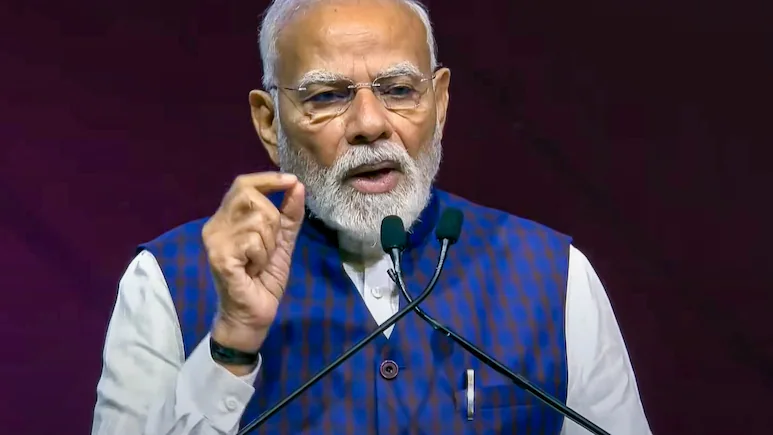
October 7, 2026, marks 25 years since Narendra Modi first assumed a constitutional leadership role as Gujarat’s Chief Minister. Over the past quarter-century, his political journey has expanded from state-level governance to the centre of India’s domestic policy and international engagement.
Modi took charge of Gujarat in October 2001, shortly after the devastating Bhuj earthquake. Reconstruction and infrastructure development became early priorities of his administration. Initiatives such as the Vibrant Gujarat investment summit and the Jyotigram power programme later became important parts of the state’s development narrative.
His political career entered a new phase in 2014, when he became Prime Minister. Since then, the government has pursued a combination of welfare delivery, infrastructure expansion, digital public services and economic reforms.
Digital Infrastructure Becomes a Major Focus
One of the most visible changes during this period has been the expansion of digital systems used to deliver public services. The Jan Dhan-Aadhaar-Mobile framework helped connect bank accounts, identity verification and mobile technology, enabling direct transfer of government benefits.
India’s digital payments ecosystem has also expanded dramatically, with the Unified Payments Interface becoming an important part of everyday transactions. The broader push toward digital public infrastructure has subsequently attracted international attention.
At the same time, government spending on infrastructure has increased substantially. Capital expenditure in the Union Budget has risen from around ₹2 lakh crore in 2014-15 to ₹12.2 lakh crore in the 2026-27 Budget, while highway construction has accelerated significantly compared with the pace recorded in 2013-14.
Manufacturing and Semiconductor Push
Another major element of the economic strategy has been the effort to strengthen domestic manufacturing. Semiconductors have emerged as a particularly important area, with India seeking to develop capabilities ranging from chip fabrication to design and electronics production.
The country had no commercial semiconductor fabrication plant in 2021. By 2026, several semiconductor projects had received government approval, reflecting the broader ambition to reduce dependence on overseas supply chains and establish India as a larger participant in the global technology industry.
A More Active Global Role
India’s foreign policy during Modi’s tenure has also placed greater emphasis on the country’s role in the Global South and on maintaining relationships with competing geopolitical blocs.
India’s presidency of the G20 in 2023 provided an opportunity to highlight issues affecting developing economies, while its BRICS chairmanship in 2026 has focused attention on cooperation among emerging and developing countries.
The government has also promoted initiatives intended to strengthen India’s role in regional security and development. Disaster-relief operations and assistance to neighbouring countries have become recurring elements of its external engagement.
Crisis Response and Evacuation Missions
Several overseas crises have tested India’s ability to respond quickly to emergencies involving its citizens. Operations including the evacuation of Indians from Afghanistan, Ukraine and Sudan demonstrated the importance of coordination between diplomatic missions, armed forces and government agencies.
India also expanded its international humanitarian outreach during the COVID-19 pandemic through the supply of vaccines to partner countries. These efforts were presented as part of a broader effort to position India as a reliable partner for developing nations.
What the 25-Year Journey Represents
The significance of Modi’s 25 years in public office extends beyond individual programmes. His tenure has been associated with an emphasis on large-scale infrastructure, digital governance, welfare delivery, manufacturing, technology and a more assertive international role.
Supporters point to the expansion of infrastructure and digital services, while debates continue over the effectiveness and wider social and economic consequences of various government policies.
As India looks toward its long-term development goals, the next phase will test whether the systems and investments created during these years can translate into sustained economic growth, employment and improved living standards.
The 25-year milestone therefore provides an opportunity to examine not only Narendra Modi’s political longevity but also how India’s governing priorities and global ambitions have evolved during this period.