India’s National Investigation Agency (NIA) has sought assistance from the United Arab Emirates (UAE) to investigate the alleged mid-air attack on Flydubai pilot Smit Machchhar, including possible Indian connections of the Omani first officer accused of stabbing him inside the aircraft’s cockpit.
The anti-terror agency has requested relevant documents from the UAE and permission to question certain individuals there. Investigators are awaiting a response before proceeding with the next stage of their inquiry, NIA Director General Rakesh Aggarwal said on November 20, 2026.
The investigation is focused on determining whether the incident was part of a larger conspiracy and whether the accused had connections in India through his education, personal relationships or other contacts.
NIA Seeks International Cooperation in Flydubai Attack Case
The NIA has submitted a request under the Mutual Legal Assistance Treaty (MLAT), a mechanism that allows countries to cooperate in criminal investigations by sharing evidence, documents and other relevant information.
Aggarwal said the agency would move forward after receiving the requested material and permission to examine individuals in the UAE.
The request represents an important step in the investigation because several aspects of the case involve people and events outside India's jurisdiction. Cooperation with UAE authorities could help investigators establish the accused's movements, contacts and possible links to other individuals.
The agency is also examining whether anyone connected to the accused may have played a role in the alleged attack or contributed to a wider criminal conspiracy.
Investigators Examine Accused Officer's Education and Contacts
One of the key areas under scrutiny is the educational background of the Omani first officer, identified in the investigation as Hamam al-Hammami.
According to the NIA chief, the officer may have studied in Australia or the United Kingdom. Investigators are seeking to establish whom he met during his time abroad and whether any individuals in his social or professional circle had connections to India.
The agency has indicated that it is still examining these possibilities and has not publicly established any Indian involvement in the alleged attack.
The inquiry is intended to determine whether the incident was an isolated act or whether other people may have been involved. Officials have not disclosed further details about the suspected motive or any possible network associated with the accused.
What Happened Aboard Flydubai Flight FZ1073?
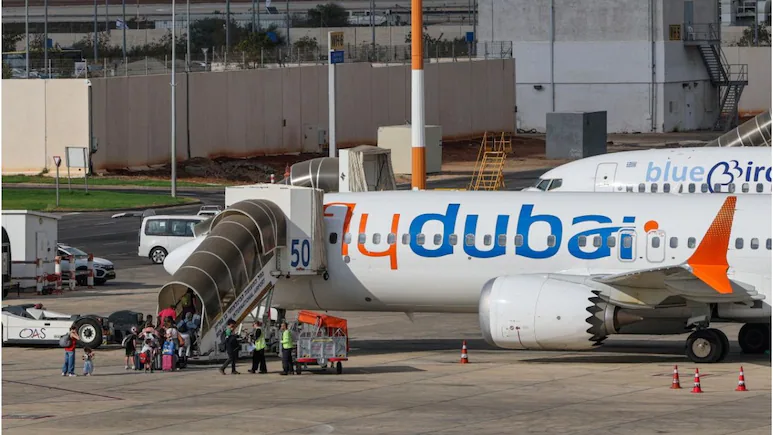
The incident took place on September 30, 2026, aboard Flydubai Flight FZ1073, which was travelling from Dubai to Tel Aviv with 174 passengers and six crew members.
According to the case details cited by investigators, the Omani first officer allegedly attacked Captain Smit Machchhar with a knife while the aircraft was flying near the Jordan-Saudi Arabia border. The attack reportedly occurred during an apparent attempt to hijack the plane or cause it to crash.
Machchhar suffered serious injuries, including deep cuts to his head and hands. Passengers and crew members reportedly helped restrain the accused, while other pilots aboard the aircraft took control.
The aircraft was subsequently diverted and landed safely at Prince Sultan bin Abdulaziz Airport in Tabuk, northwestern Saudi Arabia. Saudi authorities arrested the accused following the landing.
NIA Invokes Anti-Hijacking and Terrorism Laws
In October, the NIA registered a case to investigate the alleged attack and uncover any larger conspiracy behind it.
The agency invoked Section 3 of the Anti-Hijacking Act, 2016, along with Section 16 read with Section 15(1)(a) of the Unlawful Activities (Prevention) Act, 1967. These provisions address aircraft hijacking and terrorist acts.
The investigation is being pursued because an Indian citizen was among those directly affected by the incident, giving Indian authorities grounds to examine the matter under applicable law.
The NIA's latest request to the UAE reflects its effort to gather evidence across international jurisdictions. Investigators will need to assess the material obtained from foreign authorities before drawing conclusions about the accused's motive, potential associates or any wider conspiracy.
For now, the agency is awaiting the UAE's response. Whether the inquiry uncovers Indian connections or establishes that the attack was the work of a lone individual remains an open question.