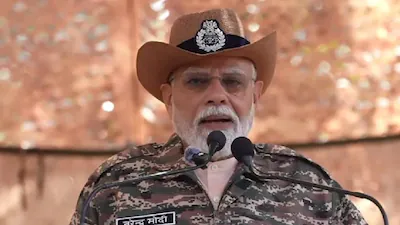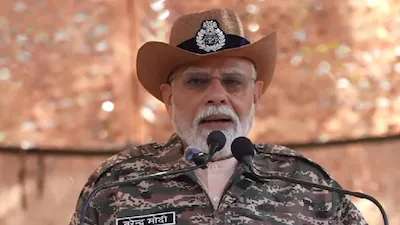
Prime Minister Narendra Modi on Sunday celebrated Diwali with security personnel in Chhattisgarh’s Bastar region, paying tribute to their sacrifices in the decades-long fight against Naxalism. He said security forces had helped people in previously insurgency-affected areas overcome fear and participate more freely in democratic processes.
Addressing personnel deployed in the region on November 8, 2026, Modi described the occasion as particularly significant, arguing that the country had reached a major milestone in its campaign against Maoist violence. He credited the courage and commitment of security personnel with helping restore peace and creating opportunities for development in areas once affected by insurgency.
PM Modi Highlights the Return of Democratic Participation
Modi’s remarks focused on the transformation of Bastar, where Naxal violence had affected everyday life for decades. Insurgent groups have historically used threats and intimidation to discourage residents from cooperating with authorities and participating in elections.
The Prime Minister highlighted the importance of restoring public confidence, suggesting that improved security had enabled people to exercise their democratic rights without the same level of fear.
For communities that experienced violence, intimidation and disrupted public services, the ability to participate in elections represents an important aspect of restoring normalcy. Security operations, stronger administrative presence and improved connectivity have been central to the government's efforts to re-establish state institutions in affected areas.
Security Forces Praised for Their Sacrifices
During his address, Modi expressed gratitude to personnel serving in challenging conditions across the country, particularly those involved in counter-insurgency operations in central India.
He credited the Central Reserve Police Force (CRPF), its specialised CoBRA units, the Border Security Force, the Indo-Tibetan Border Police, the Sashastra Seema Bal and state police personnel for their contributions. He also acknowledged the role of women personnel and specialised state-level units involved in operations against armed groups.
The Prime Minister recalled the heavy toll of the insurgency, including deadly attacks that claimed the lives of security personnel and civilians. He cited the 2010 Dantewada violence as an example of the dangers faced by those working to counter the Maoist movement.
According to Modi, sustained operations and stronger political resolve had significantly improved the security situation. He also highlighted the absence of CRPF personnel killed in action during the preceding year, describing it as a major achievement.
Bastar’s Changing Security and Development Landscape
Bastar has long been among the areas most affected by Maoist activity in Chhattisgarh. Over the years, insurgency disrupted infrastructure projects, limited access to public services and created serious security challenges for residents and government officials.
The government has increasingly combined security operations with development initiatives intended to improve living conditions and strengthen public institutions.
Road construction, mobile connectivity, education, healthcare and employment opportunities have become important parts of this approach. Improved infrastructure can help residents access essential services while allowing officials to reach remote settlements more effectively.
Modi said the progress made in Bastar demonstrated how stronger security could create conditions for development. He presented the region’s changing circumstances as an example of the broader transformation taking place in areas previously affected by Naxalism.
Political Will and the Fight Against Maoist Violence
The Prime Minister also criticised previous Congress-led governments, alleging that they had failed to confront Naxalism with sufficient determination. He argued that the response to the insurgency had become more decisive after his government came to power in 2014.
His comments placed the improvement in the security situation within a broader political argument about the effectiveness of the Centre’s counter-insurgency strategy.
The decline in Maoist activity has been attributed to several factors, including security operations, the surrender of armed cadres, disruption of insurgent networks and efforts to expand government services in remote areas.
However, the long-term challenge extends beyond reducing armed violence. Sustaining peace will also require continued development, public trust, access to justice and opportunities for communities that have lived through years of conflict.
A Call to Build on the Gains
Modi said the progress achieved against Naxalism should be treated as the beginning of a new phase rather than the conclusion of the government’s responsibilities. He urged security personnel to remain committed to protecting citizens while supporting conditions in which development could continue.
He also indicated that those who abandon violence should have an opportunity to return to the mainstream, while authorities would continue to act against individuals who threaten public safety.
The Prime Minister’s Diwali visit to Bastar underscored the government’s effort to recognise the contribution of security personnel and highlight the region’s changing circumstances. The lasting measure of success, however, will be whether improved security translates into durable peace, stronger democratic participation and better opportunities for the people living in formerly insurgency-affected areas.