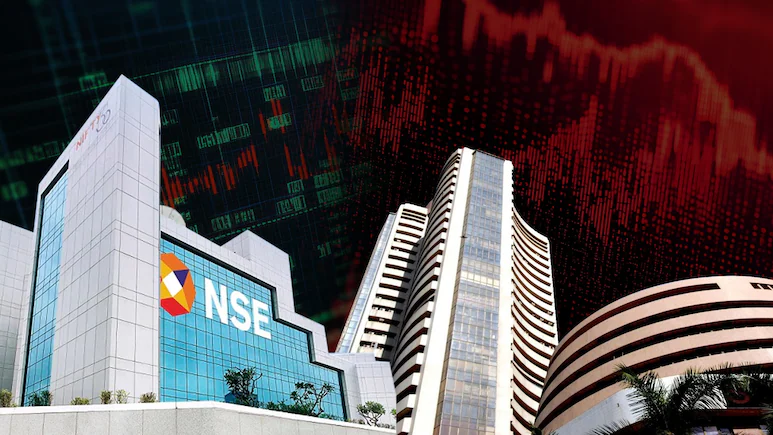
The recent weakness in India's stock market has brought investor behaviour under renewed scrutiny, particularly as concerns grow over financial losses from frequent trading. While falling share prices have created uncertainty among retail investors, fresh data from the Securities and Exchange Board of India (SEBI) highlights a larger challenge: participating in financial markets does not necessarily translate into wealth creation.
According to SEBI's latest findings for financial year 2025-26, nearly 87.7 per cent of individual traders dealing in equity derivatives recorded losses. Collectively, these traders lost approximately ₹91,685 crore during the period, with an average loss of around ₹1.17 lakh per trader.
The findings underline the risks associated with high-frequency trading and complex financial instruments, particularly for individuals without sufficient market knowledge.
SEBI Report Reveals Significant Losses in Derivatives Trading
One of the most concerning aspects of the report is the widespread losses experienced by individual traders despite a decline in active market participation.
The data indicates that approximately 87.7 per cent of retail participants in equity derivatives ended the financial year with negative returns.
Options trading accounted for nearly 92 per cent of the total losses recorded among individual traders.
These findings have renewed discussions around financial awareness, risk management and the importance of understanding investment products before entering the market.
Market volatility can create opportunities, but derivatives trading also involves considerable risks that may result in substantial financial losses.
SIP Investments Continue to Grow Despite Market Volatility
While derivatives traders have faced significant losses, India's mutual fund industry has continued to attract substantial retail participation.
According to industry data, monthly Systematic Investment Plan (SIP) contributions reached a record ₹32,297 crore in August 2026.
The number of contributing SIP accounts also crossed the 10-crore milestone, reaching approximately 10.02 crore.
Meanwhile, the mutual fund industry's total assets under management stood at ₹87.08 lakh crore at the end of August.
This growing participation suggests that more households are exploring structured investment methods instead of relying exclusively on short-term market movements.
However, SIP investments are also subject to market risks and do not guarantee profits or protection against losses.
Why Financial Planning Matters More During Market Corrections
Market declines often encourage investors to make quick decisions, including selling existing holdings or increasing trading activity in an attempt to recover losses.
Financial experts have repeatedly highlighted the importance of connecting investment decisions with long-term objectives rather than reacting to daily market movements.
For example, investments intended for retirement, education or purchasing property may require a different approach compared with short-term trading activities.
Maintaining diversification, understanding risk exposure and having a clearly defined financial plan can help investors evaluate their decisions more carefully.
The growing availability of digital trading platforms has made market participation easier, but accessibility alone cannot replace financial knowledge.
India's Investment Market Faces a New Challenge
SEBI's Investor Survey 2025 highlighted an important gap between financial awareness and actual participation.
The survey found that 63 per cent of Indian households were aware of at least one securities market product, while only 9.5 per cent participated in securities markets.
It also indicated that only 36 per cent of investors possessed moderate or high levels of securities market knowledge.
These findings suggest that India's next investment challenge extends beyond increasing participation. Improving financial literacy and helping individuals understand market risks will remain equally important.
Conclusion
The latest SEBI findings present two contrasting developments in India's financial landscape: substantial losses among individual derivatives traders and continued growth in systematic mutual fund investments.
As market uncertainty continues, the focus is increasingly shifting towards responsible financial behaviour, informed decisions and long-term financial planning.
Ultimately, successful investing is not measured by the number of trades executed but by how effectively financial decisions align with individual goals and risk tolerance.