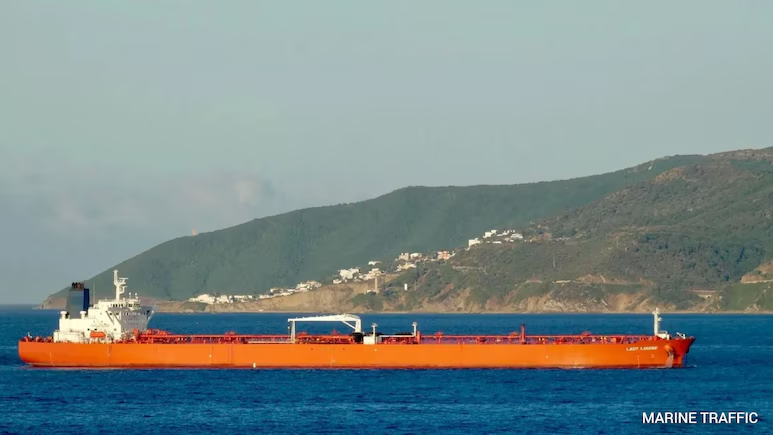
A Panama-flagged crude oil tanker carrying 27 Indian seafarers was struck by explosive devices in the Strait of Hormuz, triggering a fire in its engine room and temporarily disrupting the vessel's operations. The incident has heightened concerns over the safety of commercial shipping through one of the world's most important energy routes.
The tanker, identified as MT Louise 1, was targeted on October 30. According to maritime security information, two limpet mines were attached to the vessel's hull before detonating. The resulting explosions caused damage to the engine room and started a fire.
Union Minister for Ports, Shipping and Waterways Sarbananda Sonowal confirmed that all 27 Indian sailors aboard the tanker were safe and had suffered no injuries.
Crew Brings Engine-Room Fire Under Control
The explosions temporarily disabled the tanker, but its crew managed to extinguish the fire. No injuries or environmental damage were reported following the incident.
The United Kingdom Maritime Trade Operations (UKMTO), a maritime security agency, said the incident occurred approximately 25 nautical miles, or 46 kilometres, northeast of Khasab in Oman.
The vessel subsequently continued its voyage towards its next port of call. Maritime security sources identified the ship as MT Louise 1, although the initial UKMTO advisory did not disclose its name.
The incident is considered the first reported successful use of limpet mines against a vessel in the Strait of Hormuz since the US-Iran conflict began in February 2026.
Another Tanker Carrying Indian Nationals Targeted
The attack on MT Louise 1 came a day after another commercial vessel, the Liberia-flagged very large crude carrier MT Arzanah, was targeted by projectiles in the same strategic waterway.
The second vessel was carrying two Indian nationals. According to the shipping minister, both sailors were also safe and had sustained no injuries.
This means a total of 29 Indian seafarers aboard the two affected tankers were reported safe following the separate incidents on October 29 and 30.
Sonowal said the government was closely monitoring developments and coordinating with the ship management companies to ensure the continued safety and well-being of Indian crew members.
Responsibility for the Attack Remains Unclear
The identity of those responsible for the attack on MT Louise 1 has not been established. Maritime security sources said a small craft approached the tanker and attached two explosive devices to its hull before leaving the area.
The incident has taken place amid heightened tensions surrounding restrictions on commercial vessel movements through the Strait of Hormuz. The waterway has experienced repeated security incidents since hostilities between the United States and Iran escalated earlier in 2026.
Iran has accused some vessels of violating its transit restrictions, while commercial shipping operators continue to face uncertainty over safe passage.
A previous attempt involving similar explosive devices was reportedly made in September, but the devices failed to detonate, according to maritime security sources.
Strategic Importance of the Strait of Hormuz
The Strait of Hormuz connects the Persian Gulf with the Gulf of Oman and the Arabian Sea. It is a critical international shipping corridor through which substantial volumes of crude oil and other energy supplies are transported.
Any disruption in the waterway can affect shipping schedules, insurance costs and international energy markets. The latest incidents have therefore renewed concerns among shipping companies about the risks faced by vessels operating in the region.
For India, the safety of seafarers is a significant concern because Indian nationals form an important part of the global maritime workforce. The government said it would continue monitoring the situation and remain in contact with the companies managing the affected vessels.
Although all 29 Indian sailors were reported safe, the attacks underline the growing security challenges facing commercial shipping in the Strait of Hormuz.