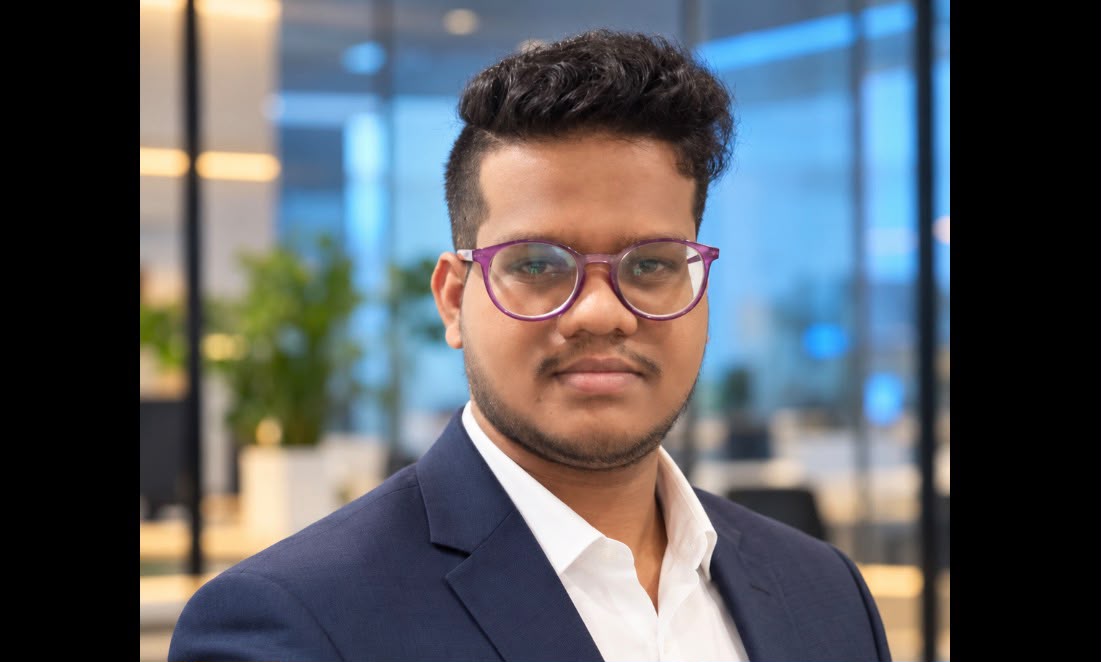
Ananya Mehta: You've spoken quite a bit about India's startup ecosystem, but your argument seems to go beyond the usual conversation around funding, valuations and unicorns. When you look at the ecosystem today, what do you think we're actually missing?
Pratham Tiwari: Builders. I don't mean that we don't have smart people. We obviously do. We have people who can analyse markets, write extremely good opinions, identify problems and tell you exactly why something is going to work or fail. But at some point, someone has to actually test the idea. That's where I think we need more people. Take the idea, build the first version, put it in front of someone and let reality tell you whether you're right. It doesn't need to be perfect. In fact, it probably shouldn't be.
Ananya: But isn't there a danger in glorifying action for its own sake? There is also a lot of value in thinking deeply before you build something.
Pratham: Of course. I'm not against thinking at all. Research matters. Strategy matters. Understanding a problem properly matters. What I'm against is when thinking becomes a comfortable substitute for doing. You can spend six months discussing an idea and still not know whether people will use it. Sometimes you have to build something just to discover what the actual question is. Reality gives you information that theory can't.
Ananya: One thing you've said that tends to make founders uncomfortable is that you don't think an idea has to be original to be worth building. Why are you so comfortable with that?
Pratham: Because I think we've made originality more important than it actually is. If somebody has built something that works, why would I automatically consider it a bad idea to build something similar? The world is full of successful companies operating in the same category. What matters is what you understand that they don't, what you can execute differently, who you can serve better or what you can make dramatically simpler. India has so many problems where a solution already exists somewhere in the world but hasn't been properly adapted here. There is nothing embarrassing about solving that problem.
Ananya: Some people would call that imitation rather than innovation.
Pratham: They can call it whatever they want. If the customer gets a better product, does the label really matter? I'd rather build something useful than something that sounds impressive when I explain it to an investor. Sometimes the most valuable innovation is not inventing a completely new category. It's taking something that already works and making it work for people who were previously left out.
Ananya: That idea of being left out brings us to technology accessibility. AI is becoming more capable almost every month, but for a lot of people it is also becoming more confusing. What bothers you about the way the industry communicates technology today?
Pratham: We sometimes make people feel stupid for not understanding technology that we haven't explained properly. That's backwards. Technology is supposed to reduce complexity. If someone needs to understand models, inference, APIs, agents and infrastructure before they can understand what an AI product actually does for them, we've created unnecessary friction. My test is pretty simple. Can I explain what this does to someone who has no technical background? If I can't, maybe the product is still too complicated.
Ananya: That's a high standard, especially for something as technically complex as AI. Do you think simplification can sometimes become oversimplification?
Pratham: Definitely. I'm not saying we should dumb technology down. That's actually the opposite of what I want. I want depth without gatekeeping. You can explain something simply without removing the complexity that matters. The best education does that. It gives you a simple entry point and then allows you to go deeper when you're ready. Technology should work the same way.
Ananya: So where do you think the next big opportunity sits? Is it still in building the underlying AI infrastructure, or somewhere further downstream?
Pratham: Both. We absolutely need people doing foundational work, and I don't think that gets enough attention. But there is also a huge opportunity between the technology and the person who actually needs to use it. That's what I mean by AI enablement. There are millions of businesses that know AI matters but don't know what to do with it. Telling them that AI is going to change everything isn't useful. Helping them figure out where it can actually save time, reduce costs, improve decisions or create new capabilities is useful.
Ananya: Can you give me an example of what you mean by that middle layer?
Pratham: Imagine a business with fifty employees that spends hundreds of hours every month on repetitive work. Maybe it's handling documents, researching leads, responding to routine customer queries or organising internal information. The technology to improve some of those processes already exists. The problem is that somebody still needs to understand the business, identify the right use cases, choose the right tools and implement them properly. That's enablement. It's not as flashy as announcing a new model, but if you do it across millions of businesses, the economic impact can be enormous.
Ananya: You seem less interested in AI as a standalone industry and more interested in what happens when AI starts becoming infrastructure for other industries.
Pratham: That's probably fair. I think the interesting question is what happens when AI stops being something people talk about and becomes something they simply use. A manufacturer becoming more efficient, a teacher getting better tools, a student being able to learn something that was previously inaccessible, a small business operating with capabilities that used to require a much larger team. That's when the technology starts changing the economy rather than just the technology industry.
Ananya: And where does India fit into that? We have the scale to become one of the world's biggest technology markets, but much of the foundational AI technology is being developed outside the country.
Pratham: We should use global technology. There's nothing wrong with that. But we shouldn't stop there. I don't want India to become a country that is extremely good at consuming technology built somewhere else. We have enough talent and enough problems to build for ourselves and for the rest of the world. That means startups, obviously, but it also means research institutions, universities, engineering teams, laboratories and companies working on difficult technical problems.
Ananya: You've mentioned research several times. Startup culture tends to reward speed and immediate commercial results. Research often works on completely different timelines. How do you reconcile those two worlds?
Pratham: We need both. A startup can move quickly because it has to. Research sometimes cannot. Some questions simply take years to answer. If every research project has to show a commercial outcome immediately, we're going to discourage people from working on the hardest problems. AI, robotics, energy, materials, computing, biology, these fields require patience. We should be willing to fund work where we don't know exactly what the commercial outcome will be. That's how foundational capabilities are created.
Ananya: Do you think India's current culture rewards that kind of patience?
Pratham: Not enough. We celebrate the launch much more than we celebrate the work that makes the launch possible. We celebrate the funding round, the valuation, the announcement. But some of the most important work is incredibly boring. Research, infrastructure, experimentation, documentation, testing. It doesn't always look exciting from the outside. But that's where a lot of the real progress happens.
Ananya: Let's talk about failure, because that's another part of your philosophy that seems quite deliberate. You're unusually comfortable saying that a founder might run out of money, shut down a company and go back to a regular job. Why?
Pratham: Because that's reality. Not every company is going to work. We need to stop pretending otherwise. If you spend two years trying to solve a difficult problem and it doesn't work, you've still learned something. Maybe you were wrong about the market. Maybe the product was wrong. Maybe the timing was wrong. Maybe you simply couldn't execute it. Those are all useful things to know. And if you need to get a job afterwards, get a job. There is no shame in rebuilding your financial position and trying again.
Ananya: But isn't that easier to say when you're young and have fewer responsibilities?
Pratham: It's definitely easier when you're young. That's actually why I think young people should take advantage of that period. You can take a risk, fail, change direction and try again. But I also don't think risk should mean being irresponsible. You should understand your downside. You should know what you're putting at stake. Taking a risk doesn't mean pretending consequences don't exist.
Ananya: You've also talked about being willing to look foolish. Is that really an important part of entrepreneurship, or does it just sound good in theory?
Pratham: I think it's very real. A lot of people don't start because they're afraid of what other people will say. They tell a friend about an idea, the friend laughs, and suddenly the idea feels embarrassing. But people are going to talk anyway. If you build, they'll talk. If you fail, they'll talk. If you succeed, they'll talk. You can't build your life around controlling other people's reactions. I'd rather be embarrassed because I tried something ambitious than comfortable because I never tried.
Ananya: What would you say to someone who has an idea but genuinely doesn't know whether it's worth pursuing?
Pratham: Don't try to answer that question entirely in your head. Build the smallest possible version and put it in front of real users. Not your friends who will tell you it's great. Real users. Watch what they do. Listen to what they complain about. See whether they come back. You don't need to know whether the company will be successful. You need enough confidence to run the first experiment. The market will tell you a lot more than speculation will.
Ananya: If we take everything you've said together, there seems to be a larger philosophy underneath it. You aren't really talking about startups alone. You're talking about how a country develops a culture of technological creation. Is that fair?
Pratham: Yes, that's probably the bigger point. I want to see more people who understand technology well enough to participate in creating it. More researchers. More engineers. More founders. More experimentation. More investment in difficult technical problems. More people building for global markets from India. And I want technology to become understandable enough that you don't need to be part of a particular professional class to use it. If only a small group understands how technology works, everyone else becomes dependent on that group. The more people who understand it, the more people can build with it.
Ananya: Then let me put the title of this conversation back to you. When you talk about a "million-dollar bet on the future of AI", what exactly are you betting on?
Pratham: Honestly, I'm not betting on one particular AI technology winning. I'm betting on what people are going to do with this technology. I'm betting that more young people will decide to build before they have certainty. That more founders will be willing to attempt difficult problems. That more businesses will move from talking about AI to actually using it. That more money will go into research. And that technology will become accessible enough for anyone willing to learn to participate. If that happens, India doesn't just become a consumer of the next technological revolution. We become one of the places helping build it.