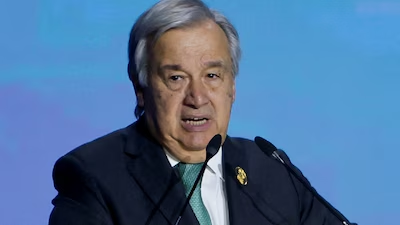
United Nations, October 3, 2026: United Nations Secretary-General António Guterres has called on the international community to draw inspiration from Mahatma Gandhi’s principles of peace, empathy and non-violence, saying they carry renewed importance at a time of growing global divisions, tensions and conflicts.
In his message for the International Day of Non-Violence, observed every year on October 2 to mark Gandhi’s birth anniversary, Guterres paid tribute to the Indian leader’s legacy and highlighted the importance of responding to injustice through dialogue rather than retaliation.
The UN chief said Gandhi demonstrated how lasting change could be achieved while remaining committed to peace. Instead of responding to cruelty with further violence, Gandhi advocated methods that promote understanding, protect human dignity and create opportunities for meaningful change.
Gandhi’s Principles in a Divided World
Guterres expressed concern about the challenges facing the international community, including rising tensions, poverty and inequality. He warned that these pressures are widening divisions between communities and weakening the foundations needed for peace and development.
He also stressed the importance of respecting the principles of the UN Charter, human rights, international law and diplomacy. According to his message, these principles are essential for resolving disputes and preventing further suffering.
The Secretary-General urged people to demonstrate courage, empathy and a shared sense of humanity, values closely associated with Gandhi’s public life and philosophy. He said genuine dialogue and diplomacy remain necessary to bridge divisions and build a more peaceful world.
International Day of Non-Violence Marks Gandhi’s Birth Anniversary
The International Day of Non-Violence is observed globally on October 2, the birth anniversary of Mahatma Gandhi. The United Nations established the observance to promote the message of non-violence through education and public awareness.
Gandhi’s approach to social and political change was rooted in truth, peaceful resistance and respect for human dignity. His philosophy influenced movements for civil rights and freedom in different parts of the world.
The annual observance provides an opportunity for governments, institutions and communities to reflect on how peaceful methods can address injustice and social divisions.
India Highlights Gandhi’s Continuing Global Influence
India’s Permanent Representative to the United Nations, Ambassador Parvathaneni Harish, also highlighted the continuing relevance of Gandhi’s ideas during commemorative discussions at the UN.
He connected the message of non-violence with the need for cooperation, trust and integrity in international affairs. He also referred to India’s proposed approach to its UN Security Council term for 2028–29, using the motto “SHANTI,” a Hindi word meaning peace.
The message comes as countries face overlapping challenges, including armed conflicts, inequality, climate-related pressures and declining trust between societies. Gandhi’s principles, as highlighted by the UN leadership, offer a framework for considering how disagreements can be addressed without abandoning human dignity.
Guterres’ appeal places renewed attention on the role of dialogue and diplomacy in international relations. It also underlines that non-violence is not limited to commemorative events but can influence everyday decisions, public institutions and efforts to resolve disputes.
As the world marks Gandhi’s legacy, the UN chief’s message is a reminder that peace requires more than the absence of conflict. It depends on respect, justice, cooperation and a willingness to understand others—even during periods of deep disagreement.