
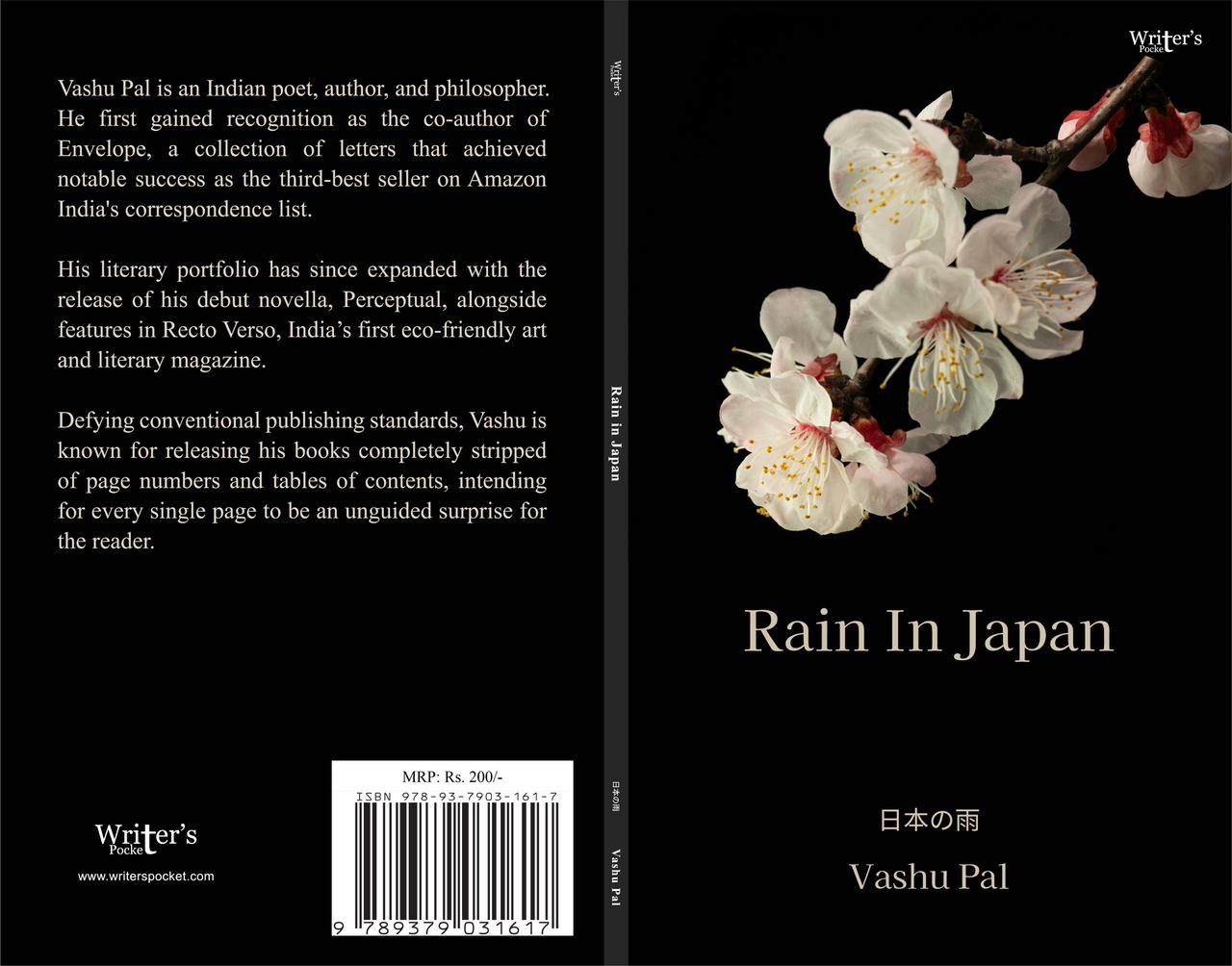
A Contemporary Voice Shaped by Readers and Experimentation
Contemporary poetry is increasingly finding new ways to speak to readers who seek intimacy, reflection and experimentation beyond conventional literary forms. Vashu Pal, an Indian author and poet, is developing a distinctive place within this evolving space through work that brings together lyrical language, visual design, philosophy and emotional inquiry. His journey reflects a growing interest among readers’ circles in poetry that does not simply describe an emotion, but creates an environment in which the reader can experience it.
From Literary Recognition to a Distinctive Poetic Voice
Pal’s literary journey has already included notable recognition. He has been featured in Recto Verso, described as India’s first eco-friendly art and literary magazine. He is also a co-author of Envelope, a title recognized as the third bestselling title on Amazon India in the Letters & Correspondence category. These milestones provide context for his wider creative practice, while his poetry continues to explore forms that encourage readers to slow down, interpret and engage with the page in a more personal way.
Rain in Japan: An Experimental Poetry Collection
A central work in Pal’s contemporary poetic practice is Rain in Japan, an experimental poetry collection shaped by the Japanese philosophy of Wabi-Sabi — finding beauty in imperfection, silence and impermanence. Rather than presenting a disconnected series of poems, the collection is conceived as one continuous emotional landscape. Recurring metaphors return throughout the work, but their meanings shift, allowing familiar images to change as the reader’s own perspective develops from page to page.
This structure makes Rain in Japan particularly relevant to readers who are drawn to literature that rewards repeated reading. A metaphor encountered early in the collection can acquire a different emotional weight later, creating a sense of movement within the book. The result is poetry that asks readers not only to read the words, but to notice how context, memory and personal experience influence interpretation.
Where Physics, Psychology and Poetry Meet
One of the collection’s distinctive qualities is its blending of physics and psychology with lyrical writing. Memory, grief, love, time and identity are explored through layered symbolism rather than straightforward explanation. This interdisciplinary approach gives the poems an intellectual dimension while retaining an emotional centre, creating space for different kinds of readers to connect with the work.
Visual Poetry That Makes the Page Part of the Poem
Pal’s work also places unusual emphasis on the physical and visual structure of poetry. Rain in Japan uses distinctive visual poetry design in which spacing, structure and emptiness carry meaning alongside language. In this format, the page itself becomes part of the reading experience. White space can create pauses, separation can suggest distance, and arrangement can influence the pace at which an emotion is encountered. This makes the collection relevant to the growing audience interested in visual poetry books and experimental literary formats.
A Journey Instead of a Sequence
The decision to create the book without an index or table of contents further strengthens its conceptual identity. Instead of directing readers through a predefined sequence, Rain in Japan invites them to experience the work as a journey. Each page is intended to feel discovered rather than simply located, reinforcing themes of impermanence, uncertainty and personal interpretation. For contemporary readers, this creates an immersive literary experience that can be approached slowly, revisited and understood differently over time.
Connecting with Modern Readers’ Circles
The appeal of Vashu Pal’s work lies in its openness to interpretation. Readers from poetry communities, literary circles and audiences interested in experimental writing can approach the same collection from different emotional and intellectual perspectives. His work demonstrates how modern Indian poetry can engage with international philosophical ideas while retaining a deeply personal literary sensibility. Through Wabi-Sabi poetry and visual experimentation, Pal is contributing to a contemporary reading culture in which poetry can be both intimate and structurally innovative.
Vashu Pal’s Continuing Literary Journey
From recognition in literary publishing to experimental contemporary poetry, Vashu Pal’s journey reflects a commitment to exploring what poetry can become. His work brings together emotion, philosophy, psychology, visual form and reader participation, creating books that invite engagement rather than passive consumption. As readers increasingly seek literary experiences that are personal, reflective and unconventional, Pal’s approach offers a distinctive contribution to the evolving landscape of Indian authors and contemporary poetry.
Explore the book on Amazon.in
Vashu Pal | Author & Poet | vashupal2@gmail.com