Falling behind on loan payments is a stressful experience. However, the financial burden is often overshadowed by the immense psychological pressure of loan recovery. When the repayment cycle breaks, borrowers frequently find themselves at the receiving end of relentless collection tactics. What starts as a standard reminder can quickly escalate into a distressing situation, making it crucial for individuals to understand their rights and the support systems available to them.
The Dark Reality of Unethical Recovery
While financial institutions have a legitimate right to recover their dues, the ground reality of outsourced recovery often crosses into severe psychological abuse. Borrowers today are regularly subjected to extreme mental harassment. Unethical agents deploy terrifying and entirely illegal tactics to extract money. They routinely send fake legal notices designed to look like official court summons. Many agents go as far as impersonating police officers over the phone, threatening borrowers with immediate arrest or demanding they present themselves at a local police station.
In the most extreme cases, recovery agents resort to photo morphing and digital blackmail. To maximize the pressure, they intentionally bypass the borrower to harass their friends, family members, employers, and colleagues. This creates a paralyzing environment of public shaming and fear, making it impossible for the borrower to focus on generating the income needed to actually resolve the debt.
Understanding Borrower Rights and RBI Boundaries
It is a common misconception that defaulting on a personal credit line strips a person of their dignity. The Reserve Bank of India has laid down strict fair practice codes governing how agents can interact with customers. Regulatory guidelines clearly state that recovery agents cannot contact borrowers before 8 AM or after 7 PM. Furthermore, they are strictly prohibited from contacting a borrower's social or professional circle regarding the debt. Any use of threatening language, fake legal notices, police impersonation, or public shaming is a direct violation of the law.
Rights During Physical Agent Visits
When a recovery agent insists on a physical visit, the borrower retains complete control over the interaction under RBI guidelines. First, the borrower has the absolute right to refuse an unannounced home visit. If a meeting is necessary, the client can dictate the location, choosing a neutral public place where they feel completely safe. Furthermore, any visiting agent must carry proper documentation. This includes a valid identity card, an official authorization letter from the lending institution, and a copy of the recovery notice. Without these documents, the borrower is under no obligation to engage or entertain the agent.
The Shield: How Professional Intervention Works
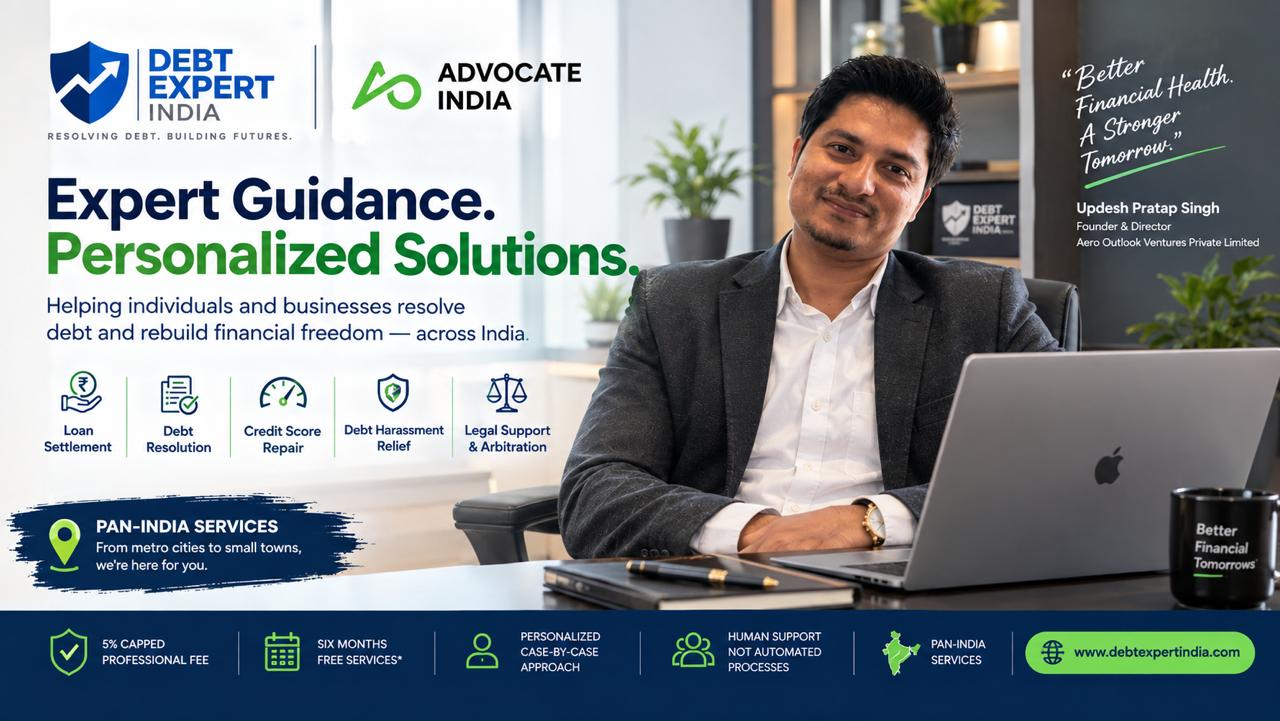
Navigating this high pressure environment alone is incredibly difficult for an average consumer. Recognizing this systemic issue in the credit market, Updesh Pratap Singh structured Aero Outlook Ventures Private Limited to provide a comprehensive shield for distressed borrowers. The organization does not just focus on the financial numbers through its core pillars of Debt Expert IndiaandNational Debt Relief. It actively addresses the critical need for lawful communication and personal safety.
The Practical Process: Legal Intimation and Setting the Terms
How does a borrower actually stop this harassment? The ecosystem provides a highly structured legal process. The intervention begins with Advocate India stepping in to send prior legal intimations directly to the lenders and their recovery agencies. This formal legal notice clearly establishes the borrower's representation and mandates that all future communication must strictly comply with RBI guidelines.
More importantly, this prior notice proactively secures the client's physical safety. It legally informs the bank that any physical meeting will only take place according to the client's convenience, at a designated safe public location, and strictly with authorized personnel carrying proper ID and bank mandates. This preemptive strike neutralizes the threat of unexpected home or workplace visits.
Simultaneously, the ecosystem establishes a practical communication buffer. Instead of facing abusive agents alone, borrowers receive structured support to handle recovery interactions. By legally managing the communication flow, the company intercepts these illegal tactics before they escalate.
Countering Fake Threats with Legal Action
When recovery agents attempt to use fake police threats, morphed photos, or workplace harassment, the associated legal panel takes immediate action. Advocate India helps borrowers document these violations and file formal legal complaints against the offending agents. This aggressive legal countermeasure forces banks and their agencies to strictly follow the lawful legal process. It holds them accountable and immediately neutralizes the mental harassment.
A Commitment to Vulnerable Communities
Aggressive recovery tactics take the heaviest toll on those already facing severe hardships. Understanding this reality, the organization maintains a social support initiative for eligible vulnerable groups. Defense personnel, military families, farmers, individuals with permanent disabilities, and families facing serious medical emergencies can qualify for zero-fee financial relief support. This ensures that the most vulnerable members of society receive protection and guidance when they need it most.
Reclaiming Financial Dignity
Financial distress should never mean a loss of basic human respect. As the Indian credit market expands, the need for ethical recovery practices and robust borrower support is more critical than ever. By combining practical debt resolution with strong legal protection, this ecosystem empowers borrowers to step out of fear and actively negotiate their path back to financial stability.