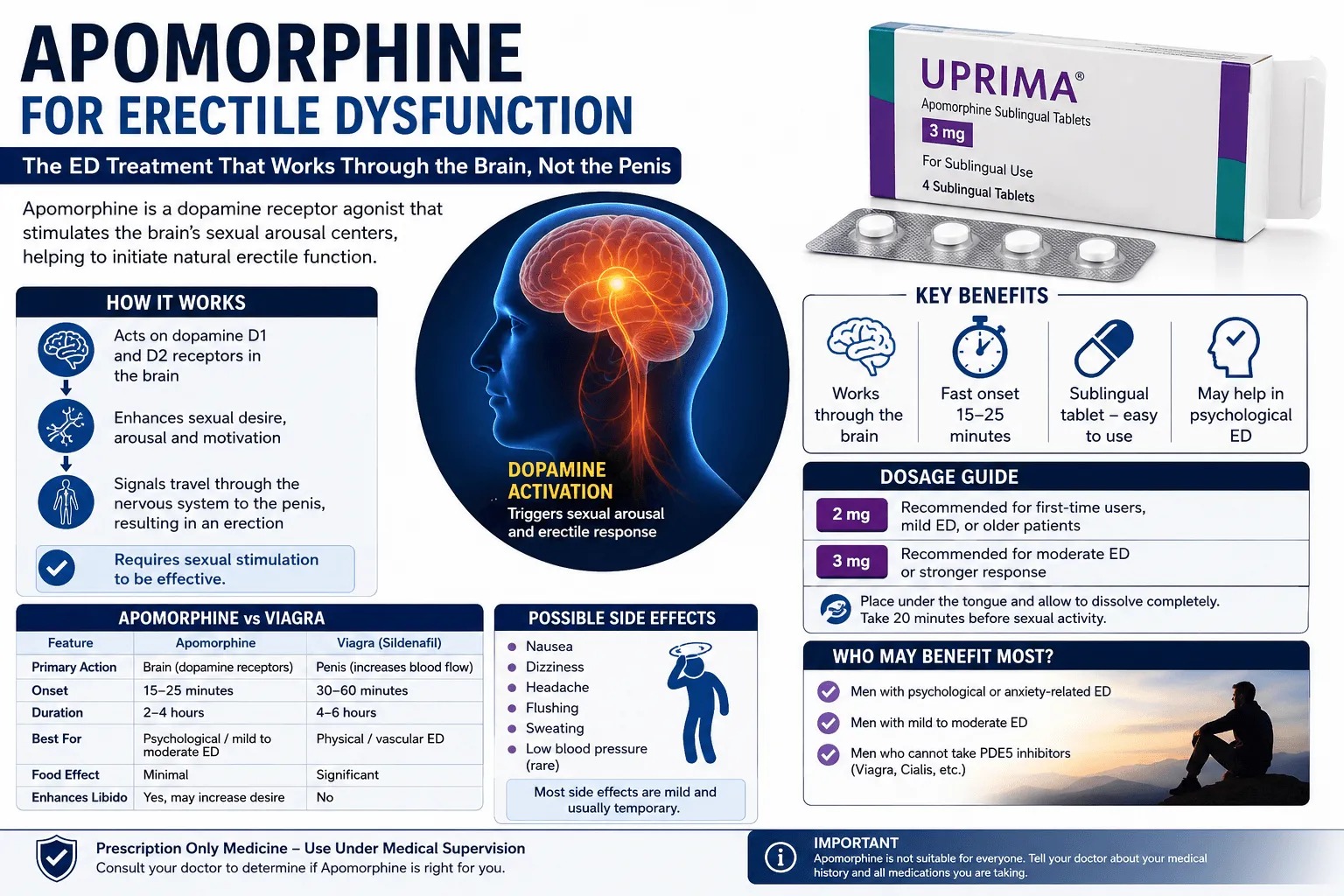
Erectile dysfunction (ED) is commonly associated with treatments that improve blood circulation, but medical research has also explored approaches that act on the brain’s role in sexual arousal. One such medicine is Apomorphine, a dopamine receptor agonist that has been studied for its potential role in treating erectile dysfunction.
Unlike commonly known medicines such as Sildenafil (Viagra) and Tadalafil (Cialis), which work by improving the physiological processes involved in penile blood flow, Apomorphine acts on the central nervous system. Its mechanism has made it a subject of interest in discussions about the neurological factors involved in sexual function.
Understanding the Role of the Brain in Erectile Function
An erection involves more than blood circulation. The process begins with signals from the brain and nervous system, which respond to physical, psychological and emotional stimulation.
Dopamine, a neurotransmitter associated with motivation, reward and sexual behaviour, plays a role in these processes. Changes in neurological activity, stress and psychological factors can influence sexual arousal and erectile function.
Apomorphine has been investigated because it stimulates dopamine receptors, particularly D1 and D2 receptor pathways, involved in central nervous system activity. This represents a different treatment mechanism from medicines that primarily target the blood-flow process.
How Apomorphine Differs From Conventional ED Medicines
Most widely used oral ED medicines belong to a class known as phosphodiesterase type 5 (PDE5) inhibitors. Sildenafil, Tadalafil and Vardenafil work by supporting the blood-flow response required for an erection during sexual stimulation.
Apomorphine follows a different mechanism by acting on dopamine receptors in the brain. This distinction has contributed to research interest in centrally acting treatments for erectile dysfunction.
However, the difference in mechanism does not automatically mean Apomorphine is more effective for men experiencing psychological or neurological ED. Treatment outcomes depend on the underlying cause, individual health factors and clinical evidence.
From Neurological Research to Erectile Dysfunction Treatment
Apomorphine has a history of medical use extending back more than a century. It became particularly associated with neurological treatment research, including its use in managing certain symptoms of Parkinson’s disease.
Observations of sexual responses among some patients receiving the medicine encouraged researchers to investigate its potential application in erectile dysfunction.
In the early 2000s, a sublingual formulation was marketed in some European countries under the brand name Uprima for erectile dysfunction. Its development represented an attempt to address sexual function through central nervous system pathways rather than relying exclusively on peripheral vascular mechanisms.
Clinical Limitations and Safety Considerations
Although Apomorphine has an interesting mechanism of action, it did not achieve the same level of mainstream use as PDE5 inhibitors. Clinical effectiveness, tolerability and the availability of more widely effective alternatives influenced its position in the ED treatment market.
Reported adverse effects include nausea, dizziness, headache, sweating and light-headedness. Blood pressure changes and fainting can also be concerns, making medical assessment important before considering treatment.
Its suitability cannot be determined simply by identifying whether erectile dysfunction appears psychological or physical. ED can have multiple contributing factors, including cardiovascular disease, diabetes, hormonal changes, medication effects, neurological conditions and psychological stress.
Why Understanding the Cause of ED Matters
Erectile dysfunction is not a single-cause condition. Some men experience predominantly vascular problems, while others may have neurological, hormonal or psychological factors. Many cases involve a combination of these issues.
This is why medical professionals generally assess a patient’s health history, medications, symptoms and possible underlying conditions before recommending treatment.
Apomorphine and PDE5 inhibitors act through different mechanisms, but neither should be selected or combined without appropriate medical guidance. In particular, Apomorphine should not be considered a routine substitute for Viagra or a self-treatment option.
A Different Area of Research in Men’s Sexual Health
Apomorphine highlights the importance of understanding the brain’s contribution to sexual function. Its history also demonstrates how observations in one area of medicine can lead researchers to investigate potential applications in another.
While PDE5 inhibitors remain established treatment options for many men with erectile dysfunction, centrally acting medicines provide another area of scientific and clinical interest.
The broader message is that effective ED treatment begins with understanding its underlying cause. Men experiencing persistent erectile difficulties should seek advice from a qualified healthcare professional rather than choosing medication based on online comparisons.
Medical disclaimer: This article is for general informational purposes only and does not constitute medical advice. Apomorphine is a prescription medicine, and its availability and approved uses vary by country. Consult a qualified healthcare professional before starting, changing or stopping any treatment for erectile dysfunction.