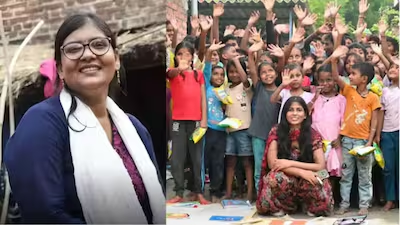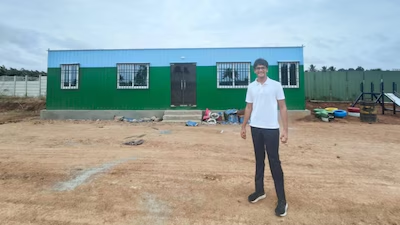
A Class 12 student in Bengaluru is developing an innovative solution to help children of migrant construction workers access education despite their families frequently moving between work sites. Divit Garg has designed a portable classroom made from a shipping container, creating a dedicated space for learning and play for children who often lack access to conventional schools.
The initiative, called The Unboxed School, aims to bring educational facilities closer to families whose temporary living arrangements can make regular schooling difficult. The first unit is nearing completion at a residential development along Sarjapur–Attibele Road in Bengaluru and is expected to begin operating by the end of 2026.
Addressing the Education Challenges of Migrant Children
Children of construction workers can face several barriers to education. When their parents move to a different location for employment, children may struggle to secure admission to a new school, particularly in the middle of an academic year. Language differences, unfamiliar surroundings and difficulties maintaining consistent attendance can further interrupt their learning.
In some construction-worker settlements, children spend much of their time without access to a safe classroom or suitable play area while their parents are at work.
Divit became interested in this issue after teaching Economics in government schools and observing the condition of some educational facilities. His experiences encouraged him to explore ways to create learning environments that could be affordable, practical and adaptable to changing circumstances.
Rather than relying on a permanent building, he began considering whether a classroom could be designed to move alongside families as they relocate.
How the Portable Classroom Will Work
The Unboxed School uses a standard 40-by-8-foot shipping container as the foundation for its classroom. The proposed facility is designed to accommodate approximately 20 to 25 children.
The layout includes a small washroom and a storage area that can also serve as an additional learning space for children who require more individual attention. Its portable structure could allow the classroom to be transported to another location when circumstances require it.
The project has an estimated budget of around ₹5 lakh, although costs may vary depending on the location and installation requirements. A concrete platform of approximately 420 square feet will support the container, while transporting it by truck is expected to cost around ₹30,000, depending on the distance.
The project is being supported financially by a real estate developer through its corporate social responsibility funding.
Tackling Bengaluru’s Heat Without High Costs
One of the main technical challenges involved making a metal shipping container comfortable for children during hot weather. Steel structures can absorb substantial heat, making their interiors difficult to use during the day.
Conventional insulation can increase construction costs, so the design incorporates alternative measures to manage temperatures. These include heat-reflective paint solutions and passive turbine vents that help circulate air without requiring electricity.
Solar panels are also planned as part of the final installation. The interior fittings and solar setup remain among the steps required before the facility can begin operating.
The approach reflects the project's central objective: developing an educational space that is both affordable and practical to maintain.
From a School Design Competition to a Real-World Project
Divit's interest in designing spaces for children began when he participated in a school design competition during Class 9. His proposal for a playscape at an Indian government school received an Honourable Mention.
He later delivered a talk on sustainable public spaces for young people and gained practical experience during an internship with an organisation specialising in low-cost playgrounds made from recycled materials.
Working on playgrounds and shipping-container projects helped him understand how design concepts could be turned into usable structures. That experience contributed to the development of The Unboxed School.
Can the Idea Expand to Other Construction Sites?
Divit hopes the first classroom will serve as a model that property developers, voluntary organisations and public agencies can replicate in other locations. Similar units could potentially be established wherever migrant workers' children need accessible learning spaces.
However, the project's long-term success will depend on more than the building itself. Consistent teaching support, regular maintenance and arrangements that help children continue their education when families move will be essential.
The classroom has not yet begun operating, so its impact on attendance and learning outcomes remains to be assessed.
By rethinking how educational spaces are built and located, Divit's initiative offers a potential way to bring learning opportunities closer to children whose circumstances make traditional schooling difficult. Its next major test will be whether the model can deliver sustained educational support and be successfully expanded beyond its first location in Bengaluru.