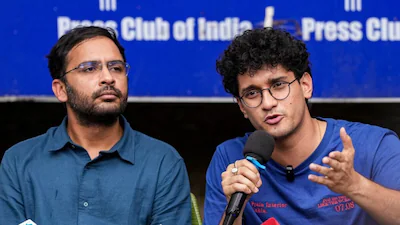
Cockroach Janata Party (CJP) leaders Saurav Das and Ashutosh Ranka withdrew their petition before the Delhi High Court on Wednesday, October 21, 2026, challenging an order that extended their judicial custody by two days. The decision followed the court's advice that they first await proceedings before the Special Executive Magistrate and pursue the appropriate legal remedy if their concerns remained unresolved.
Justice Subramonium Prasad permitted the withdrawal without making a final determination on the merits of their challenge. The development came as the two leaders were due to appear before the magistrate, who was scheduled to reconsider issues concerning the surety bonds submitted on their behalf.
Why the CJP Leaders Approached the High Court
Das and Ranka had challenged an October 19 order extending their judicial custody until October 21. Their petition sought to overturn the extension and questioned the legal basis for keeping them in custody during preventive proceedings.
Their detention followed a protest-related incident at Jantar Mantar in New Delhi. The location had recently been removed from the list of designated protest sites, and the two leaders were accused of entering the restricted area despite previous undertakings to maintain peace and good behaviour.
The authorities initiated preventive proceedings after the incident. The leaders were initially placed in judicial custody for five days, which was subsequently extended by another two days.
Their legal challenge argued that the continued custody was not justified and raised questions about the handling of their sureties.
High Court Advises Them to Follow the Appropriate Legal Process
During the hearing, Justice Prasad questioned why the petitioners had approached the High Court before allowing the Special Executive Magistrate to consider the matter again.
The judge indicated that the legal framework provided an alternative remedy through a revisional or appellate process. He suggested that the leaders wait for the outcome of the scheduled proceedings and approach the appropriate court if they continued to have grievances.
The court also discussed the distinction between preventive custody and preventive detention, noting that different legal procedures may apply depending on the circumstances.
After considering the judge's observations, the leaders' counsel sought instructions from his clients. The petition was subsequently withdrawn.
The court clarified that it had not expressed a final opinion on the merits of the case. Therefore, the withdrawal did not amount to a judicial ruling affirming the legality of the custody extension.
Dispute Over Surety Bonds
A central issue in the proceedings concerned the sureties provided by Das and Ranka. A surety is a person who undertakes specified responsibilities to help ensure that another individual complies with legal requirements.
The Special Executive Magistrate had rejected the sureties submitted earlier, citing concerns about their suitability and the information provided during verification.
The CJP leaders disputed the handling of these documents and argued that the authorities had not followed the applicable legal requirements. They also questioned whether the custody extension had been adequately justified.
The magistrate was expected to reconsider the matter on October 21. The outcome of those proceedings was important because it could determine whether the leaders could secure release or would need to pursue further legal action.
Background to the Jantar Mantar Incident
Das and Ranka were among those detained following the protest-related incident at Jantar Mantar on October 13. The group had entered the area and raised slogans demanding the resignation of Chief Election Commissioner Gyanesh Kumar.
The protest formed part of wider demonstrations concerning changes to electoral rolls. Critics have raised concerns about voter-list revisions, while election authorities have maintained that eligible voters whose names were removed can seek re-enrolment.
The incident led to preventive proceedings against the CJP leaders, who had previously given undertakings concerning peace and public order.
What Happens Next?
Withdrawing the High Court petition left the leaders free to pursue the remedies available under the law if the magistrate's decision remained unfavourable. The High Court's decision to permit withdrawal did not resolve the underlying legal dispute.
The case highlights the importance of following the appropriate judicial procedure when challenging preventive custody orders. It also raises broader questions about the balance between regulating public demonstrations and protecting constitutional freedoms.
Further proceedings before the magistrate were expected to clarify the immediate custody issue, while any subsequent legal challenge would depend on the outcome and the remedies available under the applicable law.