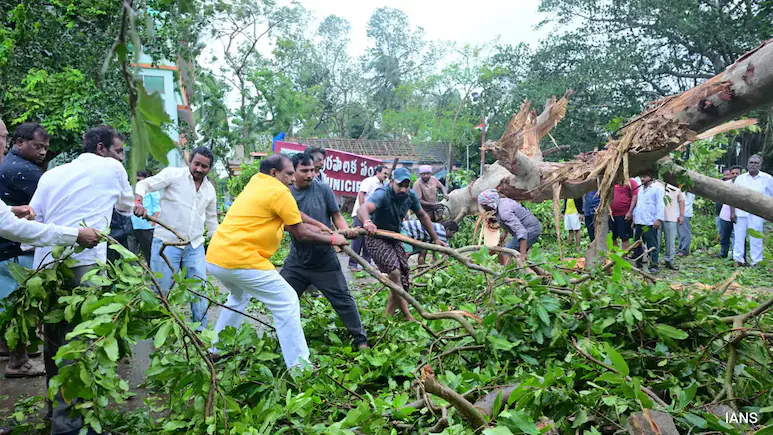
Cyclone Arnab has caused widespread flooding and landslides across southern Odisha, leaving at least three people dead and disrupting daily life in several districts. Continuous heavy rainfall pushed river levels sharply higher, inundated hundreds of villages and triggered multiple landslides, prompting an extensive rescue and relief operation.
The deceased include a couple and their nine-month-old child, who died when a landslide struck Dangesi village in Kandhamal district. Two other people were rescued by emergency personnel and moved to safety. The state government announced financial assistance of Rs 4 lakh for the next of kin of each person who died.
Southern Districts Face Extensive Flooding
Ganjam, Gajapati and Kandhamal have been among the worst-affected districts. The cyclone's impact was initially expected to be greater in Andhra Pradesh, with comparatively limited damage anticipated in Odisha. However, the storm's movement and persistent rainfall brought severe conditions to the state's southern region.
Rivers and smaller water channels rose rapidly, flooding residential areas and damaging transport infrastructure. The overflowing Rushikulya river caused significant damage in Ganjam, where several villages were inundated and bridges and roads were affected.
Sorada, Aska, Bhanjanagar and Purushottampur were among the locations reporting substantial flooding. Several areas of Sanakhemundi also experienced water entering residential neighbourhoods.
Officials said that nearly a dozen landslides had occurred across the affected districts following prolonged rainfall.
Thousands Shifted to Relief Camps
The state government has intensified evacuation, rescue and relief work as more residents face displacement. More than 23,000 people were staying in relief camps, while officials indicated that the number of people stranded in flooded locations was considerably higher.
Around 50,000 people were reported to have been severely affected in Ganjam, followed by approximately 30,000 in Gajapati and 12,000 in Kandhamal.
A total of 313 rescue teams were deployed across Odisha, with more than 100 operating in Ganjam and Gajapati. Personnel from the National Disaster Response Force and Odisha Disaster Rapid Action Force have been using boats to reach isolated communities and deliver cooked food despite difficult weather and strong water currents.
Four helicopters belonging to the Indian Navy and Indian Coast Guard were also deployed to drop food packets in flood-hit areas. Special Relief Commissioner Rajesh P Patil said supplies had been delivered to 21 identified locations in Ganjam.
The state government additionally sanctioned Rs 20 crore for relief and rescue operations in the district.
President Cancels Odisha Visit
The worsening situation also affected planned official engagements. President Droupadi Murmu cancelled her scheduled three-day visit to Odisha, which was due to begin on November 3.
She spoke with Chief Minister Mohan Charan Majhi to enquire about the condition of residents affected by the cyclone and the ongoing relief efforts.
The Chief Minister conducted an aerial assessment of affected areas alongside Disaster Management Minister Suresh Pujari. He said the state had requested assistance from the Centre after the cyclone's impact shifted towards southern Odisha.
The government has also directed officials to accelerate the restoration of damaged roads, bridges and electricity supplies, while ensuring access to drinking water, food and emergency healthcare.
Transport Services Gradually Recover
Flooding and waterlogging disrupted road and rail connectivity in several areas. National Highway 16, which connects Kolkata and Chennai, became operational again after water levels in the Bahuda river receded.
Rail services also resumed, although some trains remained cancelled or were short-terminated because of congestion and waterlogging along railway routes.
Opposition parties, including the Biju Janata Dal, Congress and Left groups, criticised the state government over its preparedness, alleging that preventive measures were inadequate despite earlier weather warnings. The Chief Minister maintained that the administration was working continuously to support affected communities.
Relief operations remain focused on reaching stranded residents, restoring essential infrastructure and preventing further loss of life as the state deals with the aftermath of the cyclone.