An international network of 101 organisations operating across 13 countries has been identified in an investigation examining connections between demonstrations in France and protest movements elsewhere, including India. The findings have drawn attention to the role of activist groups, political organisations and media platforms in coordinating, supporting and publicising demonstrations across national borders.
The investigation comes amid widespread unrest in France, where student-led demonstrations have expanded beyond education-related grievances to include concerns about living costs, government policies and broader political issues. It also highlights links between international activist networks and protests in India over revisions to electoral rolls.
However, the reported connections do not, by themselves, establish that the organisations involved jointly directed the protests or that a single network controlled the movements in both countries.
Investigation Examines International Protest Connections
The number of organisations identified has increased from earlier assessments of the protest network. An initial analysis published in October identified 50 groups associated with France's student demonstrations and their wider circle of supporters. Subsequent reporting expanded the number to 54 before the latest investigation identified 101 organisations across 13 countries.
The groups reportedly include student and youth organisations, labour unions, socialist and communist political groups, environmental activists, civil-rights organisations and media outlets.
Their involvement varies. Some groups have participated in demonstrations or helped organise activities, while others have publicly expressed support, shared protest footage or promoted the movements to international audiences.
The findings suggest that demonstrations initially focused on domestic concerns can attract support from organisations pursuing different political and economic objectives. Nevertheless, public solidarity, media coverage and organisational cooperation are distinct forms of involvement and should not automatically be treated as evidence of centralised control.
France's Protests Expand Beyond Education Issues
Student demonstrations in France have become a focal point of the investigation. The protests initially centred on dissatisfaction with school conditions, including concerns about educational facilities, staffing and the learning environment.
As the demonstrations grew, other groups joined the wider mobilisation, bringing additional issues into the debate. These included austerity measures, the cost of living, policing, military expenditure and opposition to government policies.
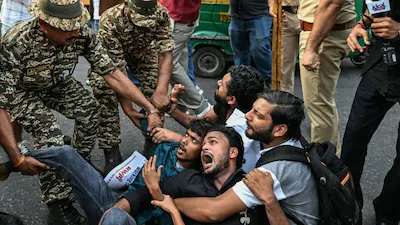
The unrest has also attracted attention because of clashes between protesters and security forces in several locations. Political and activist organisations have used public statements and social media to present the demonstrations as part of a broader movement for political and economic change.
The growing number of participating organisations has raised questions about how different groups coordinate activities and communicate across borders. At the same time, the presence of multiple organisations does not necessarily mean that every participant shares the same objectives or strategy.
Indian Protests Draw International Attention
India appears in the investigation through organisations and public figures that have highlighted demonstrations in both countries.
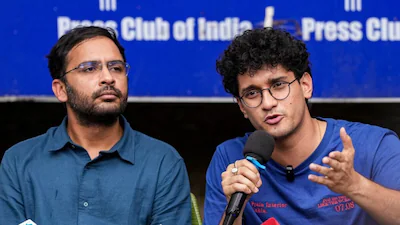
Protests in India have included demands for accountability over electoral-roll revisions and calls for the resignation of Chief Election Commissioner Gyanesh Kumar. Opposition figures and demonstrators have raised concerns about the electoral process, while the allegations surrounding the revisions remain politically contested.
Progressive International has publicly discussed demonstrations in France, Spain, India and Albania within the context of emerging protest movements. Another organisation, Indian Alliance Paris, has been identified as a group connecting Indian and French activist communities through its public messaging.
These links demonstrate that organisations can promote similar causes or draw comparisons between protests in different countries. They do not independently prove that international groups financed, organised or directed the Indian demonstrations.
Funding and Political Influence Under Scrutiny
The investigation has also brought renewed attention to organisations reportedly connected financially or institutionally to American-born technology entrepreneur Neville Roy Singham, who lives in Shanghai.
Several activist organisations associated with the wider network have faced scrutiny from US lawmakers over their funding and activities. Congressional inquiries have examined financial relationships and questions concerning possible foreign influence in political advocacy.
The issue has become particularly sensitive because funding relationships, political messaging and international cooperation can overlap without necessarily demonstrating unlawful conduct.
No publicly established evidence cited in the available reporting confirms that Singham or organisations associated with him financed or controlled the protests in India.
Questions Remain About the Extent of Coordination
The identification of 101 organisations provides a broader picture of the groups involved in supporting, organising or publicising demonstrations across countries. It also highlights the importance of distinguishing documented organisational links from allegations about political direction or financial control.
Further scrutiny of funding records, public communications and specific organisational activities may help clarify the nature of these relationships.
For now, the findings point to an interconnected international activist environment, but the extent to which its participants coordinate their actions, share resources or influence individual protest movements remains an important question.