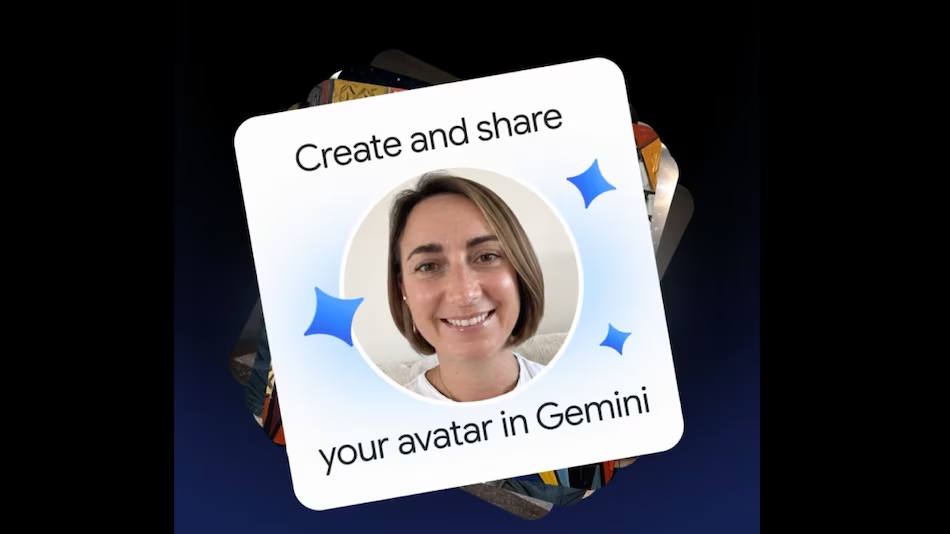
Google is expanding the personal avatar experience in Gemini, allowing users to create digital versions of themselves and include friends or collaborators in AI-generated images and videos. The feature is designed to make personalised content creation easier while giving avatar owners control over who can use their digital likeness.
Users can create an avatar by recording their face and voice. Once the process is complete, the digital version can be selected in prompts to generate content featuring the person's appearance and voice, without requiring a new recording for every creation.
How Gemini Personal Avatars Work
The avatar feature uses recordings of a user's face and voice to create a reusable digital representation. Users can select their avatar while generating images or videos and describe the scene they want to create through a text prompt.
The system also supports shared avatars. A user can invite other Google account holders to use their likeness in generated content. Recipients must accept the invitation before they can use the avatar.
Once access is granted, users can include multiple shared avatars in a prompt, making it possible to create images and videos featuring friends or collaborators together. The feature is intended to maintain consistency in a person's digital appearance and voice across generated content.
Users Remain in Control of Avatar Access
Google has introduced permission controls to give avatar owners greater authority over how their digital likeness is used.
Users can review the people who have access to their avatars, update expiry dates and revoke permissions through Gemini settings. If access is removed, the recipient will no longer be able to generate new content using that avatar.
However, revoking access does not automatically delete images or videos that another person has already generated. Users should therefore consider carefully whom they invite to use their digital representation.
Age and Availability Restrictions
Creating a personal avatar is restricted to people aged 18 or older who use a personal Google Account. The feature currently supports English and is unavailable in the European Economic Area, Switzerland and the United Kingdom.
Video generation using a personal avatar also requires an eligible Google AI subscription. Availability can vary depending on the user's region, account and subscription.
Google's support instructions specify that the account owner must personally complete the recording process. The company also warns that minors should not record themselves to create an avatar.
AI Content Transparency and Privacy
The expansion of realistic digital avatars raises questions about consent, identity and the potential misuse of someone's appearance or voice. Permission-based sharing is intended to ensure that people have control over who can generate content using their likeness.
Google also uses SynthID, its digital watermarking technology, to identify AI-generated videos. The watermark is designed to help distinguish generated content from ordinary recordings, although it should not be treated as a substitute for consent or responsible sharing.
Users can delete their avatar recordings through their Google Account. Removing those recordings prevents the creation of new content with that avatar, but previously generated or published material is not automatically erased.
A More Social Approach to AI Content Creation
The ability to share personal avatars adds a collaborative dimension to Gemini's image and video generation tools. Instead of creating content featuring only one digital representation, users can now bring multiple approved avatars into the same creative project.
The feature reflects Google's broader effort to make AI-generated media more personalised and interactive. Its long-term value will depend not only on creative capabilities but also on effective permission controls, privacy protections and transparency around synthetic media.