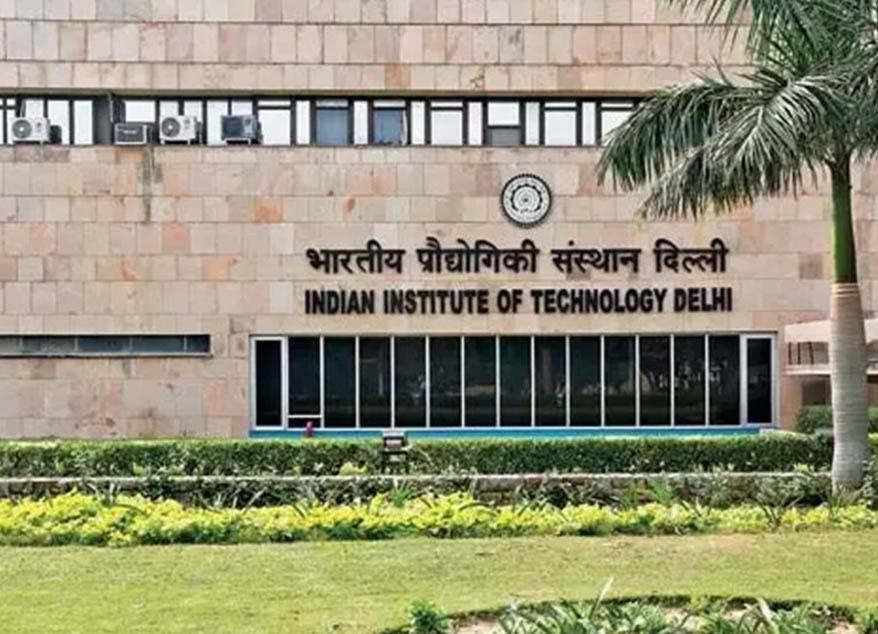
Introduction: Education + Technology + Research Angle
In a significant step toward strengthening interdisciplinary education and research in India, Indian Institute of Technology Delhi and National Law University Delhi have signed an agreement to establish the NLUD-IITD Collaborative Platform.
The partnership aims to promote joint academic and research initiatives at the intersection of law, technology, artificial intelligence, public policy, and justice systems.
The collaboration reflects the growing importance of interdisciplinary research in addressing modern technological, legal, and societal challenges.
Focus Areas of the IIT Delhi–NLU Delhi Collaboration
The newly launched collaborative platform will focus on multiple interdisciplinary domains, including:
Law and Technology
Artificial Intelligence (AI)
Operations Research
Cyber Laws and Cybercrime
Forensic Science
Law and Development
Climate Change Policy
Sustainable Development
International Trade
Migration Studies
Environmental Law
Law and Justice
Ethics and Governance
Alternative Dispute Resolution
Criminal Law and Justice Systems
The partnership aims to combine technological expertise with legal and policy research to develop practical, research-driven solutions for emerging national and global challenges.
Research Projects Under the Collaboration
The initiative has been launched under the Multi-Institutional Faculty Interdisciplinary Projects (MFIRP) scheme operated by the Research & Development Unit of IIT Delhi.
As part of the collaboration, both institutions have already approved joint research projects focused on:
Forensic investigations involving human DNA samples
Algorithmic bias in AI systems and its legal implications in India
These research areas are increasingly relevant as India expands its digital infrastructure and AI adoption across sectors.
Bridging Technology and Legal Systems
Experts believe collaborations between engineering and law institutions are becoming increasingly important due to the rapid advancement of AI, cybersecurity, data governance, and digital public systems.
The partnership is expected to contribute toward:
Policy-oriented technology research
Ethical AI governance frameworks
Legal understanding of emerging technologies
Data and cyber regulation research
Leadership Perspectives on the Collaboration
According to V. Ramgopal Rao, Director of IIT Delhi, the partnership marks an important step in integrating law and technology for broader societal impact.
Meanwhile, Srikrishna Deva Rao, Vice-Chancellor of NLU Delhi, emphasized the importance of rigorous interdisciplinary research in law, science, and technology domains.
Their statements highlight a shared vision of building research-driven solutions for future governance and policy challenges.
Why Interdisciplinary Research Matters Today
As emerging technologies increasingly influence governance, finance, security, healthcare, and communication, interdisciplinary collaboration is becoming critical for:
Ethical AI deployment
Cybersecurity governance
Digital rights protection
Technology regulation frameworks
Sustainable policy development
Educational institutions globally are now investing heavily in collaborative research ecosystems that combine law, technology, and social sciences.
Results & Impact (MOST IMPORTANT)
Education Impact:
Promotion of interdisciplinary academic research in India
Greater integration between law and technology education
Technology Impact:
Research on AI governance, cyber law, and forensic systems
Increased focus on ethical and regulatory dimensions of emerging technologies
National Impact:
Potential policy contributions in AI, law, and digital governance
Strengthening India’s innovation and research ecosystem
Final Verdict
The partnership between IIT Delhi and NLU Delhi represents a major step toward building a collaborative academic ecosystem focused on solving future challenges through interdisciplinary innovation.
As technology increasingly shapes legal, ethical, and governance systems worldwide, such initiatives are expected to play a crucial role in developing research-driven frameworks that align technological advancement with societal and legal responsibilities.