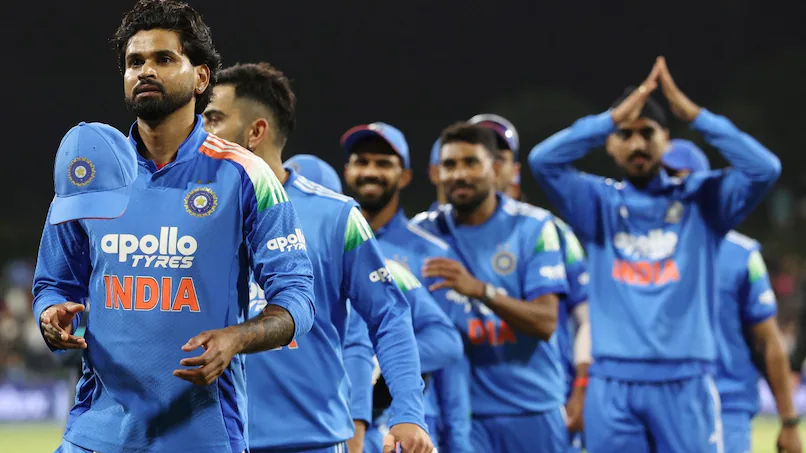
India have been fined 35 per cent of their match fees by the International Cricket Council (ICC) for maintaining a slow over-rate during the fifth and final One-Day International against New Zealand. The penalty was announced on November 18, following India's 22-run victory in Mount Maunganui on November 15, which secured a 3-1 series win.
The sanction was imposed after the Indian team, led by stand-in captain Shreyas Iyer, was found to have bowled seven overs fewer than the required rate, even after time allowances were taken into account.
Why Did the ICC Punish India?
The ICC's decision relates to its rules governing minimum over-rates in international cricket. Teams are expected to complete their allotted overs within the permitted time, subject to allowances for interruptions and other circumstances.
According to Article 2.22 of the ICC Code of Conduct for Players and Player Support Personnel, players are fined five per cent of their match fees for every over their team falls short of the required rate. The rules impose a maximum penalty of 50 per cent of the players' match fees.
Since India were found to be seven overs behind the required rate, the applicable calculation resulted in a 35 per cent fine.
The sanction applies to the players' match fees and is separate from the team's result in the match. India retained their victory and their series triumph despite the disciplinary action.
Shreyas Iyer Accepts the ICC Sanction
ICC Elite Panel match referee Ranjan Madugalle imposed the penalty after reviewing the over-rate offence.
Iyer admitted the charge and accepted the proposed sanction. Consequently, the matter did not require a formal hearing.
The charge was brought by the match officials, including on-field umpires Paul Reiffel and Wayne Knights, third umpire Kumar Dharmasena and fourth umpire Chris Brown.
The acceptance of the sanction brought the disciplinary proceedings to a close without the need for further adjudication.
India Win Fifth ODI to Seal Series 3-1
The ICC penalty came despite a successful finish to India's ODI campaign against New Zealand. India won the final match by 22 runs after defending a target of 210.
Batting first, India were dismissed for 209. Ishan Kishan and Axar Patel were among the key contributors, scoring 46 runs apiece to help the team recover and post a competitive total.
New Zealand's chase struggled against India's bowling attack. The hosts were eventually bowled out for 187, allowing India to register a series-clinching victory.
The win gave India a 3-1 result in the five-match series, with the third ODI having been abandoned without a result.
Another Slow Over-Rate Penalty for India
The latest sanction also brings renewed attention to India's over-rate discipline. The team had previously faced a financial penalty for a slow over-rate during an ODI against the West Indies in October 2026, when players were reportedly docked 20 per cent of their match fees.
Repeated breaches can become a concern for teams because over-rate regulations are designed to ensure matches progress within a reasonable timeframe and minimise unnecessary delays.
Although India's performances secured the series against New Zealand, the latest fine serves as a reminder that teams remain accountable for meeting the ICC's playing conditions regardless of the result.
India Turn Attention to Test Cricket
With the ODI series completed, India are set to shift their focus to the two-match Test series against New Zealand, beginning on November 19.
The team will look to carry its winning momentum into the longer format while addressing the disciplinary issue highlighted by the ICC.
For now, the 35 per cent match-fee penalty stands as the principal consequence of India's slow over-rate in the final ODI. The result remains unchanged: India won the match by 22 runs and finished the series with a 3-1 advantage.