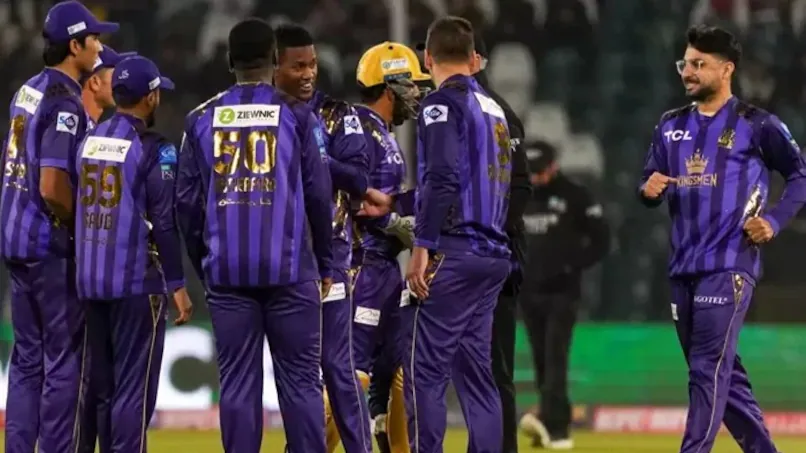
Nadeem Omar, owner of Pakistan Super League (PSL) franchise Quetta Gladiators, has confirmed that he is prepared to sell the team if he receives an acceptable offer and prospective buyers agree to certain conditions. Omar has acknowledged that the PSL cannot match the commercial strength of the Indian Premier League (IPL), citing Pakistan’s smaller market, limited sponsorship opportunities and difficulties generating revenue from merchandise.
His comments have brought renewed attention to the financial challenges facing franchise cricket outside India, particularly as major T20 leagues compete for international players, sponsors and broadcasting audiences.
Omar said he believed it was the right time to consider leaving the PSL after years of investment in the Quetta franchise. Despite the team’s competitive achievements, he said its commercial performance had fallen short of his expectations.
Nadeem Omar Says PSL Cannot Match IPL’s Financial Power
Omar argued that attempting to compete directly with the IPL commercially had been a mistake. According to him, the two leagues operate in markets with vastly different financial resources and commercial potential.
He pointed to the IPL’s extensive sponsorship network and the large amounts of money invested by businesses in its franchises. The Indian league also benefits from substantial broadcasting revenue, ticket sales, merchandise and other commercial activities.
The Quetta Gladiators owner said comparable revenue opportunities were much harder to develop in Pakistan, leaving PSL franchises at a disadvantage.
The IPL’s enormous domestic audience and established commercial ecosystem have helped it attract major corporate partners and international players. Its financial strength also allows franchises to invest heavily in team-building, marketing and fan engagement.
Omar believes the PSL should focus on its own strengths instead of attempting to replicate the IPL’s business model.
Counterfeit Merchandise Hurts PSL Franchise Revenue
One of Omar’s biggest concerns is the difficulty of generating meaningful income from official team merchandise.
He explained that Quetta Gladiators had sold official shirts for around 1,000 Pakistani rupees, but inexpensive counterfeit versions were available in the market for approximately 200 rupees.
According to Omar, the price difference makes it difficult for official merchandise to compete and deprives franchises of an important source of revenue.
In the IPL, team merchandise contributes to the broader business surrounding franchises, allowing supporters to purchase official shirts and other branded products. Stronger purchasing power, established retail channels and extensive marketing also help teams develop their brands.
Omar’s comments highlight how commercial challenges extend beyond television rights and sponsorship deals. Franchises also need effective systems to protect intellectual property and persuade fans to purchase official products.
Without those opportunities, teams may struggle to build sustainable businesses even when they attract substantial public interest.
Seven Years of Financial Losses Disappoint Quetta Owner
Omar said Quetta Gladiators had remained financially unprofitable for seven years, adding that several ambitions he had when purchasing the franchise had not been realised.
He explained that his decision to invest in the team was motivated by more than financial returns. He had hoped to contribute to Pakistan cricket by bringing matches to Quetta and creating opportunities for players from Balochistan.
However, he said those objectives had not been achieved for various reasons.
The franchise has nevertheless enjoyed success on the field. Quetta Gladiators have reached the PSL final four times and won the championship once.
Omar admitted that the team had not delivered everything he had hoped for, describing the experience as disappointing despite its achievements in the competition.
He also suggested that the increasing sums being spent on PSL franchises had made the business increasingly difficult to justify.
Quetta Gladiators Could Become Second PSL Team to Change Owners
If Omar completes a sale, Quetta Gladiators would become the second PSL franchise to change ownership since the previous year, following developments involving Multan Sultans.
Omar originally acquired Quetta’s franchise when the PSL was launched in 2016, paying an annual fee of $1.1 million. He said the relatively low acquisition cost had helped him manage the team’s finances over the years.
The franchise’s future will now depend on whether a suitable buyer emerges and agrees to his conditions.
Although Omar is considering an exit, he continues to rate the PSL highly among international T20 competitions. He said the league could still be regarded as one of the world’s top three, pointing to the quality of its cricket and its reputation for maintaining financial integrity.
PSL Faces a Difficult Choice as T20 Cricket Expands
The growing competition between international T20 leagues has made financial sustainability increasingly important. The IPL’s commercial dominance gives it a significant advantage when attracting players and sponsors, while other competitions must identify their own markets and revenue opportunities.
The PSL’s scheduling overlap with the IPL since 2025 has added to the challenge, with some international players choosing the Indian competition when the two tournaments run simultaneously.
Omar’s remarks underline the need for the PSL to strengthen its commercial foundations rather than compete solely on spending. Better merchandising, stronger sponsorship arrangements and a sustainable franchise model could help the league preserve its position in global cricket.
For Quetta Gladiators, however, the immediate question is whether a new owner can offer the financial resources and strategic direction needed to realise the franchise’s potential.