India needs to strengthen its ability to protect increasingly capable artificial intelligence systems as AI models become more powerful and their potential risks grow, Indian technology entrepreneurs said during a discussion on the country's AI future.
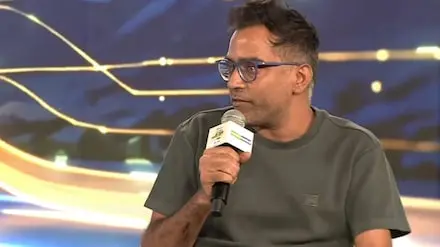
The issue was raised by Sarvam co-founder Pratyush Kumar and Emergent founder Mukund Jha at the Moneycontrol Startup Conclave 2026 on September 26. Their discussion focused not only on India's efforts to build advanced AI models, but also on the security challenges that could emerge as these systems become more capable and increasingly integrated into real-world applications.
More Capable AI Brings New Security Risks
Mukund Jha argued that improving AI capabilities cannot be viewed separately from the need to secure those systems. As models gain stronger reasoning and operational abilities, weaknesses in the systems surrounding them could potentially have more serious consequences.
His position was that simply slowing technological progress is unlikely to be a practical solution. Commercial competition and demand for increasingly capable AI are expected to continue pushing the technology forward.
That makes defensive capability an important part of the AI development process. Security measures, monitoring and safeguards will need to evolve alongside the models themselves rather than being treated as an afterthought.
The concern is particularly relevant as AI systems move beyond generating text or images and begin performing more complex tasks. Emergent, for example, is expanding its work toward autonomous business automation, where AI agents can take on tasks within business processes.
Sarvam Co-Founder Calls for Faster AI Development
Pratyush Kumar offered a broader view of India's position in the global AI race. He described the country as being at an early stage of its AI journey, with efforts now expanding around computing infrastructure, models and technical talent.
Kumar argued that India should continue accelerating AI development rather than attempting to slow it down. At the same time, he stressed the importance of developing safeguards capable of dealing with the risks created by increasingly powerful systems.
India's large population, technical workforce and growing adoption of digital technology could give the country a significant opportunity to deploy AI at scale. That opportunity, however, also means that security considerations could become more important as adoption spreads.
AI Adoption Is Expanding Beyond Chatbots
The discussion also highlighted how Indian AI companies are moving into sectors where AI could have direct effects on everyday services.
Potential applications discussed included agriculture, education and healthcare, along with systems designed to process large volumes of documents and information. Sarvam is also developing computing and software infrastructure intended to support its own models as well as open AI models.
As these technologies become part of larger digital systems, protecting the underlying infrastructure becomes increasingly important. A security failure involving an AI system used for business or public services could have consequences beyond the model itself.
India is also exploring domestic AI capabilities for strategic applications. The government has been engaging with Indian AI companies about potential uses of homegrown models in defence and other sensitive areas, reflecting wider concerns about dependence on foreign technology.
Building AI and AI Security Together
The discussion points to a broader shift in how AI development is being viewed in India. The focus is no longer limited to creating larger or more capable models. Computing infrastructure, talent, applications, cybersecurity and governance are increasingly part of the same conversation.
For India, the challenge will be to expand its AI capabilities while developing safeguards that can keep pace with technological progress. As AI becomes more autonomous and enters increasingly sensitive areas, defensive capabilities will remain an important part of the country's wider AI strategy.
The message from the technology leaders was therefore twofold: India should continue building its AI ecosystem, but the ability to secure and defend those systems needs to develop at the same time.