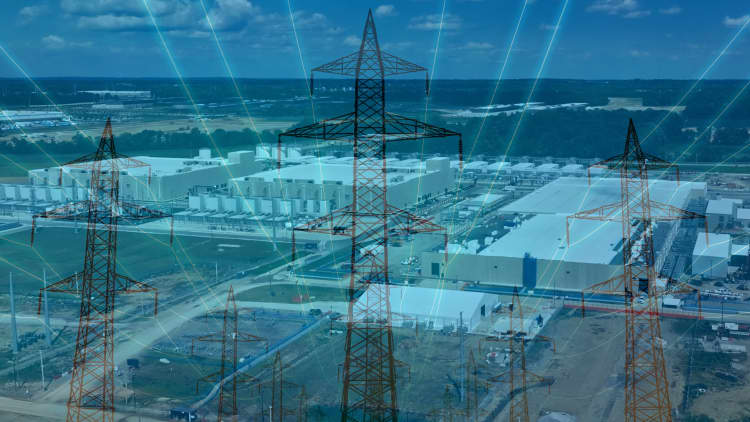
India’s rapidly expanding artificial intelligence industry is expected to significantly increase the country’s electricity requirements, with AI data centres projected to add 26.3 gigawatts (GW) of power demand by the financial year 2031-32. The revised estimate highlights the growing challenge of supplying reliable electricity to energy-intensive digital infrastructure while maintaining stability across the national power grid.
The Ministry of Power shared the projection in a written response to Parliament on July 27, 2026. The additional electricity requirement is expected to be incorporated into the national grid, with renewable energy capacity anticipated to meet a substantial portion of the demand.
The latest forecast represents a major increase from the government’s earlier estimate of 13.56 GW by 2031-32. The updated projection reflects the growing pipeline of data centre projects proposed across different states and the accelerating adoption of artificial intelligence, cloud computing and high-performance computing services.
AI Expansion Creates New Electricity Challenges
Data centres provide the computing power required to operate AI applications, store information and support digital services. As businesses increasingly deploy AI tools, the infrastructure needed to process large volumes of data is expanding, bringing electricity availability into sharper focus.
Unlike many conventional electricity consumers, large data centres require substantial power to operate computing equipment and cooling systems. Their electricity consumption can also fluctuate sharply as computing workloads change.
These variations create additional challenges for grid operators, who must continuously balance electricity supply and demand. Sudden changes in consumption or unexpected disconnection of large facilities could complicate grid management, particularly in areas where several energy-intensive installations operate together.
Power-sector experts have therefore emphasised the importance of assessing data centre electricity requirements before new facilities become operational.
Grid Stability and Infrastructure Planning Take Centre Stage
The government is consulting state transmission utilities, distribution companies and data centre developers to understand the infrastructure required to support the projected increase in electricity consumption.
Key considerations include reliable power supply, transmission capacity and the ability to balance sudden changes in demand. Policymakers are also examining whether new data centres should be located away from major urban electricity demand centres to reduce congestion on transmission networks.
At present, data centres often cluster around established information technology hubs, where connectivity and business infrastructure are readily available. However, concentrating additional large facilities in the same locations could increase pressure on existing electricity networks.
Locating suitable projects closer to renewable energy generation facilities is another option under consideration. Such arrangements could help reduce transmission constraints and improve access to cleaner electricity, although their feasibility would depend on connectivity, infrastructure availability and operational requirements.
Renewable Energy Expected to Support Future Demand
Renewable energy is expected to play a major role in meeting the additional electricity requirements of AI data centres. Expanding solar and wind generation, alongside investments in transmission infrastructure, will be important to accommodating the sector’s growth.
India’s data centre industry has already expanded considerably. Installed data centre capacity increased from approximately 375 megawatts (MW) in 2020 to around 1.5 gigawatts in 2025.
Industry projections indicate that operational data centre capacity could reach 12 GW by 2030, supported by growing demand from cloud service providers, businesses and AI developers. Dedicated AI computing capacity is also expected to increase significantly as organisations adopt more sophisticated digital technologies.
Longer-term electricity projections underline the scale of the challenge. Data centre electricity consumption is forecast to rise from approximately 10 terawatt-hours (TWh) in 2025 to around 200 TWh by 2040, potentially accounting for about 7% of India's total electricity demand.
Balancing Digital Growth With Energy Security
The projected increase in AI-related electricity consumption presents both an infrastructure challenge and an opportunity for India’s energy sector. Meeting the demand will require coordinated planning between electricity generators, grid operators, state authorities and technology companies.
Expanding renewable energy alone will not resolve every challenge. Transmission upgrades, effective demand management and systems capable of responding to rapid changes in electricity consumption will also be essential.
India’s ability to accommodate the projected 26.3 GW of additional demand will be an important test of its power infrastructure as AI adoption accelerates. Ensuring that data centres receive dependable electricity without compromising grid reliability will remain central to the country’s digital and energy strategies.