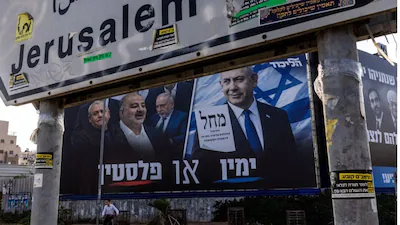
Israel is voting on October 27, 2026, in a parliamentary election that could reshape the country’s political leadership after years of conflict and domestic controversy. Around 7.3 million eligible voters are expected to choose representatives for the 120-seat Knesset, with Prime Minister Benjamin Netanyahu seeking another term amid a closely contested political race.
The election is the first national parliamentary vote since the Hamas-led attacks of October 7, 2023, and the subsequent wars involving Israel and regional actors. Security, government accountability, military service exemptions, judicial reform and Israel’s international standing have emerged as major campaign issues.
How Israel’s Election System Works
Unlike presidential elections in which voters directly select a head of state, Israelis vote for political parties rather than individual candidates. Parliamentary seats are allocated through proportional representation, meaning a party’s share of seats broadly reflects its share of the national vote.
The Knesset has 120 seats. A party must receive at least 3.25% of the national vote to enter parliament. Because no single party has ever secured an outright majority, forming a government generally requires cooperation among several parties.
A governing majority typically requires support from at least 61 lawmakers. Consequently, the party that wins the most votes does not automatically secure the prime minister’s office. Political leaders must negotiate with potential partners and assemble a coalition capable of gaining parliamentary support.
After the official results are announced, Israel’s president consults political representatives before selecting a lawmaker to attempt to form a government. The designated candidate normally has 28 days, with a possible 14-day extension, to complete coalition negotiations.
Netanyahu Faces Opposition From Gadi Eisenkot and Other Leaders
Netanyahu, Israel’s longest-serving prime minister, is leading the right-wing Likud party and seeking to continue his political leadership. His coalition has included far-right parties and ultra-Orthodox Jewish political groups.
His record has become a central campaign issue following the October 7 attacks and the conflicts that followed. Netanyahu also faces corruption charges in Israel, which he denies.
Former military chief Gadi Eisenkot has emerged as a major opposition figure through his Yashar party. Other prominent challengers include former prime ministers Naftali Bennett and Yair Lapid, who are associated with the Together alliance, as well as former defence minister Avigdor Lieberman and opposition leader Yair Golan.
The opposition parties differ on several policy questions, but some have pledged to cooperate in an effort to replace Netanyahu’s government. Their ability to work together after the election could prove as important as their individual performances at the ballot box.
Key Issues Shaping the Vote
National security remains a major concern following the October 7 attack and the subsequent conflicts in Gaza, Lebanon and Iran. Voters are also debating whether the government has adequately addressed security failures and whether a formal state commission of inquiry should examine the events surrounding the 2023 attack.
Another significant issue is compulsory military service. Netanyahu’s ultra-Orthodox political partners have supported exemptions for many religious students, a policy that has generated public debate over the distribution of military responsibilities during wartime.
Judicial reform is also a major point of division. Netanyahu’s efforts to change the judiciary’s powers have drawn criticism from opponents, while supporters have argued that the reforms are necessary to rebalance authority between elected officials and the courts.
The election is additionally taking place amid continuing international scrutiny of Israel’s conduct in Gaza and its relations with neighbouring countries.
Arab-Led Parties Could Influence Coalition Formation
Parties representing Palestinian citizens of Israel may play an important role if neither major political bloc can secure sufficient parliamentary support. These parties include Ra’am and the Joint List, whose potential influence depends on their election results and the willingness of other parties to cooperate with them.
However, several leaders in the Jewish-led opposition have ruled out certain coalition arrangements, making the negotiations more complicated.
The election outcome will therefore depend not only on the number of seats won by individual parties but also on whether their leaders can agree on a workable governing arrangement.
What Happens After Voting?
Once voting concludes, the allocation of parliamentary seats will establish the starting point for coalition negotiations. If no candidate can form a government, Israel could face a prolonged political impasse and potentially another election.
For Netanyahu and his challengers, the contest represents a critical test of public confidence after years of conflict and political division. The final outcome will determine which parties control parliament and whether a new coalition can be formed to govern Israel.