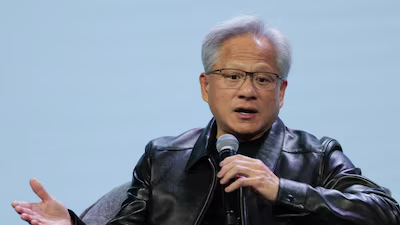
Nvidia co-founder Jensen Huang is back at the helm of the artificial intelligence chip giant, triggering a wave of excitement across social media as supporters celebrated his return with memes, jokes and optimistic predictions about the future of AI.
Nvidia’s board reinstated Huang as president and chief executive officer on November 23, 2026, reversing its earlier position following his resignation less than two weeks ago. The decision brought relief to employees, investors and technology enthusiasts who had campaigned for him to return.
Online reactions ranged from humorous posts declaring that AI had been “saved” to celebratory messages welcoming the veteran technology executive back to the company he helped build.
Nvidia Board Reverses Its Decision
Huang’s return marks a dramatic turn in the leadership crisis at Nvidia, one of the world’s most influential technology companies.
The executive stepped down on November 12 following scrutiny over his personal relationships and concerns raised about potential national security implications. His departure prompted questions about the company’s future leadership and its ability to maintain its position in the rapidly expanding AI industry.
Nvidia’s board subsequently reconsidered its position after discussions with Huang. In announcing the decision, the company said directors were satisfied with his candour and ability to lead the business.
The board also said it had received input from senior US government officials and concluded that Huang’s reinstatement did not pose a national security risk.
Huang welcomed the decision, expressing gratitude to the board, employees, shareholders, business partners and his family. He said he was honoured to return and eager to resume his responsibilities.
The company’s investigation into the circumstances surrounding his departure is continuing.
Social Media Celebrates Huang’s Comeback
News of Huang’s reinstatement quickly became a talking point among technology enthusiasts and investors. Supporters who had argued that he deserved another opportunity welcomed the announcement, while others turned the dramatic reversal into internet humour.
Some posts portrayed his return as a victory for the AI industry, reflecting how closely Nvidia’s leadership is associated with the global artificial intelligence boom.
Tesla and SpaceX chief executive Elon Musk was among those who welcomed the development. His online reaction echoed the sentiment of supporters who believed the decision to remove Huang had been a mistake.
A public campaign calling for Huang’s reinstatement had also attracted substantial support. More than 185,000 people reportedly signed a petition urging Nvidia to bring him back, demonstrating the strength of the response among his supporters.
Memes and AI-generated videos featuring Huang celebrating his return to Nvidia’s headquarters added to the online buzz.
Why Huang Matters to the AI Industry
Huang co-founded Nvidia in 1993 and helped transform it from a graphics-chip manufacturer into a central supplier of processors used to develop and operate advanced AI systems.
The company’s graphics processing units, or GPUs, have become essential infrastructure for AI research, data centres and generative AI applications. Its hardware is used by technology companies, research institutions and cloud-computing providers around the world.
Because of this influence, uncertainty surrounding Nvidia’s leadership can have consequences beyond the company itself. Investors and industry observers closely monitor its strategy, product development and relationships with major customers.
Huang’s return has therefore been viewed by supporters as a stabilising development at a time when the AI sector is navigating intense competition, growing investment and heightened regulatory scrutiny.
Nvidia Shares Rally After the Announcement
Financial markets also reacted positively to the news. Nvidia shares surged sharply following confirmation of Huang’s reinstatement, while other AI-related stocks also recorded gains.
The rally reflected investor relief that the leadership uncertainty had been resolved, although the company continues to face questions involving compliance, national security and its business dealings.
The board has established committees to examine relevant concerns, and Nvidia has said it will continue cooperating with government inquiries. Huang’s return does not mean those investigations have concluded.
For supporters celebrating online, however, the immediate focus has been the return of the executive closely associated with Nvidia’s rise.
The episode illustrates the extraordinary influence Huang has acquired in the technology industry. His reinstatement has calmed some investor concerns and sparked widespread online celebration, but Nvidia’s longer-term outlook will depend on its business performance, regulatory challenges and ability to sustain its leadership in AI computing.