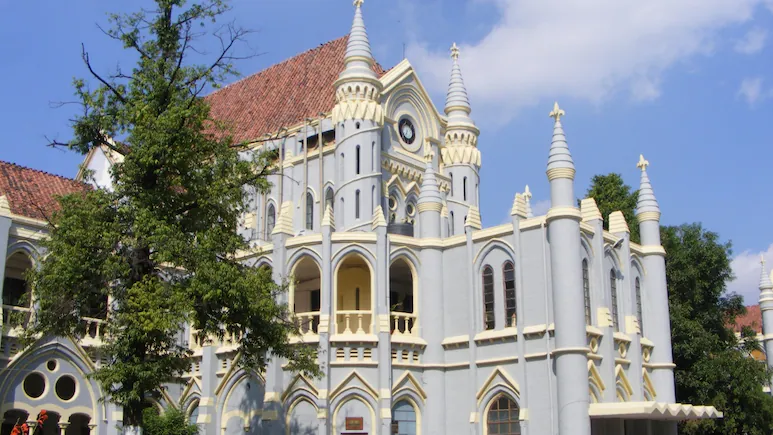
The Madhya Pradesh High Court has struck down the state government's decision to increase Other Backward Classes (OBC) reservation from 14% to 27%, restoring the earlier quota and directing recruitment agencies to complete appointments for previously withheld vacancies within three months. The October 9, 2026, ruling brings a major development in a reservation dispute that has affected government recruitment and higher education for several years.
A division bench comprising Justices Anand Pathak and Vinay Saraf delivered the judgment after considering numerous petitions challenging the 2019 legislation. The court concluded that the state had not established sufficient constitutional grounds to justify exceeding the established 50% reservation ceiling.
Court Restores OBC Reservation to 14%
The judgment overturns the 2019 amendment introduced when Kamal Nath led the Congress government in Madhya Pradesh. Through an ordinance issued in March 2019 and subsequent legislation, the state increased the OBC quota from 14% to 27%.
The move triggered legal challenges over whether the enhanced reservation complied with constitutional requirements and Supreme Court precedents. The High Court held that the government had failed to demonstrate exceptional circumstances that would justify crossing the 50% ceiling.
The bench referred to established Supreme Court rulings, including the Indra Sawhney and Jaishri Laxmanrao Patil cases, while examining the legal limits governing reservation policies.
The court also assessed available information concerning OBC representation in public employment and higher education. It concluded that the material presented did not establish a sufficient basis for increasing the existing quota.
Consequently, OBC reservation in Madhya Pradesh government services and higher education will remain at 14% under the ruling.
Three-Month Deadline for Pending Government Jobs
One of the most significant consequences of the verdict concerns vacancies that remained unresolved while the reservation dispute was being heard.
In September 2022, the state adopted an arrangement under which recruitment could proceed for 87% of posts, while the remaining 13% were kept pending until the legal question surrounding the enhanced OBC quota was resolved.
The High Court has now directed recruitment agencies to fill these withheld vacancies from the unreserved-category lists within three months. The order applies to the Madhya Pradesh Public Service Commission, the Employees Selection Board and other recruitment authorities.
The directive provides a defined timeline for resolving a long-running recruitment uncertainty. Candidates awaiting decisions on these vacancies will now look to the relevant agencies for further action in accordance with the judgment.
The ruling also distinguishes between appointments already made and those that may be affected by the decision. OBC candidates appointed under the additional quota between March 2019 and September 29, 2022, have been protected from losing their jobs. The corresponding posts will be adjusted or accommodated across the next three recruitment cycles.
Appointments made after the specified cutoff under the additional quota beyond 14% do not receive the same protection under the judgment.
Political Dispute Continues After Verdict
The decision has reignited disagreements between the Congress and BJP over responsibility for the failure of the 27% reservation policy.
Congress leaders have criticised the state government's handling of the case and maintained that the party will continue pursuing the enhanced quota. The dispute has also drawn opposition from OBC organisations, with petitioner Lokendra Gurjar indicating that the OBC Mahasabha intends to challenge the judgment in the Supreme Court and organise a statewide movement.
The BJP, meanwhile, has defended the legal outcome by criticising the manner in which the original legislation was introduced. Cabinet Minister Prahlad Patel argued that the 2019 measure contained constitutional shortcomings, while maintaining that efforts to support backward communities would continue.
The controversy has persisted across successive state governments, demonstrating how reservation policy has remained both a legal and political issue in Madhya Pradesh.
What the Decision Means Going Forward
The High Court's ruling settles the immediate question before it by rejecting the increase to 27% and directing action on the pending vacancies. However, proposed legal challenges could bring the issue before the Supreme Court again.
For government job aspirants, the immediate development is the three-month deadline for filling the withheld 13% of posts. The precise implementation will depend on the relevant recruitment agencies and the requirements of individual selection processes.
The judgment marks a significant shift in Madhya Pradesh's reservation framework, while leaving the broader political debate over OBC representation and the future of the enhanced quota unresolved.