Introduction: Industry + Event Entry
Mental health is rapidly emerging as one of the most critical public health priorities in India, especially in urban centers with growing youth populations. As awareness increases, there is a parallel need to move beyond policy discussions and implement actionable, ground-level solutions.
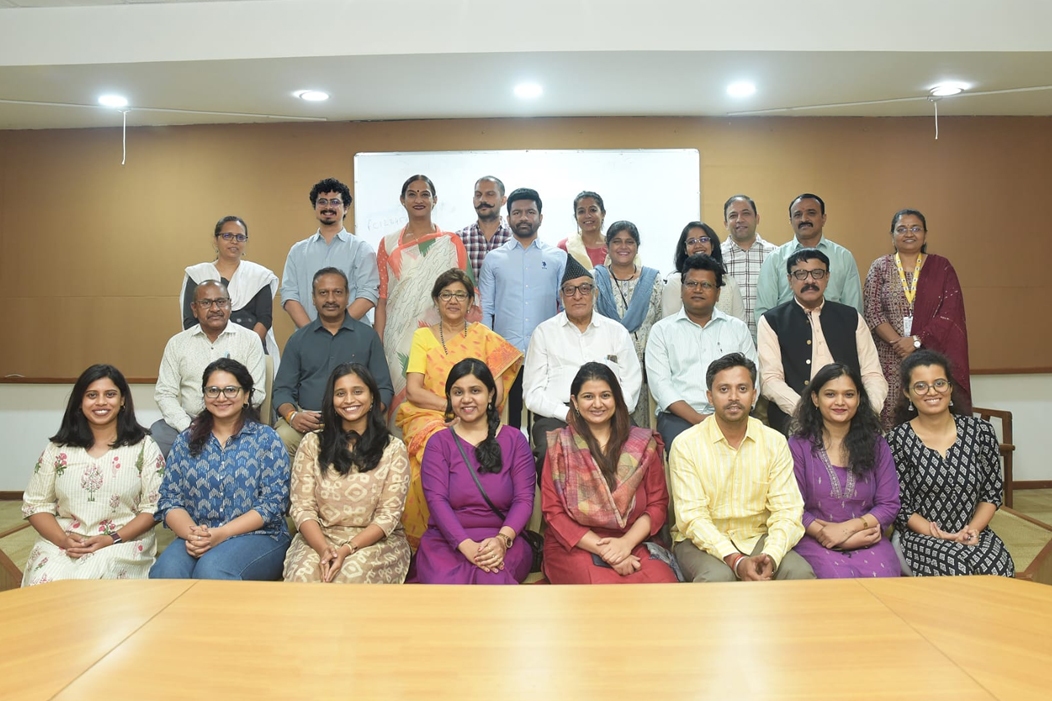
In this context, Pune has taken a proactive step with the launch of the Policymakers’ Forum on Mental Health – Pune City Chapter. The first convening was held at ILS Law College, bringing together key stakeholders from government, healthcare, academia, and civil society to initiate a structured dialogue on mental health governance.
The Vision Behind the Initiative
The Pune City Chapter aims to create a collaborative, city-led model that integrates mental health into governance, education, and community systems.
The initiative focuses on bridging the gap between policy and execution by enabling:
Coordinated action among stakeholders
Practical, scalable interventions
Long-term mental health integration in public systems
This approach reflects a shift from reactive care to proactive and preventive mental health strategies.
What Makes This Initiative Significant
Key Highlights:
Multi-Stakeholder Collaboration
Participation from government officials, policymakers, and experts
City-Level Action Model
Focus on practical implementation rather than theoretical frameworks
Youth-Centric Approach
Addressing mental health in schools, colleges, and workplaces
Scalable Framework
Designed to be replicated in other cities
Event Overview & Leadership Participation
The session was conducted under the guidance of Smt. Vandana Chavan, former Member of Parliament and former Mayor of Pune.
Key attendees included:
Shri Naval Kishore, Municipal Commissioner, Pune Municipal Corporation
Shri Shrinath Bhimale, Chairman, Standing Committee, PMC
Shri Sanjiv Wavare, Assistant Medical Officer of Health, PMC
Dr. Mohan Agashe, Former Advisor to the Government of Maharashtra
Representatives from civil society and technical experts
The session also featured presentations by Arjun Kapoor (CMHLP) and Dr. Sukriti Chauhan (ETI Services), focusing on data insights, policy frameworks, and actionable pathways.
Key Statements from Leadership
Shri Naval Kishore emphasized the importance of ecosystem-level intervention:
“Mental health is not confined to hospitals. We must build supportive environments across society, and the PMC is committed to this direction.”
Shri Shrinath Bhimale highlighted ongoing initiatives:
“Efforts such as ‘Pink Rooms’ for adolescent girls and improvements in public healthcare systems reflect our commitment to mental wellbeing and suicide prevention.”
Smt. Vandana Chavan stressed Pune’s potential:
“Pune, with its youth and institutional strength, can lead this effort by translating policy into real, on-ground action.”
Dr. Mohan Agashe underlined long-term commitment:
“Mental health policy must remain independent of political cycles. Sustained effort and access to care are essential.”
Dr. Sukriti Chauhan pointed to the urgency:
“This is not an isolated issue—it is a systemic challenge. Without integrating mental health into governance, we risk failing an entire generation.”
Arjun Kapoor emphasized cross-sector collaboration:
“Pune has the potential to become a national model for embedding mental health across education, economy, and community systems.”
Focus Areas & Action Plan
The discussion centered on practical, city-level interventions, including:
Awareness and mental health education campaigns
Strengthening counselling systems
School and college-based mental health programs
Cross-sector partnerships between government and civil society
These focus areas aim to create a structured and sustainable mental health ecosystem in Pune.
Results & Impact (MOST IMPORTANT)
Expected Outcomes:
Improved access to mental health support
Stronger collaboration between institutions
Early intervention systems for youth mental health
Reduction in stigma and increased awareness
Long-Term Impact:
Establishment of Pune as a model city for mental health governance
Scalable framework for replication across India
Digital Presence & Ecosystem
The initiative is supported by:
Research-driven insights
Policy-backed frameworks
Collaboration between institutions and experts
This ensures that the approach remains data-driven and actionable.
Future Plans & Expansion
Implementation of pilot programs across Pune
Expansion of partnerships with institutions
Scaling the model to other cities
Integration of mental health into broader governance systems
Final Verdict (Authority Closing)
The launch of the Pune Policymakers’ Forum on Mental Health marks a critical shift from discussion to action. By bringing together leadership, expertise, and community participation, Pune is positioning itself as a frontrunner in building a comprehensive and scalable mental health model for India.