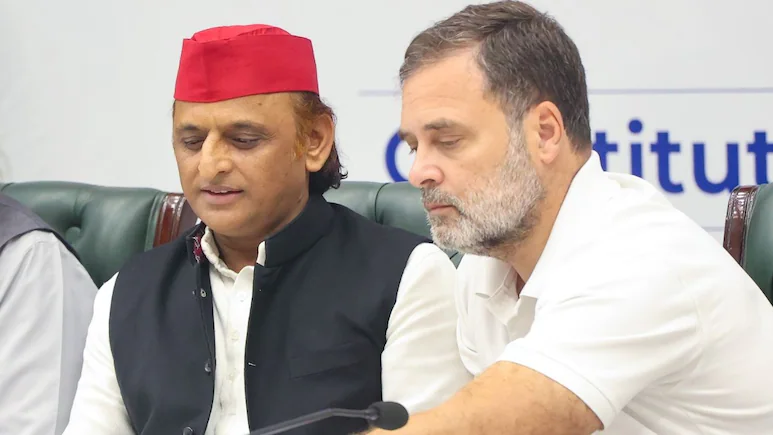
The Samajwadi Party (SP), led by Akhilesh Yadav, is preparing to take a firm position in seat-sharing negotiations with the Congress ahead of the 2027 Uttar Pradesh Assembly elections. The party is reportedly unwilling to give up constituencies where it won or finished runner-up in the 2022 Assembly polls, a stance that could significantly limit the number of seats available to its INDIA bloc ally.
Although both parties are expected to contest the election together, their differing expectations over seat allocation could make negotiations challenging. The SP is prioritising electoral winnability and its existing political strength, while the Congress is seeking what it considers a fair and respectful share of constituencies.
SP Unlikely to Offer Congress 100 or More Seats
According to people familiar with the SP's position, the party is reluctant to negotiate over constituencies where its candidates won in 2022 or finished second. In that election, the SP secured 111 seats and came runner-up in another 223 constituencies.
Together, those results cover 334 of Uttar Pradesh's 403 Assembly seats. If the party maintains its position on all these constituencies, only 69 seats would remain outside that category for potential negotiations with the Congress and other allies.
The SP's approach suggests that the Congress is unlikely to receive 100 or more seats. However, the final allocation has not been decided, and the two parties are yet to begin formal seat-by-seat negotiations.
Congress Seeks a Larger Share of Constituencies
The Congress has been pushing for a substantial number of seats, arguing that its improved performance in the 2024 Lok Sabha elections has strengthened its position within the alliance.
The party reportedly sought 181 of Uttar Pradesh's 403 Assembly constituencies, including several currently represented by SP legislators. Congress leaders have also emphasised the need for dignity and respect during negotiations, signalling that they want their electoral contribution to be recognised.
In the 2022 Assembly election, however, the Congress contested 399 seats and won only two. The party believes its subsequent performance in the parliamentary election, when it won six of the 17 Lok Sabha seats it contested in Uttar Pradesh, demonstrates that its prospects have improved.
Amethi and Rae Bareli Could Become Flashpoints
Constituencies in Amethi and Rae Bareli are likely to be among the most sensitive issues in the negotiations.
The Congress considers these areas politically important because of its longstanding association with the Gandhi family and its parliamentary victories in the region. It may seek Assembly seats within these Lok Sabha constituencies as part of a broader arrangement.
The SP, however, has a strong claim to several of these constituencies because its candidates currently represent them in the Assembly. The party is reportedly reluctant to surrender seats held by its sitting legislators, creating a potential conflict between the Congress's regional ambitions and the SP's existing electoral base.
Similar disagreements could arise in other constituencies where the Congress wants to expand its presence but the SP believes it has stronger candidates.
Committees Expected to Lead Negotiations
The two parties have agreed in principle to establish committees to handle the seat-sharing discussions. The proposed negotiations are expected to take place in New Delhi on November 23 and 24, although the arrangements and representatives were still being finalised as of November 18.
The Congress side is expected to include senior leaders KC Venugopal, Rajendra Gautam, Aradhana Mishra and Imran Masood. Priyanka Gandhi Vadra is expected to oversee the negotiations and could participate in discussions.
The SP is considering its own panel, with leaders including Rajeev Rai and Dharmendra Yadav among those mentioned. The final decision on the seat-sharing formula is expected to rest with Akhilesh Yadav and the Congress leadership, including Rahul Gandhi.
Alliance Unity Faces a Crucial Test
Despite the differences, both parties have indicated that they want to preserve their alliance and challenge the BJP in Uttar Pradesh. Their cooperation proved electorally significant in the 2024 Lok Sabha election, when the INDIA bloc performed strongly in the state.
The challenge now is to translate that parliamentary understanding into an Assembly-level arrangement acceptable to both sides. The SP wants to protect constituencies where it has an established advantage, while the Congress hopes to capitalise on its recent gains.
The coming negotiations will determine whether the parties can bridge that gap without weakening their broader opposition alliance ahead of the 2027 election.