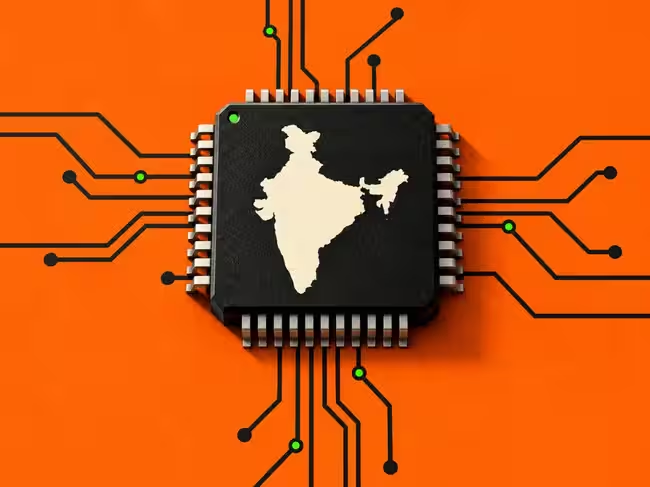
Artificial intelligence is rapidly becoming a major driver of economic growth, technological innovation and national competitiveness. For India, the next challenge is not simply adopting AI tools developed abroad but building the infrastructure, expertise and domestic capabilities needed to develop and manage artificial intelligence independently.
This approach, commonly known as sovereign AI, could help India protect sensitive data, strengthen national security, support domestic innovation and reduce dependence on foreign technology providers. As global supply chains and geopolitical relationships evolve, control over critical AI systems is becoming an increasingly important strategic priority.
What Is Sovereign AI and Why Does It Matter?
Sovereign AI refers to a country's ability to develop, operate and govern artificial intelligence using capabilities that it can control. These capabilities include computing infrastructure, data resources, AI models, semiconductor technology and skilled professionals.
For India, sovereign AI does not necessarily mean avoiding international technology or collaboration. Instead, it means developing sufficient domestic capacity to ensure that essential systems can operate reliably and securely, even when external conditions change.
Countries that depend heavily on foreign AI infrastructure may face challenges involving data governance, service availability, technology costs and access to advanced computing resources. Developing domestic alternatives can provide greater flexibility and strengthen long-term technological resilience.
AI Could Become a Major Engine of Economic Growth
Artificial intelligence has the potential to improve productivity across manufacturing, financial services, healthcare, education and government operations. Businesses can use AI to automate repetitive tasks, analyse large datasets and make faster, better-informed decisions.
India has already developed extensive digital infrastructure through systems such as Aadhaar, the Unified Payments Interface (UPI) and DigiLocker. These platforms have expanded access to digital services and created opportunities for innovation at a national scale.
The next step is to build AI infrastructure that allows businesses, public institutions and startups to develop and deploy intelligent applications more widely.
Domestic AI capabilities could also attract investment, create skilled employment and help Indian companies compete in international markets. However, these benefits will depend on whether investments translate into practical applications, sustainable businesses and measurable improvements in productivity.
Computing Infrastructure and Semiconductors Are Critical
Developing advanced AI requires substantial computing power, reliable data centres and access to specialised chips. These resources are expensive and can become bottlenecks when demand grows faster than available capacity.
India's efforts to expand semiconductor manufacturing, digital infrastructure and national AI programmes are therefore important components of its technology strategy.
Access to domestic computing resources could help researchers and startups develop models without relying entirely on overseas platforms. It may also improve the affordability and availability of AI services, particularly for organisations that cannot independently finance expensive infrastructure.
At the same time, building competitive infrastructure requires significant investment, reliable electricity, efficient cooling systems and a steady supply of skilled engineers.
National Security and Sensitive Data Protection
Sovereign AI has implications beyond commercial growth. Defence, critical infrastructure and public administration increasingly depend on digital systems that process sensitive information.
Excessive reliance on external technologies for critical operations may introduce risks involving data access, service disruption and dependence on decisions made outside India.
Domestic AI systems could give authorities greater control over how sensitive information is stored, processed and protected. They could also support applications in cybersecurity, infrastructure monitoring and strategic planning.
However, domestic ownership alone does not guarantee security. Strong cybersecurity practices, independent testing, transparent governance and clear accountability remain essential.
Agriculture and Public Services Offer Major Opportunities
India's diverse economy creates opportunities to apply AI to challenges that require local knowledge and context.
In agriculture, AI systems could combine satellite imagery, weather forecasts, soil information and crop data to help farmers make informed decisions. Better forecasting and supply-chain analysis could also reduce waste and improve resource management.
Healthcare, education and financial services offer further opportunities. AI tools designed for Indian languages and local conditions could make information and services more accessible to people who are underserved by conventional digital platforms.
For these applications to succeed, systems must be reliable, affordable and suitable for India's varied linguistic, economic and regional needs.
Building an Integrated Indian AI Ecosystem
India's long-term success will depend on connecting government initiatives, private-sector investment, academic research and startup innovation. Developing domestic AI models is only one part of the challenge; the country must also strengthen its computing infrastructure, research capabilities and talent pipeline.
Responsible AI practices will be equally important. Privacy protection, fairness, transparency and appropriate human oversight must accompany wider deployment.
Sovereign AI could become a foundation for India's next phase of economic development, but progress will require sustained investment and effective coordination. By combining domestic technological capabilities with international cooperation, India can work towards an AI ecosystem that supports innovation, strengthens resilience and creates economic opportunities across the country.