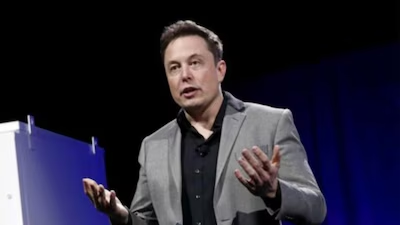
New Delhi, October 11, 2026: Elon Musk's push to bring Starlink satellite internet to India has sparked a wider debate over competition, connectivity and affordability. While the SpaceX founder argues that satellite broadband could help underserved communities access high-speed internet, experts have questioned whether the service would be financially accessible to rural households that need better connectivity the most.
The debate has intensified after Musk accused unnamed powerful business interests of obstructing Starlink's entry into India to protect established players. The government rejected allegations of an unfair regulatory framework, saying satellite communication companies must follow the applicable approval and security procedures.
Beyond the political disagreement, the practical question remains whether satellite internet can offer a meaningful alternative to India's existing broadband and mobile data services, particularly for people living in remote villages.
Affordability Could Determine Starlink's Reach
Starlink uses a network of low-Earth-orbit satellites to deliver internet connectivity without relying on conventional terrestrial mobile towers or cable infrastructure. This approach can be particularly useful in geographically isolated locations where building traditional networks is expensive or difficult.
However, providing coverage and making a service affordable are two different challenges.
Satellite internet generally requires specialised user equipment, including a compatible antenna and router, in addition to recurring subscription payments. Installation, equipment replacement and electricity requirements can add to the overall cost of accessing the service.
For households with limited disposable income, these expenses may present a significant barrier. Rural communities that currently depend on inexpensive mobile data could find it difficult to justify a more expensive satellite connection unless it provides substantially better performance or solves a connectivity problem that existing services cannot address.
This raises questions about how widely Starlink could be adopted if its initial pricing is positioned towards businesses, institutions and customers willing to pay a premium for connectivity.
India's Low-Cost Mobile Data Presents a Challenge
India's telecommunications market has expanded rapidly, helped by widespread smartphone adoption, competitive mobile operators and relatively inexpensive data packages.
This has changed the economics of internet access. For many households, a mobile connection already provides sufficient bandwidth for messaging, online education, video streaming and routine digital services.
Starlink would therefore need to demonstrate a clear advantage over existing options rather than rely solely on the promise of faster internet.
Its strongest potential market could be locations where terrestrial networks remain unreliable or unavailable. In such areas, the relevant comparison is not necessarily satellite internet versus inexpensive mobile data, but satellite connectivity versus having little or no reliable internet access.
The commercial opportunity will depend on the balance between service costs, network performance and the needs of individual customers.
Remote Villages Could Still Benefit
Despite affordability concerns, satellite broadband could play an important role in India's digital infrastructure.
Remote schools could use reliable connectivity for online learning, while healthcare facilities might benefit from improved access to digital records and remote consultations. Local businesses could connect to online marketplaces, and public institutions could strengthen communications in areas where conventional infrastructure is limited.
Satellite services may also provide an additional communications option during natural disasters, when terrestrial networks are damaged or disrupted.
However, these benefits would depend on local conditions, reliable electricity, suitable equipment and sustainable funding. Community internet centres, public institutions and shared-access models could help distribute costs among multiple users instead of requiring every household to purchase an individual connection.
Such approaches may prove more practical in low-income areas than expecting satellite broadband to replace mobile internet for every consumer.
Government Rejects Allegations of Unfair Treatment
Musk's comments have also placed India's satellite communication approval process under scrutiny. The SpaceX chief alleged that powerful business interests were attempting to preserve their market position by preventing Starlink from launching.
India's Communications Ministry rejected the suggestion that the country's regulatory framework was discriminatory. Authorities have said satellite communication providers must satisfy applicable security and authorisation requirements before commercial operations can begin.
Starlink's entry also comes amid competition involving established telecom operators and other satellite communication providers. The outcome will depend not only on commercial competition but also on compliance with India's rules governing spectrum, security and network operations.
Musk's allegations have not independently established that a competitor or business group caused the delay.
Competition Must Translate Into Affordable Access
The Starlink controversy highlights two separate policy questions: whether India should encourage additional providers to compete in satellite communications and how those services can reach people who remain underserved.
More competition can expand consumer choice, but its benefits are not automatic. Pricing, coverage, equipment costs and the availability of suitable alternatives will determine whether new services improve access for lower-income communities.
For Starlink, gaining regulatory approval would be only the first step. Its longer-term impact in India will depend on whether it can offer a commercially sustainable service while addressing connectivity gaps that existing networks have struggled to fill.
The central test will be whether satellite broadband becomes a practical solution for underserved regions or remains primarily an option for customers and institutions able to absorb its higher upfront costs.