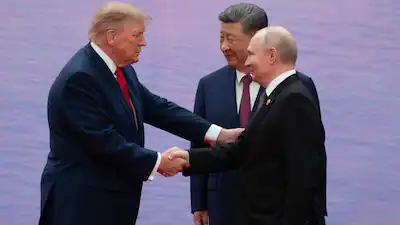
The unprecedented meeting between US President Donald Trump, Chinese President Xi Jinping and Russian President Vladimir Putin in Shenzhen has produced a joint peace declaration, but its practical impact remains uncertain. The November 19, 2026, summit brought together leaders of three major nuclear powers, generating striking diplomatic imagery and promises of cooperation. Yet it offered few concrete solutions to the wars in Ukraine and Iran or the wider tensions shaping international security.
The declaration outlines commitments to reform the United Nations, increase supplies of refined petroleum products, reduce nuclear risks and uphold protections concerning the immunity of state officials. However, the document provides few specific targets or deadlines, leaving important questions about how the commitments will be implemented.
The meeting could eventually mark a meaningful shift in relations among the three powers. For now, however, the difference between diplomatic symbolism and tangible results remains the central issue.
1. Can the declaration help end the wars in Ukraine and Iran?
The most significant omission is the absence of any direct reference to either conflict in the final declaration.
Trump said he had raised both wars during discussions with Xi and Putin. Putin also referred to Ukraine in his opening remarks, while Xi emphasised the importance of cooperation among major powers. Nevertheless, the published commitments did not establish a ceasefire framework, a timetable for negotiations or a mechanism for ending either conflict.
This leaves the summit’s most pressing diplomatic question unresolved: can three leaders who have substantial influence over global security turn their discussions into practical steps towards peace?
Without follow-up negotiations involving the parties directly engaged in the wars, the declaration risks remaining a general statement of intent rather than a path to conflict resolution.
2. Will nuclear powers commit to meaningful arms control?
Nuclear security was another major subject of the summit. The three leaders reaffirmed that nuclear war must never be fought and agreed to pursue dialogue on reducing nuclear risks and preventing proliferation.
However, the declaration stops short of announcing reductions in nuclear stockpiles, verification arrangements or a new arms-control treaty.
The challenge is particularly significant following the expiration of the New START treaty between the United States and Russia in February 2026. Trump has advocated a new agreement that would also involve China, whose nuclear arsenal remains smaller than those of Washington and Moscow.
Beijing has historically resisted joining negotiations on equal terms, arguing that the existing imbalance between the arsenals makes such an arrangement unfair.
The Shenzhen meeting may create an opening for discussions, but progress will depend on whether the governments establish formal negotiations and agree on measurable commitments. Without those steps, the promise to reduce nuclear risks will remain largely aspirational.
3. What does UN reform actually mean?
The declaration commits the three countries to reforming the United Nations so that it can respond more effectively to global challenges.
Yet it does not specify which reforms they support, whether they favour changes to the Security Council or how they would address disagreements over the use of veto powers.
All three countries are permanent members of the UN Security Council and possess veto authority. That gives them considerable influence over international security decisions, but their competing interests have also complicated efforts to reach consensus.
For China, the declaration offers an opportunity to reinforce its role in shaping discussions about global governance. For Russia, it provides a platform to underline its continuing influence in international affairs. For the United States, cooperation could offer a route towards addressing disputes through direct engagement with its strategic competitors.
The critical question is whether the three governments can agree on reforms that improve the institution’s effectiveness without simply advancing their own national interests.
4. Does the declaration protect state officials from international accountability?
One of the declaration’s most politically sensitive provisions concerns the immunity of state officials and the jurisdiction of the International Criminal Court (ICC).
The three leaders said the principle of state consent and respect for official immunities were important, adding that the ICC and similar institutions should not abuse their authority.
The provision has attracted particular attention because the ICC issued an arrest warrant for Putin in 2023 over alleged war crimes relating to the unlawful deportation and transfer of Ukrainian children. Russia rejects the court’s jurisdiction in the matter.
The declaration does not itself cancel the warrant or change the court’s legal powers. However, its language signals shared opposition among the three governments to what they describe as excessive or improper international judicial authority.
This raises a broader question about how the international community should balance the immunity of state officials with accountability for alleged serious international crimes.
5. Will promises on energy and diplomacy produce tangible benefits?
The declaration also commits the three countries to increasing the production and supply of refined petroleum products and maintaining stable energy flows.
Such cooperation could have wider economic implications at a time when conflict and disruptions to major shipping routes have heightened concerns about energy security. The Strait of Hormuz, in particular, has become a significant focus amid the war involving Iran.
However, the declaration does not provide production targets, delivery schedules, pricing arrangements or a clear framework for implementing the energy commitment.
Nor does it explain how cooperation would work alongside existing sanctions, trade restrictions and competing national priorities.
The same uncertainty applies to the summit’s broader diplomatic promises. Without defined responsibilities, deadlines and mechanisms for monitoring progress, it will be difficult to determine whether the meeting has produced lasting change.
A historic meeting, but its legacy remains uncertain
The Shenzhen summit was significant simply because the leaders of the United States, China and Russia met together for the first time in a trilateral format. It gave all three an opportunity to demonstrate diplomatic relevance and discuss shared concerns.
But a high-profile meeting is not the same as a peace agreement. The declaration sets out broad principles without resolving the wars, nuclear disagreements and institutional disputes that divide the three countries.
The next test will be whether the leaders follow through with sustained negotiations and concrete commitments.
For now, the Shenzhen declaration is best understood as an opening for further diplomacy rather than proof of a breakthrough. Its historical importance will ultimately depend on what happens after the cameras have gone and the negotiations move beyond the language of shared intentions.