The International Court of Justice (ICJ) has ruled that Myanmar committed genocide against the Rohingya minority during the military operations carried out in northern Rakhine State in 2017. The landmark judgment, delivered on November 19, 2026, marks the first time the United Nations’ principal judicial body has held a state responsible for genocide.
The verdict has implications far beyond Myanmar. It raises questions about the future of more than 1.3 million Rohingya refugees, the prospects for their safe return, accountability for atrocities and the challenges facing neighbouring countries, including India, which has its own Rohingya refugee population.
The judgment also comes as Myanmar remains engulfed in conflict, with armed resistance groups controlling territory in parts of the country and conditions in Rakhine State continuing to complicate humanitarian efforts.
What Did the ICJ Decide?
The case was brought by The Gambia in November 2019, alleging that Myanmar had violated the 1948 Genocide Convention through its treatment of the Rohingya, a predominantly Muslim ethnic minority.
In its final judgment, the court found that Myanmar committed genocide during the 2017 military operations. Judges examined evidence of killings, sexual violence, attacks on children and fleeing civilians, and the destruction of Rohingya villages.
The court also found that Myanmar had failed to meet its obligations to prevent and punish genocide and had breached its duty to preserve evidence related to the allegations.
The judgment requires Myanmar to take steps to prevent further violations, investigate suspected perpetrators and provide reparations to the Rohingya. These include measures supporting safe, voluntary and dignified returns, family reunification and compensation for the harm suffered.
The amount and arrangements for compensation will be determined in a subsequent phase of the proceedings.
The ruling is final and cannot be appealed, although enforcing it will remain a significant challenge.
Why the Rohingya Crisis Matters to India
India is affected by the crisis because of its geographic proximity to Myanmar and its wider security and humanitarian interests in South Asia.
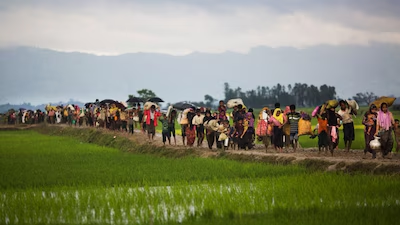
The Rohingya have faced decades of discrimination in Myanmar, including restrictions on citizenship, movement and access to essential services. The 2017 military crackdown forced more than 700,000 people to flee, with most seeking refuge in neighbouring Bangladesh.
Bangladesh now hosts approximately 1.3 million Rohingya refugees, placing considerable pressure on its resources and humanitarian infrastructure.
India also hosts Rohingya refugees, some of whom entered the country after fleeing persecution in Myanmar. Their presence has generated debate over refugee protection, national security, immigration rules and the country's responsibilities under international law.
For New Delhi, the ICJ judgment could increase international pressure for a durable solution to the crisis. However, the ruling does not automatically require India to grant citizenship or permanent residency to Rohingya refugees living within its borders.
India will have to consider the legal and diplomatic implications of the verdict alongside its existing policies on undocumented migrants and national security.
Rebel Control of Rakhine Complicates the Situation
One of the biggest obstacles to resolving the crisis is the deteriorating security situation inside Myanmar.
The country has experienced widespread conflict since the military seized power in February 2021. Fighting between the military and resistance groups has further weakened state institutions and disrupted humanitarian operations.
In Rakhine State, the Arakan Army, an ethnic armed organisation, has gained control over substantial territory. This has complicated efforts to protect the remaining Rohingya population and establish conditions for refugees to return safely.
The Rohingya continue to face risks linked to violence, displacement and restrictions on movement. The changing balance of power also raises questions about which authorities can guarantee security, protect minority rights and facilitate the delivery of humanitarian assistance.
For India, instability in Myanmar has implications for border management and regional security, particularly in the northeastern states that share a border with the country.
A return of refugees cannot be considered sustainable unless the security situation improves and credible guarantees are established for their protection.
Will the Verdict Help Rohingya Refugees Return Home?
The judgment provides formal legal recognition of the atrocities committed against the Rohingya, but it does not mean that refugees can immediately return to Myanmar.
A safe return requires more than a court ruling. Refugees need protection from renewed violence, freedom of movement, access to housing and livelihoods, and assurances that they will not face the discrimination that contributed to their displacement.
The ICJ has called for safe, voluntary and dignified returns and family reunification. However, the court has limited means of enforcing its decisions directly, particularly when a state refuses to cooperate.
Myanmar's continuing conflict and the uncertainty surrounding governance in Rakhine State make implementation difficult.
Bangladesh has repeatedly maintained that repatriation must be safe, sustainable and voluntary. The latest judgment strengthens the legal basis for international pressure on Myanmar, but the practical obstacles remain considerable.
What Does the Judgment Mean for International Law?
The ruling represents a significant development in the application of the Genocide Convention.
Genocide cases require courts to establish not only that serious atrocities occurred but also that the perpetrators intended to destroy a protected national, ethnic, racial or religious group, in whole or in part.
By holding Myanmar responsible, the ICJ has established a landmark precedent in state responsibility for genocide. The judgment may also influence how courts and legal experts assess evidence in other cases involving allegations of mass atrocities.
However, the decision does not automatically determine the outcome of separate proceedings involving other countries. Each case must be assessed on its own evidence and legal circumstances.
The ruling also reinforces the distinction between state responsibility, which the ICJ examines, and the individual criminal responsibility of military commanders or other alleged perpetrators, which falls within the jurisdiction of appropriate criminal courts.
What Happens Next?
The central challenge will be translating the judgment into meaningful improvements in the lives of Rohingya communities.
Myanmar is expected to take steps to comply with the court's orders, while the question of compensation will be addressed in further proceedings. International organisations and governments may use the judgment to press for investigations, humanitarian access and protections for displaced people.
For India, the outcome presents both diplomatic and practical challenges. New Delhi must navigate its relationship with Myanmar, its security concerns along the border and the humanitarian consequences of a crisis that has displaced more than a million people.
Ultimately, the verdict is a major milestone in the pursuit of justice for the Rohingya, but it is not the end of their struggle. Lasting progress will depend on whether Myanmar implements the court's requirements, whether displaced families can return safely and whether the international community can sustain pressure for accountability and protection.