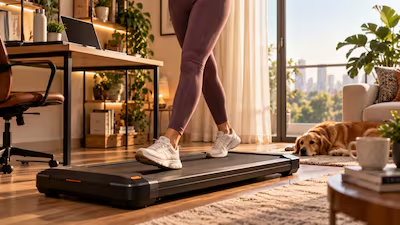
Walking pads are becoming a popular option for people who want to stay active while working from home or spending long hours indoors. These compact treadmill-like devices allow users to walk without leaving their homes, making it easier to add movement to a busy daily schedule. However, while walking pads can help reduce sedentary time, they do not offer every benefit associated with walking outdoors.
The main advantage of a walking pad is convenience. People can use one during breaks, while listening to audio or performing certain low-attention tasks. Outdoor walking, meanwhile, provides a change of environment, exposure to natural daylight and opportunities to enjoy parks, neighbourhoods and other open spaces.
Rather than treating the two options as competitors, fitness experts generally recommend choosing the approach that makes regular physical activity easier to maintain.
How Walking Pads Help People Stay Active
A walking pad is a compact walking machine designed primarily for indoor use. Many models have a simple control panel, adjustable speed settings and a slim design that can fit beneath a standing desk.
For people who spend much of the day sitting at a computer, these devices can provide an opportunity to move more frequently. Short walking sessions can break up extended periods of inactivity without requiring a separate trip outside.
Regular movement supports cardiovascular health, circulation, joint mobility and general fitness. Walking also contributes to overall physical activity levels, particularly when it replaces time that would otherwise be spent sitting.
Another advantage is flexibility. Users can fit brief sessions into their schedules instead of relying entirely on a single workout at the end of the day. Walking pads may also be useful when rain, extreme temperatures or other circumstances make outdoor exercise less convenient.
However, their usefulness depends on regular use, appropriate equipment and a comfortable walking pace.
What Outdoor Walking Offers That Indoor Machines Cannot Fully Reproduce
Walking outside provides benefits beyond the physical movement itself. Natural surroundings, daylight and changes in scenery can make a walk more enjoyable and provide a mental break from work or screen time.
Outdoor routes also vary naturally. Pavements, gentle slopes and different walking environments introduce changes in terrain that most basic walking pads do not provide. Depending on the route and pace, these variations may challenge balance and muscles differently.
Spending time outdoors can also create opportunities for social interaction. Walking with friends or family may make physical activity more enjoyable and easier to maintain over time.
For some people, an evening walk provides a useful transition between work and personal time. It offers a chance to step away from indoor responsibilities, clear the mind and establish a consistent daily routine.
These benefits do not mean outdoor walking is always superior for every individual. Weather, accessibility, personal safety and mobility concerns can make indoor exercise a more practical choice.
Walking Pads Have Limitations
Despite their convenience, walking pads are not a complete replacement for a varied fitness routine. Most basic models are designed for walking rather than running, and some lack adjustable inclines or features that allow users to increase exercise intensity.
Walking slowly while working can add movement to the day, but it may not provide the same cardiovascular challenge as a purposeful, brisk walk. The amount of exercise achieved depends on the duration, speed and intensity of the activity.
There are also practical considerations. Users need enough space, a stable surface and suitable footwear. Walking while concentrating on demanding tasks can affect coordination, so activities requiring close attention should be performed while stationary.
People should begin at a comfortable pace, increase activity gradually and stop if they experience pain, dizziness or unusual discomfort.
Should You Choose a Walking Pad or an Evening Walk?
The best option depends on an individual's schedule, environment and preferences. A walking pad may be particularly useful for people who work at desks, have limited opportunities to go outside or want to break up long periods of sitting.
Outdoor walking may be preferable for those who enjoy fresh air, natural surroundings and exploring their neighbourhood. Combining both options can provide flexibility throughout the week.
For example, someone could use a walking pad during short work breaks and take an outdoor walk when time and conditions allow. Neither option needs to replace all other forms of exercise.
Consistency Matters More Than the Equipment
Walking pads can make movement more accessible, but purchasing a device does not automatically improve fitness. Their value comes from using them regularly and incorporating physical activity into everyday life.
Adults are generally advised to aim for at least 150 minutes of moderate-intensity aerobic activity each week, alongside muscle-strengthening activities on two or more days. Individual needs and abilities may differ.
Ultimately, walking pads and outdoor walks can complement each other. The most useful choice is the one that encourages consistent movement while allowing enough variety, comfort and enjoyment to sustain the habit over time.