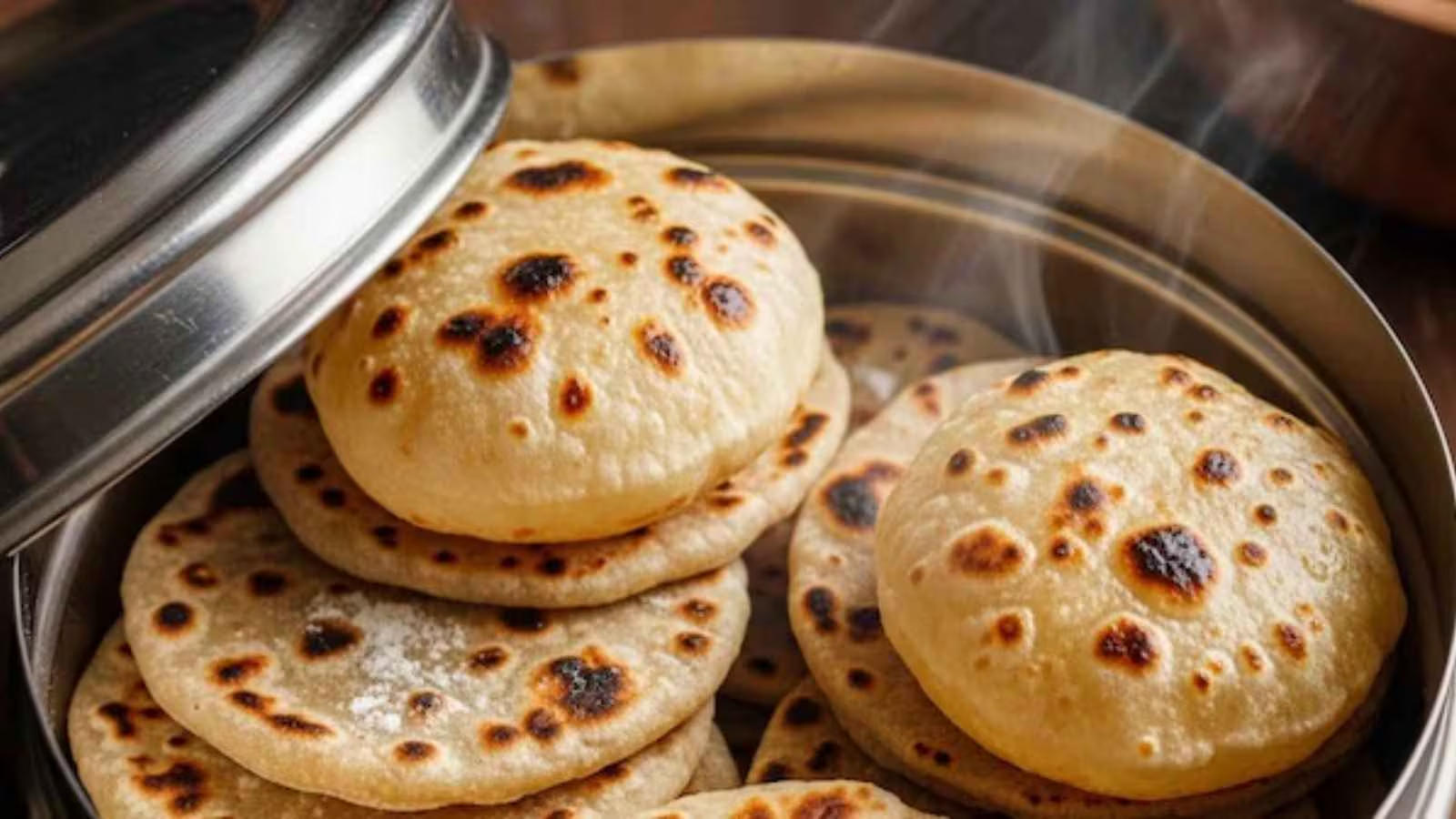
Freshly made rotis are a staple in many Indian households, but keeping them soft and fresh after cooking can be challenging. When hot chapatis are placed directly inside a closed casserole, trapped steam can condense into water droplets, leaving the rotis damp, sticky or uneven in texture.
A simple kitchen tip involving bay leaves, commonly known as tej patta, has attracted attention as a possible way to improve roti storage. However, bay leaves are primarily used to add aroma and flavour to food, and there is limited evidence that placing them in a casserole independently keeps chapatis fresh for longer. Proper storage remains the more reliable solution.
How the Bay Leaf Trick Is Used
Bay leaves are widely used in Indian cooking, particularly in pulao, biryani, dals and curries. Their distinctive aroma comes from naturally occurring aromatic compounds.
For the roti-storage trick, a clean, completely dry bay leaf may be placed inside the casserole alongside the stored chapatis. Some people use the method as a traditional household tip, hoping that the leaf will help keep the stored food in better condition.
However, the leaf should not be treated as a moisture absorber or a food preservative. It cannot replace appropriate storage practices, and its effectiveness in extending the freshness of rotis has not been firmly established.
Why Rotis Become Damp Inside a Casserole
The main reason rotis become soggy is trapped moisture. Freshly cooked chapatis release steam, and when they are immediately enclosed in a tightly covered container, that steam can collect on the lid and drip back onto the food.
Excess moisture can affect the texture of the rotis, making them feel sticky instead of soft. At the same time, leaving chapatis exposed to air for too long can cause them to dry out and become hard.
The aim is therefore to retain enough warmth and softness without allowing excessive condensation to build up.
5 Practical Tips to Keep Rotis Soft and Fresh
1. Allow Excess Steam to Escape
After cooking each roti, leave it uncovered briefly on a clean plate or rack so that excess steam can escape. Avoid leaving it exposed for too long, as this can dry it out.
2. Use a Clean Cotton Cloth
Line the casserole with a clean, dry cotton cloth and gently wrap the stacked rotis in it. The cloth helps manage surface moisture while reducing direct contact between the chapatis and condensation.
3. Avoid Overfilling the Container
A casserole packed tightly with too many rotis can trap moisture between the layers. Store a manageable quantity so the chapatis are not excessively compressed.
4. Choose the Right Storage Container
A well-insulated casserole can help retain warmth. Make sure the container is clean and dry before adding the rotis, and avoid sealing it while excessive steam is still escaping.
5. Store Leftovers Safely
If rotis need to be kept for an extended period, food safety matters as much as texture. Refrigerate leftovers promptly rather than leaving them at room temperature for several hours, particularly in hot weather. Reheat them thoroughly before eating.
Can Bay Leaves Really Keep Rotis Fresh?
Bay leaves can add a pleasant aroma, but there is no strong scientific evidence that a leaf placed inside a roti casserole reliably prevents sogginess or extends shelf life. The outcome depends much more on moisture control, storage conditions and how long the chapatis are kept.
For everyday cooking, the most dependable approach is to use a clean casserole, allow excess steam to escape and wrap the rotis in a suitable cloth. The bay leaf can remain an optional traditional touch, but it should not be relied on to preserve food.
With these simple habits, households can make it easier to enjoy soft, warm chapatis at mealtimes while avoiding unnecessary kitchen waste.