Bengaluru-based spacetech startup OXG Space has raised ₹17 crore in a funding round led by Aum Ventures, with participation from the co-founders of Skyroot Aerospace and the founder of Cosmoserve. The company plans to use the fresh capital to develop satellite connectivity and in-orbit computing technologies designed to help Earth-observation satellites process and transmit information more quickly.
The funding will support Mission Synapse, a 12-month programme intended to demonstrate the startup’s core technologies in orbit. The initiative aims to address a persistent challenge in satellite operations: the time it takes to transfer collected data to Earth and convert it into useful information.
The investment highlights growing interest in India's space technology sector, particularly in infrastructure that could make satellite networks more responsive and efficient.
Who Invested in OXG Space?
Aum Ventures led the funding round through its India Innovation Fund II. Pawan Kumar Chandana and Bharath Daka, co-founders of launch vehicle company Skyroot Aerospace, also participated in the investment. Chiran Phanindra, founder of Cosmoserve, joined the round as well.
The investment will help OXG Space advance its technology development and prepare for demonstrations of its satellite communication and computing systems.
Aum Ventures has invested in several businesses across India's deep-technology ecosystem, including companies working in space technology and advanced engineering. The latest investment reflects continued investor interest in companies developing infrastructure for emerging space-based applications.
The Satellite Data Challenge
Earth-observation satellites collect information used in areas such as environmental monitoring, infrastructure planning, agriculture and national security. However, capturing information from space is only one part of the process. The data must also be transmitted, processed and delivered to the organisations that need it.
Many satellites rely on communication windows when they pass within range of ground stations. When a suitable connection is unavailable, collected data may remain stored onboard until the next opportunity to transmit it.
This can delay the delivery of satellite imagery and other information. According to figures cited by the company, the interval between observation and usable insights can range from four to 12 hours, while satellites may remain out of contact for approximately 74% of the day.
OXG Space aims to reduce these delays by bringing more communication and computing capabilities directly into orbit instead of relying exclusively on ground infrastructure.
Building an Orbital Connectivity Network
The startup is developing an orbital network that combines satellite connectivity with onboard computing. Its approach is intended to allow satellites to communicate more consistently and process selected information before sending it to Earth.
The company describes its concept as building space-based infrastructure similar in purpose to cell towers, using technologies inspired by modern telecommunications networks.
Its planned technology includes a Ka-band phased-array antenna, a deployable mesh reflector for communication links with the ground, and a deployable solar array to power communications and computing equipment.
The antenna is targeting an initial link capacity of 1 gigabit per second, with a longer-term roadmap towards 64 gigabits per second per spacecraft. These figures represent development targets rather than demonstrated operational performance.
Mission Synapse to Demonstrate Core Technologies
The fresh funding will support Mission Synapse, a programme planned over 12 months to demonstrate the startup's key systems in orbit.
The programme will focus on validating communication hardware, deployable structures and power systems needed to support the proposed network. Successful demonstrations could help the company move towards providing more persistent connectivity and onboard processing for satellite operators.
The technology could be relevant to organisations that depend on timely Earth-observation information, including commercial operators and government users. Its practical value will depend on technical performance, reliability and the ability to integrate with existing satellite systems.
Founders Bring ISRO Experience
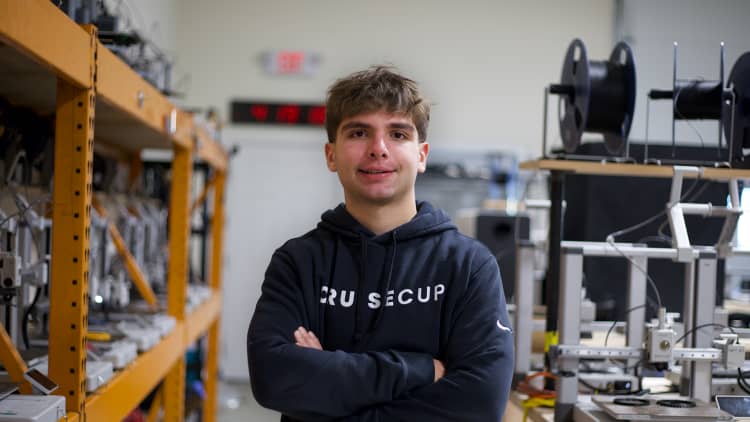
OXG Space was founded by Akash Shetty and Sanjay Gorur, former engineers associated with the Indian Space Research Organisation. The founders bring more than 17 years of combined experience across India's space programmes, including work on spacecraft systems connected with Chandrayaan-2 and Chandrayaan-3.
Their engineering backgrounds are relevant to the company's focus on spacecraft mechanisms, antennas, communications and other systems designed to operate in demanding space environments.
What Lies Ahead for OXG Space?
The next major milestone will be the demonstration of the technologies planned under Mission Synapse. The results could help establish whether the company's approach can reduce communication delays and support more efficient satellite data processing.
As satellite constellations expand, demand for faster data delivery and more capable orbital infrastructure is likely to remain an important area of development. OXG Space is positioning itself in this emerging market, although its longer-term prospects will depend on successful testing, customer adoption and the ability to scale its technology commercially.