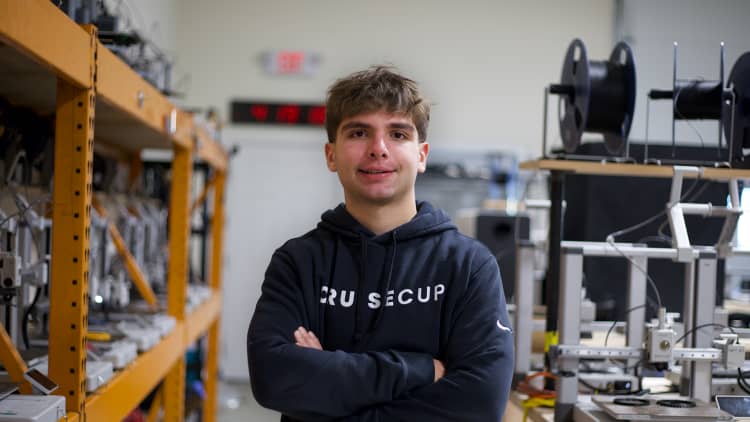
A 19-year-old entrepreneur from New York has turned a small investment in 3D-printing equipment into a fast-growing business generating hundreds of thousands of dollars in annual revenue. Mike Satterlee, the founder of CruiseCup, built the company around innovative drink accessories, demonstrating how product design, online marketing and customer demand can help a small venture scale.
Satterlee started with approximately $500 to purchase his first 3D printer in 2022. What began as an experiment with digital manufacturing eventually developed into a full-time business operating more than 160 printers from a warehouse in Clifton Park, New York.
According to reported business figures, CruiseCup generated approximately $808,000 in gross revenue during 2025. By September 2026, the company had recorded around $601,000 in revenue for the year, highlighting continued demand for its products.
From a Small Investment to a Manufacturing Business
Satterlee's interest in entrepreneurship began before CruiseCup. He experimented with different product ideas, including accessories for popular footwear, using 3D printing to manufacture items.
His earlier venture, Solefully, sold shoe charms and related accessories. The business reportedly generated about $250,000 in sales in 2024, providing valuable experience and helping him expand his operations.
As he explored additional opportunities, Satterlee shifted his attention towards drinkware accessories. Rather than relying on conventional designs, he developed products intended to stand out visually and offer a distinctive user experience.
The move eventually led to CruiseCup, which specialises in 3D-printed drink holders and can coolers.
The Product That Helped CruiseCup Gain Attention
One of the company's most successful products is a hard-shell drink cooler designed to hold two cans. Its unusual loading mechanism allows users to insert cans from either end, making the product different from conventional insulated drink holders.
In August 2025, Satterlee shared a demonstration of the product on Instagram. The video attracted substantial attention online, helping introduce CruiseCup to a much larger audience.
The increased visibility translated into a sharp rise in orders. The company reportedly generated approximately $100,000 in revenue during that month, creating a significant production challenge for its existing equipment.
At the time, Satterlee operated around 60 printers. Meeting the sudden demand required additional manufacturing capacity, so he used incoming revenue to purchase more machines rather than treating the increase in sales as personal income.
The experience illustrated how social media can help a product reach potential customers quickly, while also creating operational pressure when demand rises faster than production capacity.
How the Company Manages Its Growth
CruiseCup now operates more than 160 3D printers and receives hundreds of orders on many days. Its sales primarily come through its own website and TikTok Shop, with Amazon contributing a smaller share.
Satterlee runs the company full-time with one other employee. His responsibilities include managing production, developing products and promoting the business.
Despite the impressive revenue figures, gross sales should not be confused with profit. A manufacturing business must cover expenses such as equipment, materials, warehouse rent, advertising, labour, packaging and shipping.
Satterlee reportedly takes home between $500 and $1,500 per month, choosing to reinvest much of the business's money into expansion. He lives with his parents, which also helps keep his personal living expenses relatively low.
The company has not publicly disclosed its annual profit figures, so its exact profitability cannot be calculated from revenue alone.
Plans for the Next Stage
Satterlee's future plans include expanding product options, exploring additional printing capabilities and pursuing broader retail distribution. These initiatives could help CruiseCup reach customers beyond its existing online channels.
However, sustaining growth will require more than a viral video. The company must continue developing appealing products, maintaining consistent quality and fulfilling orders efficiently as competition increases.
Lessons for Aspiring Entrepreneurs
CruiseCup's growth highlights several principles relevant to people interested in starting a business: testing product ideas, understanding customer demand, using digital platforms to reach audiences and reinvesting revenue to improve operations.
Its story also demonstrates that a large revenue figure does not automatically mean the founder receives an equally large personal income. Equipment, marketing and production costs can absorb a substantial share of sales.
For Satterlee, a modest initial investment became the foundation of a much larger manufacturing operation. The next challenge will be turning that early momentum into sustainable long-term growth.