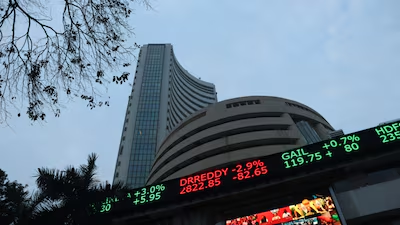
Indian stock markets opened lower on Monday as investors assessed corporate earnings, elevated crude oil prices and uncertainty across global markets. The BSE Sensex declined by more than 100 points in early trade, while the NSE Nifty 50 opened near the 23,150 mark. The rise in India VIX, a key indicator of expected market volatility, added to the cautious mood.
The weak opening reflected investors’ concerns about the outlook for major companies and the potential impact of expensive crude oil on the Indian economy. Market participants were also monitoring developments in international markets for further direction.
Sensex and Nifty Begin the Session in the Red
The benchmark indices came under pressure at the opening bell, with selling in select heavyweight stocks weighing on overall sentiment. The Nifty 50 hovered around the 23,150 level, while the Sensex slipped by more than 100 points.
The movement indicated a cautious start to the trading session rather than a decisive shift in the market’s broader direction. Investors were watching whether the indices could recover their opening losses or face additional selling pressure as the session progressed.
Stock-specific developments and quarterly earnings were expected to influence trading, particularly in sectors with a substantial weight in the benchmark indices.
India VIX Climbs 2.6%
India VIX rose 2.6%, signalling an increase in the market’s expectations of near-term volatility. The index is commonly used to assess how much movement investors anticipate in the Nifty 50 over the coming period.
A rise in India VIX often reflects greater uncertainty and demand for protection against potential market swings. However, it does not indicate whether the market will necessarily move higher or lower.
The increase came as traders evaluated several factors, including corporate earnings, international market movements and crude oil prices. Investors were likely to remain attentive to further changes in volatility during the session.
Crude Oil Prices Remain a Major Concern
Elevated international crude oil prices continued to weigh on sentiment. India imports a substantial portion of its oil requirements, making domestic economic conditions sensitive to sustained increases in global energy costs.
Higher crude prices can raise the import bill and place pressure on inflation. They may also increase operating expenses for companies in sectors such as aviation, transportation and other energy-intensive industries.
The impact on individual businesses can vary depending on their pricing power, cost structure and ability to pass higher expenses on to customers. Investors therefore continued to assess the potential consequences for corporate earnings and the broader economy.
Corporate Earnings in Focus
Quarterly financial results remained an important driver of stock-specific activity. Investors were assessing companies’ revenue growth, profitability, operating costs and management outlook to understand whether earnings could support current valuations.
Banking stocks were particularly important to the market’s direction because of their significant representation in the benchmark indices. Any unexpected results or changes in expectations for lending growth, asset quality and profit margins could influence sentiment across the financial sector.
As more earnings announcements arrive, market participants are likely to distinguish between companies with stronger operating performance and those facing pressure on profitability.
What Investors May Watch Next
The immediate direction of the market is likely to depend on movements in benchmark indices, changes in India VIX, global equity trends and developments in crude oil prices. Investors will also monitor buying and selling activity in heavyweight stocks and the response to corporate earnings.
A rise in volatility can lead to sharper price movements, making it important to avoid drawing conclusions from the opening session alone. The market’s subsequent performance will provide a clearer indication of whether the initial weakness persists.
For investors, the key takeaway is that a weak opening and a higher volatility index reflect uncertainty, but neither independently determines the market’s direction for the entire trading day. Corporate fundamentals, economic conditions and changing investor expectations will continue to shape trading activity.