Tensions between Bihar’s ruling Janata Dal (United) and the Bharatiya Janata Party have intensified following the JD(U)’s disappointing performance in the recent Legislative Council elections. The dispute has raised questions about trust between the two allies, particularly after two Independent candidates who defeated JD(U) nominees were publicly associated with the BJP.
The controversy has also given Rashtriya Janata Dal leader Tejashwi Yadav an opportunity to attack the ruling alliance. The Leader of the Opposition has questioned the BJP’s political intentions and demanded action against the two newly elected Independent Members of the Legislative Council (MLCs), arguing that their reported move towards the BJP raises concerns under the anti-defection law.
Despite the growing unease, the BJP has maintained that the National Democratic Alliance remains intact, while JD(U) leaders have indicated that the differences could be resolved through discussions.
JD(U)’s Poor Performance Triggers Questions Over Alliance Unity
The recent Bihar Legislative Council elections dealt a setback to the JD(U), which won only one of the four seats it contested. Its spokesperson Neeraj Kumar retained the Patna Graduates constituency, but the party lost the Tirhut Graduates, Saran Teachers and Darbhanga Teachers seats.
The results triggered internal discussions about the party’s campaign strategy and the support it received from its alliance partner. Some JD(U) leaders have alleged that the BJP did not adequately support the party’s candidates in constituencies where the NDA had agreed to field JD(U) nominees.
The defeat of Abhishek Jha in Tirhut Graduates and Pushkar Anand in Saran Teachers became particularly contentious because the winning candidates subsequently expressed support for the BJP.
JD(U) leaders reportedly viewed the BJP’s public association with the winners as a sign that the alliance’s electoral understanding had not been followed consistently. These allegations, however, have not been established as fact, and the BJP has rejected suggestions that the coalition is breaking apart.
Two Independent MLCs at the Centre of the Controversy
The dispute intensified after Bansidhar Brajwasi, who won the Tirhut Graduates seat, and Rahul Raj, who secured the Saran Teachers constituency, were photographed wearing saffron scarves during an event involving senior BJP leaders.
The BJP initially announced that the two Independents had joined the party. However, following questions about the constitutional implications of their move, both candidates said they had merely extended support to the BJP rather than formally becoming party members.
The distinction is significant because both were elected as Independents and defeated candidates officially fielded by the JD(U).
Rahul Raj had previously been associated with the BJP but was expelled after contesting the Saran Teachers seat as an Independent against the JD(U)’s nominee. His victory over Pushkar Anand added another layer to the disagreement between the two NDA partners.
The JD(U)’s concern is not limited to the election results themselves. Party leaders are also questioning whether the BJP’s actions were consistent with the understanding expected between coalition partners.
Tejashwi Yadav Demands Action Under Anti-Defection Law
Tejashwi Yadav has used the controversy to challenge the BJP’s conduct and demand the disqualification of the two Independent MLCs.
The RJD leader has argued that if the legislators formally joined the BJP after being elected as Independents, their actions could attract the disqualification provisions under the Tenth Schedule of the Constitution.
The anti-defection law provides that an elected Independent legislator can be disqualified for joining a political party after the election. The matter therefore hinges on whether Brajwasi and Raj became formal members of the BJP or simply offered political support.
The RJD, Congress and Jan Suraaj Party have raised objections and sought action. Jan Suraaj representatives have also approached Bihar Legislative Council Chairman Ram Bachan Rai over the issue.
The chairman has the authority to decide disqualification petitions under the Tenth Schedule, and any such decision remains subject to judicial review. Photographs or political statements alone do not automatically determine the legal outcome; the relevant evidence and circumstances would need to be examined.
BJP Rejects Claims of a Breakdown in the NDA
The BJP has sought to play down suggestions that the controversy threatens the alliance. Party representatives have maintained that the two Independent MLCs extended their support to the BJP and have denied that the episode signals a breakdown in relations with the JD(U).
JD(U) leaders, meanwhile, have indicated that the party is examining the reasons behind its electoral losses and the concerns raised during the campaign. The leadership has also expressed hope that the differences can be addressed through internal discussions.
The dispute comes at a sensitive time for Bihar’s ruling coalition, where both parties have political interests to protect. Although the BJP remains a major force in the state, the JD(U) continues to be an important constituent of the NDA.
Will the Political Dispute Affect Bihar’s Ruling Alliance?
The MLC election controversy has exposed the challenges of maintaining trust within a coalition. Electoral defeats can be addressed through organisational reviews, but suspicions that an alliance partner failed to support official candidates can create deeper tensions.
For the JD(U), the immediate challenge is to understand the reasons for its poor performance and ensure that future electoral arrangements are followed. For the BJP, managing its own political expansion without alienating its ally remains equally important.
Tejashwi Yadav’s intervention has added pressure by turning the dispute into both a political and constitutional issue. Whether the controversy leads to lasting friction will depend on the outcome of the legal proceedings, the parties’ internal discussions and their willingness to resolve their differences.
For now, the NDA remains in power, but the episode has raised fresh questions about trust, coordination and the balance of influence between Bihar’s two principal ruling allies.
US, Russia and Ukraine Hold Peace Talks in Abu Dhabi: Key Issues, Territorial Disputes and Prospects for a Deal
Representatives from the United States, Russia and Ukraine have begun a new round of trilateral negotiations in Abu Dhabi, seeking a path towards ending the war that has devastated Ukraine for more than four years. The talks, which began on November 10 and continued into Wednesday, November 11, mark the first such US-mediated meeting between the three sides since February.
The negotiations come amid renewed diplomatic efforts by US President Donald Trump to secure a settlement. However, major differences remain over territorial control, Ukraine’s future security arrangements and the conditions under which fighting could stop. Despite cautious optimism from Washington and Kyiv about the opening discussions, no breakthrough has been announced.
Why Are the Three Countries Meeting in Abu Dhabi?
The latest meeting is part of Washington’s renewed push to bring Moscow and Kyiv closer to a negotiated settlement. US envoys Steve Witkoff and Jared Kushner are involved in the diplomatic effort, with the United Arab Emirates hosting the discussions.
The agenda includes post-war security arrangements, de-escalation, humanitarian measures and possible steps towards ending the conflict. Ukrainian officials have also emphasised the need for credible security guarantees to prevent another Russian attack if a peace agreement is reached.
The first day of discussions lasted approximately four hours. US Secretary of State Marco Rubio described the talks as productive, while Ukrainian President Volodymyr Zelenskyy characterised them as constructive and substantive. A further session was scheduled for Wednesday, with officials indicating that considerable work remained.
Territorial Disputes Remain the Biggest Obstacle
The future of occupied Ukrainian territory remains one of the most difficult issues facing negotiators. Russia continues to demand control over the entire Donbas region, including areas that remain under Ukrainian control.
Moscow has also pushed for discussions about a broader European security framework, arguing that the wider security environment must be addressed alongside the war itself.
Ukraine, however, has rejected demands to surrender territory it has defended against Russian forces. Kyiv maintains that any settlement must protect its sovereignty and include security guarantees strong enough to deter future aggression.
Reports have suggested that US negotiators believe some flexibility might be possible on territorial questions. Ukrainian officials have pushed back against suggestions that Kyiv is prepared to make concessions without appropriate guarantees.
The talks therefore face a fundamental challenge: finding terms that both sides could accept without undermining their core security and territorial positions.
Ukraine Seeks Security Guarantees and a Lasting Ceasefire
For Kyiv, ending the fighting is only one part of a potential agreement. Ukrainian officials want assurances that Russia would not launch another invasion after a ceasefire or peace deal.
Zelenskyy has identified several priorities, including security guarantees, an energy ceasefire, reopening access through the Black Sea and further prisoner exchanges. Ukraine has also sought a meeting involving the leaders of the United States, Russia and Ukraine to address the most difficult political questions directly.
Russia, meanwhile, has shown little willingness to accept a ceasefire on terms that would allow Ukraine to strengthen its military position. This disagreement has complicated earlier diplomatic efforts and remains a significant barrier to progress.
Europe Wants a Role in the Negotiations
European governments are concerned that a settlement reached without their involvement could affect the continent’s long-term security. France and other European partners have argued that any durable agreement must account for European security interests.
Moscow has resisted including European representatives in the main trilateral negotiations, while European leaders have called for a greater role in decisions that could reshape the region’s security arrangements.
The disagreement reflects a broader question surrounding the negotiations: whether the United States, Russia and Ukraine can reach a workable settlement without wider agreement among Ukraine’s European partners.
Prisoner Exchanges and Humanitarian Measures
Even if a comprehensive peace agreement remains out of reach, the talks could produce progress on humanitarian issues. These include the exchange of prisoners of war and other measures intended to reduce the immediate consequences of the conflict.
Ukrainian officials indicated that a large-scale prisoner exchange was discussed during the opening session, although details were still being worked out. Such an agreement could provide a limited but tangible outcome while negotiations on territory and security continue.
Can the Abu Dhabi Talks Deliver a Breakthrough?
The negotiations offer a renewed opportunity for diplomacy, but expectations remain cautious. Russia and Ukraine continue to hold sharply different positions on territory, security guarantees and the conditions required to end the war.
The opening session produced encouraging statements from US and Ukrainian officials, but neither side announced an agreement that would bring the fighting to an end. Reports of continued attacks during the negotiations also underline how far the countries remain from a comprehensive settlement.
The immediate focus is on whether the second day of talks can produce concrete progress on humanitarian measures, security arrangements or preparations for further high-level discussions.
For now, Abu Dhabi represents another attempt to move the conflict towards a negotiated solution. Whether that effort succeeds will depend on the willingness of Moscow and Kyiv to narrow their differences and accept terms that can provide a credible and lasting peace.
Lahore AQI Crosses 600 as Pakistan Minister Blames Pollution from Ludhiana, Jalandhar and Other Indian Cities
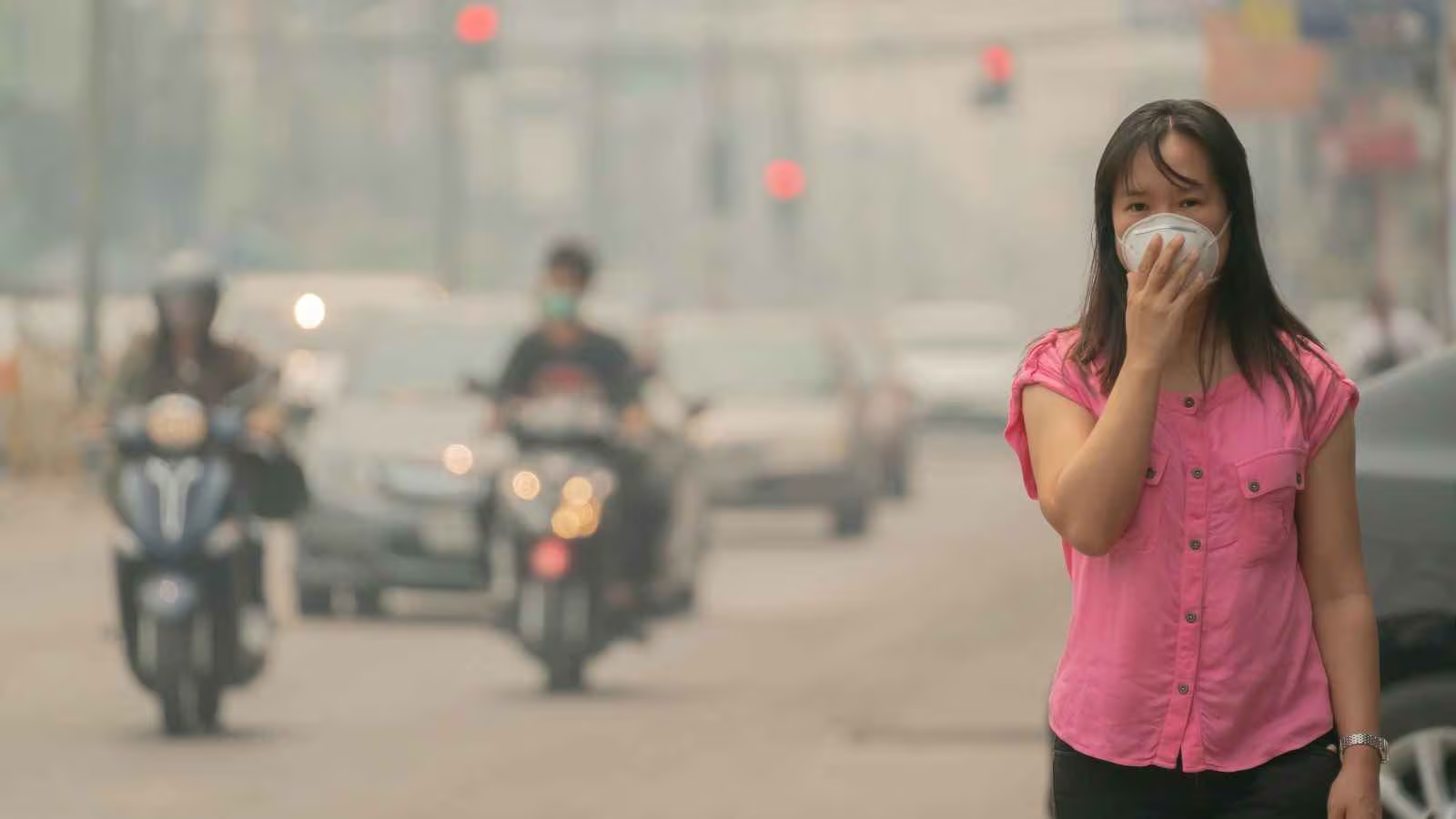
Lahore faced a severe air pollution crisis in November 2026, with its Air Quality Index (AQI) crossing 600 as a thick blanket of smog engulfed Pakistan’s Punjab province. Amid growing concerns over hazardous air quality, Punjab’s Environment Protection Minister Marriyum Aurangzeb blamed polluted air drifting from Indian cities, including Ludhiana, Jalandhar, Amritsar and Bathinda, for contributing to the deterioration.
The minister said changing wind patterns had carried pollution across the international border, adding to the concentration of harmful particles in Lahore. Her remarks came after Diwali celebrations in India, when firecracker emissions added to seasonal pollution across parts of northern India.
However, the extent to which pollution from India contributed to Lahore’s deteriorating air quality remains disputed. An assessment by the Pakistan Air Quality Initiative highlighted the substantial role of crop-residue burning within Pakistan itself, raising questions about claims that fireworks across the border were primarily responsible.
Lahore Among the World’s Most Polluted Cities
Lahore emerged as the world’s most polluted major city during the latest episode, with IQAir reporting an AQI of around 590 on November 9. A separate hourly reading reached approximately 647, placing the city firmly in the hazardous category.
The pollution crisis extended beyond Lahore, with several other cities in Pakistan’s Punjab province also recording extremely poor air quality. Raiwind, Multan and Faisalabad were among the locations reporting hazardous readings during the period.
Fine particulate matter, particularly PM2.5, poses a serious health risk because these microscopic particles can penetrate deep into the lungs and enter the bloodstream. Prolonged exposure can aggravate respiratory illnesses, increase cardiovascular risks and cause breathing difficulties.
Lahore’s pollution levels have historically worsened during the autumn and winter months, when cooler temperatures, low wind speeds and stagnant atmospheric conditions allow pollutants to accumulate near the ground.
Pakistan Minister Points to Pollution from Indian Cities
Marriyum Aurangzeb attributed part of Lahore’s pollution spike to smoke and fine particles travelling from neighbouring Indian Punjab. She identified several cities, including Ludhiana, Jalandhar, Amritsar, Bathinda and Firozpur, as possible sources of polluted air moving towards Pakistan.
According to the minister, easterly winds and unfavourable weather conditions helped transport pollutants across the border, contributing to the sharp deterioration in air quality after Diwali.
She also said that improving weather conditions, stronger winds and anti-smog operations could help bring pollution levels down. Authorities in Pakistan have been monitoring air quality and implementing measures intended to reduce emissions and limit the impact of smog.
Although pollutants can travel across national boundaries, determining how much pollution originates in another country requires detailed analysis of wind patterns, atmospheric conditions and emissions from different sources.
Crop Burning in Pakistan Emerges as a Major Concern
A report by the Pakistan Air Quality Initiative challenged the suggestion that fireworks in India were responsible for Lahore’s post-Diwali pollution spike. Its assessment indicated that crop-residue burning within Pakistan’s Punjab province was a major contributor to the region’s poor air quality.
Satellite data identified 16,714 likely crop-residue fires in Pakistani Punjab between October 1 and November 9. The assessment attributed approximately 89% of pollution in Lahore and other parts of the province to crop-residue burning.
These findings highlight the importance of addressing local emissions alongside pollution transported from neighbouring regions. Agricultural fires release substantial quantities of particulate matter, which can accumulate when weather conditions prevent pollutants from dispersing.
The findings do not rule out cross-border pollution, but they suggest that attributing Lahore’s severe air quality entirely to Indian firecrackers would overlook significant domestic sources.
Cross-Border Pollution Debate Intensifies
The controversy has highlighted the challenges of managing air pollution across the India-Pakistan border. Both countries face seasonal smog, agricultural burning and emissions from transport, industry and other activities.
Experts have stressed that identifying the precise contribution of individual pollution sources requires reliable measurements rather than assumptions based solely on the timing of deteriorating air quality.
While Lahore’s AQI subsequently showed improvement, the episode underlined the need for sustained measures to reduce emissions on both sides of the border. Controlling crop-residue burning, strengthening pollution monitoring and improving regional cooperation could help address the recurring crisis.
For Lahore, the immediate priority remains protecting residents from hazardous air while tackling the multiple sources responsible for the city’s persistent smog.