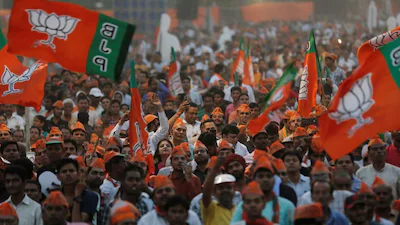
The Bharatiya Janata Party (BJP) is preparing for a significant reshuffle of its candidate line-up ahead of the 2027 Uttar Pradesh Assembly elections, with the party reportedly considering fielding several sitting Members of the Legislative Council (MLCs) in the state’s 403-member Assembly.
As part of its preparations, the party’s leadership has reportedly asked MLCs to identify constituencies where they have a strong chance of winning. The move signals a possible change in candidate selection as the BJP seeks to strengthen its electoral prospects and counter anti-incumbency against existing legislators.
The proposed strategy could also lead to a substantial number of sitting MLAs being denied tickets, creating opportunities for new faces and experienced organisational leaders to contest Assembly seats.
BJP Asks MLCs to Identify Winnable Constituencies
According to reports, the BJP’s central leadership has instructed MLCs to prepare for the Assembly elections and assess constituencies where they could emerge as competitive candidates.
A senior party source indicated that a majority of the sitting MLCs could be considered for Assembly tickets, although the final selection will depend on the leadership’s assessment of electoral prospects and local political conditions.
The development suggests that the party is looking beyond its existing Assembly legislators while preparing its electoral strategy. By considering MLCs for direct electoral contests, the BJP could bring experienced leaders into constituencies where it believes a change of candidate may improve its chances.
However, the reported discussions do not amount to a final list of candidates. The party is expected to assess individual leaders and constituencies before announcing its nominees.
Senior BJP Leaders Among Possible Candidates
Several prominent BJP leaders who currently serve as MLCs could be considered for Assembly elections.
The names reportedly under consideration include Uttar Pradesh Deputy Chief Minister Keshav Prasad Maurya, senior minister AK Sharma, Swatantra Dev Singh and Dara Singh Chauhan. Former state BJP president Bhupendra Singh Chaudhary is also among the senior leaders who could feature in the broader discussions.
These leaders have held important organisational or governmental responsibilities, making them potential candidates for constituencies where the party believes their experience and political standing could prove advantageous.
Their selection, however, will depend on the party’s assessment of local factors, including voter support, organisational strength and the presence of competing candidates.
The final decision is expected to rest with the BJP’s central leadership after consultations with state leaders and a review of constituency-level feedback.
Many Sitting MLAs Could Be Denied Tickets
A major part of the BJP’s proposed strategy involves reviewing the performance of its existing legislators. The party is reportedly considering dropping a substantial number of sitting MLAs to address anti-incumbency and introduce fresh candidates.
The exercise is expected to consider factors such as public approval, accessibility to voters, development work, local organisational feedback and the strength of potential challengers.
The BJP has 255 MLAs in the 403-member Uttar Pradesh Assembly. Reports suggest that the party could deny tickets to more than 100 sitting legislators, although the precise number will depend on the final assessment.
The approach reflects the party’s effort to avoid relying solely on incumbency. Leaders who have held their seats for multiple terms could face particular scrutiny if internal surveys indicate declining support.
At the same time, replacing sitting legislators carries political risks. Leaders denied tickets may become dissatisfied, potentially creating internal disagreements and affecting campaign coordination.
Lessons From Previous Election Results
The BJP’s preparations come against the backdrop of its performance in the 2024 Lok Sabha elections in Uttar Pradesh, when its tally fell sharply compared with the 2019 general election.
The party won 33 parliamentary seats in the state in 2024, compared with 62 in 2019. The result prompted discussions within the organisation about candidate selection, local leadership and coordination between the state and central units.
For the 2027 Assembly elections, the party appears keen to identify potential weaknesses well before polling begins. Early candidate assessments could give selected leaders more time to strengthen their local presence and engage with voters.
The proposed changes also reflect a broader effort to balance experienced leadership with fresh candidates and improve the party’s performance across constituencies.
Winnability to Remain the Key Criterion
The BJP’s reported plans indicate that electoral winnability will play a central role in deciding who receives tickets. Internal surveys, feedback from party workers, local political equations and the performance of existing legislators are expected to influence the process.
Although senior MLCs may be considered for Assembly contests and several sitting MLAs could lose their nominations, no final candidate list has been confirmed through the reported discussions.
With the 2027 Uttar Pradesh elections approaching, the BJP’s candidate-selection exercise is likely to become an important part of its political preparations. The extent of the reshuffle will ultimately depend on the leadership’s assessment of which candidates offer the strongest prospects of winning their constituencies.